comment 1

Visualizing the Pitayal Pt. 4 – The Act of Early Morning Data Collection

Thanks for visiting Wingtrip. This post is a part of a project called Visualizing the Pitayal. Click here for an explanation of the project. Click here for a complete listing of all the posts in the project so far, to start at the beginning. And if you are impressed by what you learn and see, consider supporting the Alamos Wildlands Alliance. Thanks again and enjoy!

Xeric (xe·ric) (adjective) \ˈzir-ik, ‘zer\ : Characterized by, relating to, or requiring only a small amount of moisture <a xeric habitat> <a xeric plant>.

13608143814_a8bae0e2fd_b

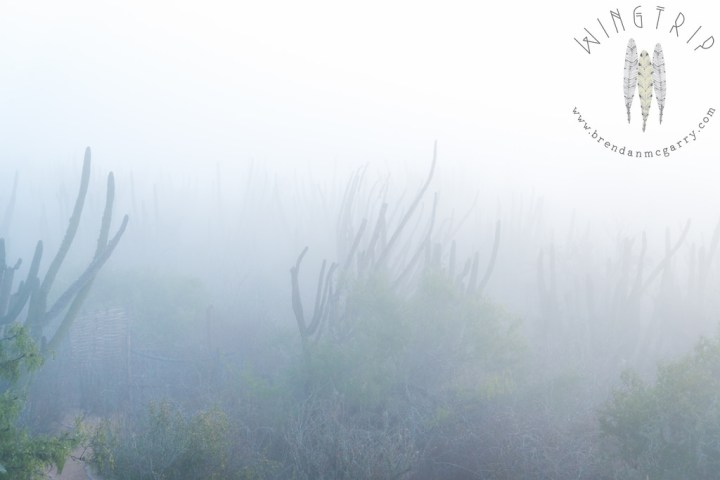
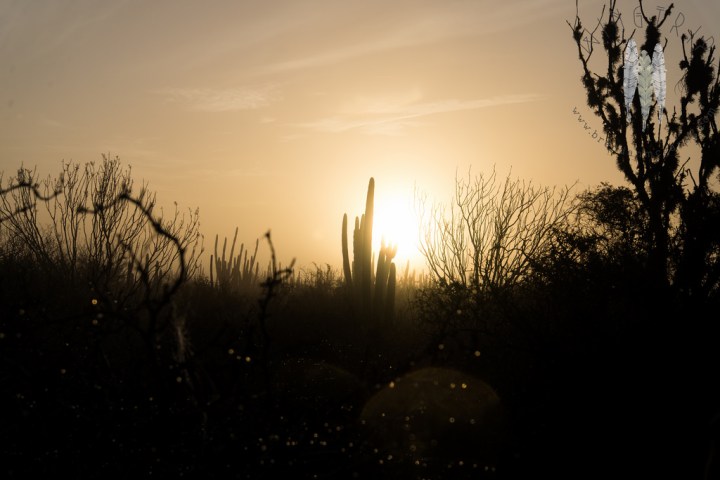
Pea Soup in the Pitayal.

It’s difficult to consider this definition when soggy. The press of scrub we were gingerly picking through, glimmered through a shroud of early morning fog. Thick fog is incongruous with most people’s notions of deserts, but  were the fleshy cacti, drought adapted leafless shrubs and mostly bare soil. Having spikes driven into my ankles didn’t make my clothes any less sodden.

Water is universally vital, but xeric scarcity encourages a specific devoutness in desert inhabitants. Navopatia receives a (mostly) annual monsoon system in July and August. The Sonoran name for it is “las aguas,” or “the water,” which alludes nicely to the torrential rains. The same monsoonal winds thrust these storms into Southern Arizona, but are slightly less intensely . Winter rains aren’t unheard of, frequent enough to acquire the name “equipatas,” a reference to the sound of pattering rain on the roofs, like little horse hooves. Still, there are places North of Navopatia, in the interior of the Sonoran Desert where rain may not fall for years at a time.

13608179694_d73273f489_b

Great-tailed Grackles, waiting for the fog to lift so they can get on with their day.

Momentarily, while waddling around thorns, I was engulfed by an inane thought: the English language doesn’t have terms for different types of rain. Of course we do, they just don’t sound as romantic. Having flowery linguistic flex is pleasurable, but if rain can succinctly be described as either a mist, a drizzle, a shower, or a downpour, I think we’re doing just fine. Carhartts clinging to my legs, I wondered about a Sonoran phrase for “coastal fog that soaks everything.” The shimmering landscape in the morning light certainly seemed romantic enough to have acquired description.

13607665244_f3b0ae370e_b

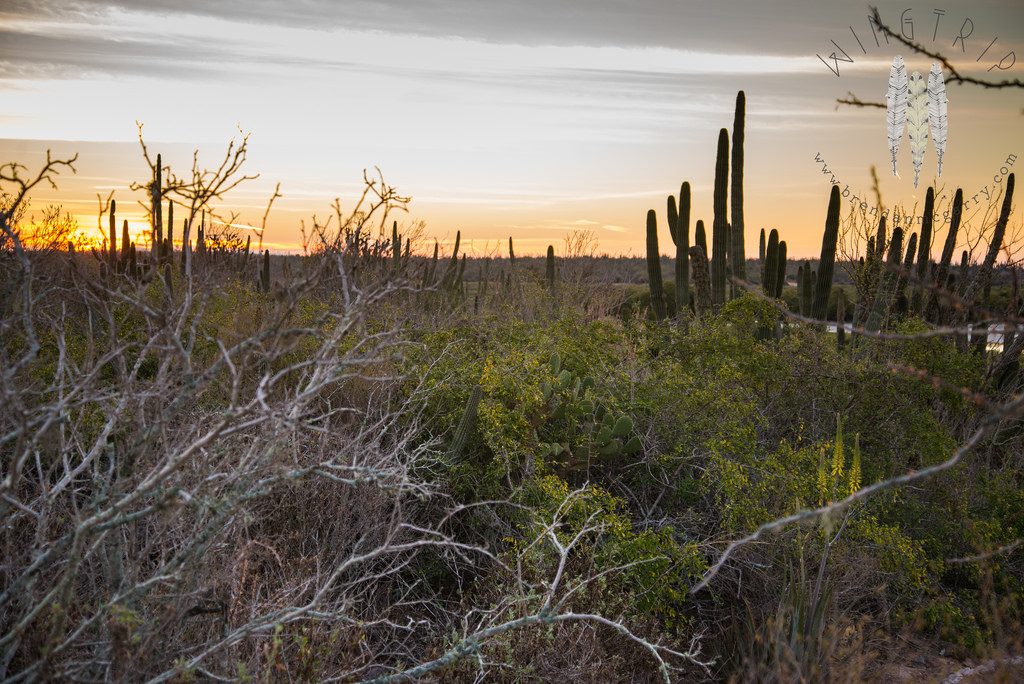
The romantic, not at that moment xeric, landscape.

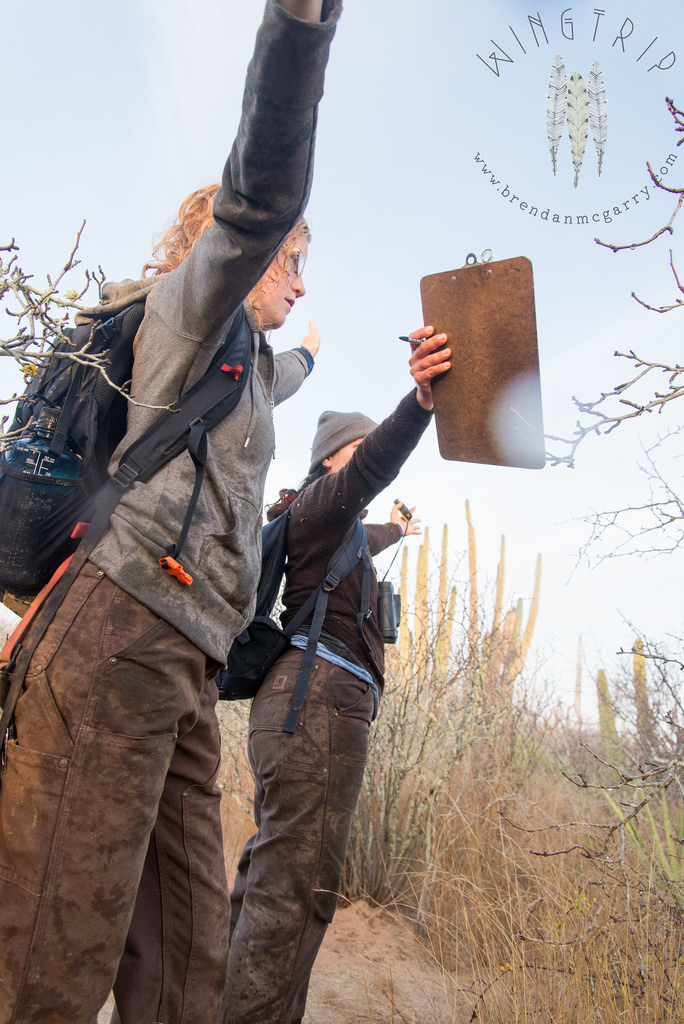
Of the many interns jobs at the Navopatia Field Station, a major responsibility is conducting area searches. Most mornings, the students are out on plots in the surrounding area, surveying them for bird life. Transecting these plots they note the birds they hear and see. For a group whose goal is to protect a portion of habitat, knowing what is there, is of course a vital part of the equation. On several mornings I joined the interns on their data gathering, bumbling along behind them while they did their work; which is exactly what I was doing when I considered the incongruous fog and desert.

So, you just go there, note all the birds, and head back to camp. Done. You know it’s not that simple.

13607372053_cbf956055e_b

Rhiana and Jilly planning the morning route.

First of all, one has to know all the birds, by sight and sound. Even for interns with birding expertise, this is no small feat. Likely their bird knowledge is from the United States and more likely from Washington because many of the interns are from the Evergreen State College. These barriers are temporary, surpassable with some diligent study.

The landscape has less plasticity as a challenge. Here’s the good news: it’s totally flat and free of rushing waterways. No giant hills to run up to finish your survey in the allotted time, no snow-melt engorged creeks to fall into. Here’s the bad news: it’s a hellish wall of thorns, sprinkled with the threat of venomous snakes and tiny, dangerous scorpions.

13607640414_fa932387bc_b

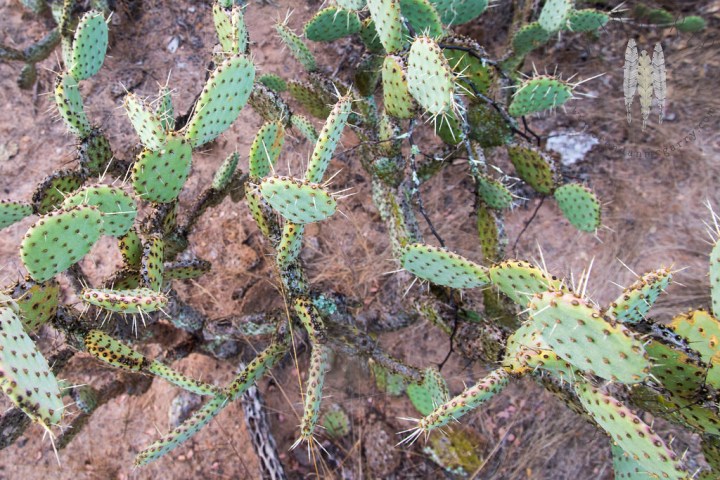
Prickly Pear aren’t my favorite when you have to get around them in tight quarters.

On my first area search with Rhiana and Jilly, I was not only soaked, but well aware most of the plants we brushed past were more than happy to skewer me. I trusted the interns, I followed them as they wound their way through the cacti, agave, ocotillio trees, and acacia. Somehow I only managed to kick on cholla and tear one hole in my shirt, despite fussing with my camera and being generally distracted by the world around us. The interns of course, moved through the landscape with comparative grace.

My guides, fully immersed in their work, moved deftly through the Pitayal, stopping only to listen or scribble notes. I often looked up from this wonder or that wonder, to find myself alone. Despite my hubris over a good sense of direction, the Pitayal is a confusing homogeny of dense scrub. No doubt I would have found my way out of the maze alone, but parsimony was to keep up.

13607455393_e0b1f29365_b

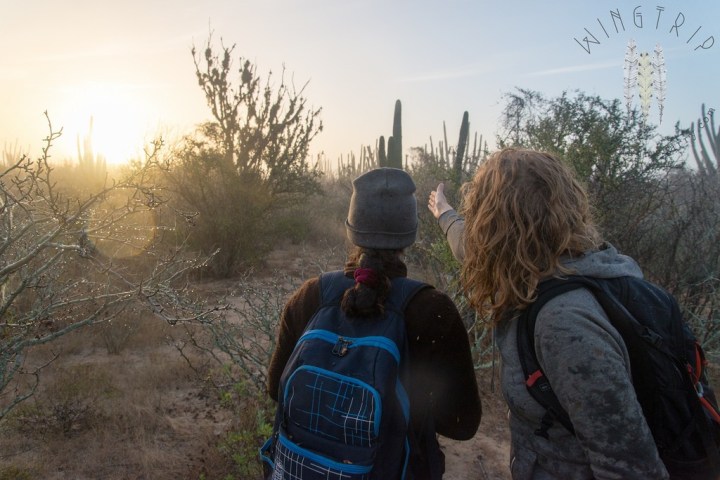
Jilly and Rhiana verify that we’ve been heading in the right direction the whole time. When you are picking your way around cacti, it’s hard to tell if you are staying on course.

Both the area searches I accompanied were made tardy by the morning fog. Only the chuck of Northern Mockingbirds and a few cheerful Northern Cardinals broke the relative silence at the beginning of each survey. However, by the end both plots were alive with bird voices, peeping verdins, noisy thrashers, and the calls of wintering birds, sparrows, buntings, and warblers, with no reason to sing. They were soon bound North to breeding territories where singing actually mattered.

In both global and local perspectives, these area searches are important. On one hand, they help establish what species of neotropical migrants spend their winters in coastal thorn-scrub. They also help answer how important is the habitat to these species. As vacuous as it sounds, no one would know that answer, unless a group of scientists took the time to collect the data and make comparison (those of you waiting to hear the answer, I don’t have on yet). Equally so, monitoring helps establish what other non-migratory species call the pitayal home.

6069922659_3a5f6e27dd_b

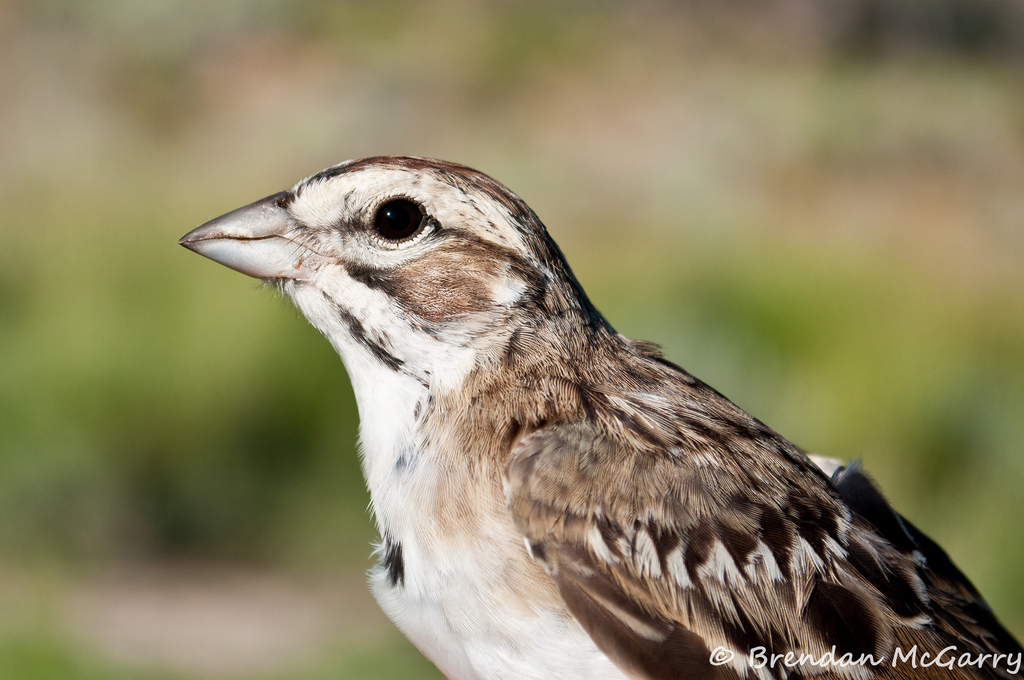
Lark Sparrows are a common winter resident from the North, but are found in huge numbers on the edges of the thornscrub in the agricultural lands that surround it.

So, say no one did this work, that the pitayal was all bulldozed, and this wonderful sink of biodiversity was lost forever. We’d never know much about what was there, besides the early botanical and anthropological work conducted in the vicinity. The pitayal would just drift away as a memory, the ghost of another place pushed out of existence. That alone is a tragedy. Knowing that this is the densest collection of organ-pipe cactus in the world, a place with 800 species of plants, and 400 species of birds makes it even more painful to think it could disappear.

What if the pitayal was discovered to be an important wintering habitat for neotropical migrants, after the fact, when certain populations crashed? Any such hypothetical is unacceptable. These sorts of questions, and an enduring curiosity in basic natural history, is what truly motivated the interns to rise early, push through a laceration of scrub, and sometimes, get soaked to the bone.

Believe me, expectations of superiors and contracts are not enough to get the work done, you have to really love it out there. After spending several hours going along for waterbird and vegetation surveys in midday heat, the mornings can seem idyllic. But when you are snuggled up in your wall tent and the sun hasn’t risen, sometimes all you want is to close your eyes and doze till eight. Lying there, struggling for motivation, dawn chorus breaks and you remember the new things you find everyday, and you catch the last wispy stars wiped from the sky by the rising sun. That’s what field work is all about.

13607824994_71094095b4_b

Every day the field presents something new to the attentive field biologist.


comments 3

A 2014 Earth Day Musing

After writing about what earth day means last year, I decided that I’d write about it again, (despite the fact it’s likely a lot better than what you are about to read).

So. Happy Earth Day! Or happy tomorrow if you think every day is Earth Day. Or possibly you think it’s all bullshit and a losing battle. Sometimes I’m tempted by the latter.

However, now you’ve read the above, shake my hand, and promise you’ll finish this article.

PicsArt_1398231938367

I’m no pessimist. I don’t believe people are inherently bad. I don’t believe most people do things with purposeful disdain for life, biodiversity, nature, or whatever noun you deem emblematic of life on Earth. Even the CEOs of oil companies probably don’t want to cause extinctions, except that in a strange way, extinctions make them money. That said, aside from Jane Goodall, we are malingering, maladroit bags of skin that simply want to eat, reproduce, and experience pleasure over all else.

My Earth Day was strange. I woke up early to the sound of American Robins. I drove my humble, relatively efficient car to pick up one of the few people the birding world can call a celebrity. We went birding with a few key community members at the environmental non-profit where I currently work. I drove him to sign books at the non-profit’s shop. Then I drove him to the airport for him to fly off and sign more books in other places. It was not a bad day, but I definitely didn’t feel like I was saving the world or celebrating the planet despite the bird theme.

PicsArt_1397525312100

While I can make tenuous connections between my day’s activities and Earth Day, I didn’t wonder if I was helping the world in the process. Instead I was thinking about the stresses of life, my job, my future, and where I want to go birding next. I was thinking about projects yet unfinished that for all their benevolent intentions might be a drop in the bucket, even if I got lucky and people took notice.

Most weeks I burn fossil fuels to go birding. I write and take photos with gadgets made of toxic chemicals and rare metals mined from the earth daily. Most months see me buying things I don’t need. And when I have the funds, I travel to distant lands burning even more fossil fuels. In some ways the planet would probably be better off if I walked everywhere, grew my own food, lived in a shack, and never traveled. Now, I’m not prepared to do this, but I wonder how many people have these thoughts? This isn’t an attempt to be dour or depressing, I’m seriously asking how many of you contemplate these things. Who knows, maybe it’s just me?

PicsArt_1398232165130

I (We) can obsess all day long, every day, and let guilt trickle through the primordial gills of my being and drown out the light of day. That’s the real evil, and one of the main things one shouldn’t be doing on Earth Day.

Life and death are intertwined, inexorably one. There is no place or time where all animals live equally and wildflowers are never were trampled. Worrying for utopia is useless.

PicsArt_1398232039220

I’ve had a lot on my mind lately. Wondering if moving to a small island and trying to perfect my crafts and be more self-sufficient is as responsible and sensible as living in densest possible inner-cities. Wondering if my goals are really just built out of egotism and selfishness. Wondering if signing a petition to try to stop poisoning of Common Ravens to save Greater Sage Grouse will truly do any good (good lord, just sign the damn thing, it won’t hurt). Wondering why we let people like Cliven Bundy get away with trashing land “owned” by everyone in the United States, regardless of if he paid his pittance or not. Wondering if this all wasn’t a waste of time and that entropy was inevitable.

PicsArt_1398232116249

However, I’ve also spent a good deal of time thinking about tireless, beautiful evolution. About how to take better macro photographs. About wanting to see the biological wonders of Mozambique, Madagascar, Myanmar, and Micronesia and translate it into verbal-visual inspiration. About the remarkable melange of Brazilian street art. About the books I’ll write, the magazine I’ll start, about the great things I’ll thrust myself into. About the wonderful people, animals, and plants in my future, past, and penultimate present life.

PicsArt_1398232209015

Catapulting away from the dark places that can tempt our thoughts, I realized that it really doesn’t matter, but not in the way that sounds. I don’t want to live in a world where I fret about what consumer goods will save us from ourselves. I want to live in a world where we all do positive things, helpful, forward thinking things no matter our social status or income. Striving towards that will always be a better than any alterntaive, for our planet, and for ourselves.

PicsArt_1398232259759

There will always be dark places of guilt and awful inklings of what our reality actually means for nature. We’ll always see death, we’ll cry, and experience pain. There will always be imperialists, dictators, sexists, racists, bulldozers, and industrial feedlots. You name it. None of it is going away, (until we’re all gone). I don’t wish for that, nor do I think our disappearance will be a silver bullet for anything. Bad shit happens bro.

Call me a cornball, but I really believe this: seeing the glass half full is better than seeing it half empty. That’s from a naturalist whose earliest lexicon was flooded with phrases like “deforestation,” “endangered,” and “extinction.” I have my lapses but when I look at the Earth, on any day, I believe that. I walk outside and hear birds, see insects vibrating against a botanical fabric. I get dirty and breath fresh air. I feel good. That’s what we should be doing on Earth Day: living life today, enjoying what we have, being positive, and doing something worth a damn. Not fearing life before death. Nor feeling guilty about being who you are or about your impact because that’s so overwhelming you’ll end up doing nothing.

PicsArt_1398232294493
So for fuck’s sake: buy less meaningless crap, eat food grown somewhere nearby, and take a goddamned walk somewhere. But do something, please, do something.

Happy Earth Day.

PicsArt_1398231885380

comments 2

Visualizing the Pitayal Pt. 3.5 – A Quick Exercise in Place

Thanks for visiting Wingtrip. This post is a part of a project called Visualizing the Pitayal. Click here for an explanation of the project. Click here for a complete listing of all the posts in the project so far, to start at the beginning. And if you are impressed by what you learn and see, consider supporting the Alamos Wildlands Alliance. Thanks again and enjoy!

Before I continue, show of hands, do you have any idea where Navopatia sits on a map? How about Sonora? Only a few of you?

As it turns out, most gringos don’t know much about the geography of our neighboring country to the South. Until I started taking interest in Mexico, I also couldn’t place many details on a map beyond major landmasses and a few key cities. Between the extreme self-centeredness of US citizenry and the media’s portrayal of violent Mexico, many don’t consider traveling beyond the bleakness of resort towns. I may be generalizing, but I cannot tell you how many vacant stares I’ve gotten in the past months when I tell people Navopatia is in Southern Sonora..

Large Map

Navopatia is right there.

Why care about where a place is located? I think it’s integral to the story. Despite what globalism increasingly attempts to foist on us, when you pull your face away from the screen and eat a few fragments of food that didn’t come for halfway round the globe, you generally realize place is important. If you have any intention of understanding the world and doing justice to its profundities, take note of where you live and where you visit, both in terms of culture and ecology.

The people of Sonora themselves, until trains and then highways sliced through the land, were relatively isolated in a frontier world. The silver riches of Alamos made the region of Sonora well known, but the vast deserts, sinister mountains, and limiting international border to the North helped retain much of their unique qualities. The diminishing cultures of Sonora are not as evident today, indigenous people don’t stand out in the crowd, at least to a foreigner. Much has changed from when David Yetman first started visiting, as described in his book Sonora. The Mayo people of Navopatia are still there, but indigenous wealth and knowledge is faltering as land is cleared for shrimp, cows, and crops. Still, Sonorans are Sonorans partially because of their ecosystem, a simple truth which the globalized world often wishes to sidestep.

A very famous pitaya cactus growing out of the church wall in Aduana, Sonora. It’s very much symbolic of the people of Sonora, a cactus celebrated by catholic pilgrims that come specifically to see it. Credit: Brendan McGarry

To reiterate after my diatribe, the small fishing village of Navopatia is in Southern Sonora. It bounds the North end of the Agiabampo Estuary, lapping the border between the states of Sonora (to the North) and Sinaloa (to the South). Most important to note is that this is the beginning of the Neotropics.

The decidedly tropical looking thornscrub. It’s a dry place, but very different from other North American deserts.

This boundary between the Neartic and the Neotropics is not vividly distinct, but a flowing boundary of interchange. Several biogeographers, have diligently drawn simple distinctions by striking straight lines and wavering arcs across Mexico (I’ll spare you the details of this dead white guy’s map, versus the other one’s). Consensus today is that it stretches North on both coasts of Mexico, but sags South in the mountainous interior (this makes sense as mountainous regions are colder and harbor temperate species). I’m content knowing that somewhere in our travels across Northern Mexico, my friends and I entered a transitional zone, where representatives of both biogeographic regions intermingle. This is exactly why Mexico is such a fascinating country. With borders stretching from around 32° at the North and 15° at the South, two very different bodies of water on the coasts, and a mountainous interior, it encompasses a huge variety of biomes. The same could be said of the US, but our country is less diverse and over four times the size.

If I look in the wonderful tome, A Natural History of the Sonoran Desert, I’m told that the Sonoran Desert ends just shy of Navopatia. The landscape of coastal Southern Sonora is still “desert,” but it’s most certainly a tropical one. Most who have studied the region, believe that the thornscrub ecosystem, which even to the untrained eye seems intermediary between Sonoran Desert and tropical deciduous forest, may have been the precursor to the Sonoran ecosystem. Worked on over many thousands of years by the glacial actions to the North and the rising mountains to the West, the area that would become the Sonoran Desert became too dry and too cold for much of the life that would have existed there. The continent was warmer and more tropical, and there’s evidence a thornscrub-like habitat (and tropical deciduous forest) extended much farther North into modern day Arizona and adjacent states.

Sabino Canyon, dominated by saguaro cactus, just outside Tucson. Well within the Sonoran Desert. Credit: Brendan McGarry

Many of the species of the Sonoran Desert appear to be quite young. These habitat types, retreating South in the face of climatic changes, left their marks in the form of flora and fauna. To survive rapidly changing conditions, those species would have had to adapt or die out. Indeed many did persist through adaptive modification, as the desert has relatively high number of endemics that have tropical ties. The Sonoran Desert, unlike the other deserts of the continental United State is considered the most tropical of xeric wonderlands, with plants and animals that link the Nearctic and Neotropic boundaries.

Crested caracara are a neotropical raptor, only found the extreme southern United States. South of Arizona it’s increasingly common. Credit: Brendan McGarry

The transition wasn’t lost on any of us on our drive. South of Hermosillo more species of columnar cacti appeared, the legumous trees seemed more numerous and lush; frost never touched down here and surely just over that rise were jaguars and magpie jays. No doubt this was still a place of minimal rainfall, but not the same we’d woken up to in Tucson and sped away from on a highway that marginalized regional and biological boundaries. How ironic we came to admire a unique habitat on a road that could well be the death knell for the land itself. Pondering this from the car, I was soon to be fully immersed in the dense thorn-scrub, for better for worse.

The dense thornscrub.

comment 0

Visualizing the Pitayal Pt. 3 – Birds in the Hand

13269733564_6c0888470d_b

Thanks for visiting Wingtrip. This post is a part of a project called Visualizing the Pitayal. Click here for an explanation of the project. Click here for a complete listing of all the posts in the project so far, to start at the beginning. And if you are impressed by what you learn and see, consider supporting the Alamos Wildlands Alliance. Thanks again and enjoy!

Waking up in Navopatia after days on the road is immersion into a magical place. Especially because we’d previously writhed out of our sleeping bags and groggily listened to the sounds of urban Tucson. Now with a new day, new voices signaled dawn.

There’s a good reason so many people find themselves enamored with birds; it’s because of their diversity and their obviousness. Their sounds dominate dawn in practically every terrestrial habitat on earth, creating the often profound dawn chorus. The desert, is no different in this regard.

In the northernmost Neotropics, February is most assuredly spring, but vastly different from the temperate spring. There’s no predictable rains, but birds are breeding or preparing to. Some territories are being established in anticipation of burgeoning food and some parents are already incubating.

Despite being travel weary, this dawn was sleepless for the excitement of familiar desert sounds painted across the canvas tent. During the night my eyes had cracked open in a confusion of light, not knowing where I was. The moon filtered over the mangroves, shining off the estuary in spectral rays through the columns of cacti; the monochrome of darkest morning in full moon. When the chorus hit my ears, I woke again in confusion, but found myself exactly where I wanted.

Every morning, the cacophony of waterbirds in the estuary always mixes with the elegant singing onshore. As the double notes of Curve-billed Thrashers sounded from the tops of the pitaya, herons croaked in the shallows, jostling for the best feeding grounds. A Bell’s Vireo, effervescent, yet monotonously vocal, passed nearby. A Caspian Tern matched with squawking tones. Cardinals, Verdin, Costa’s Hummingbirds, Northern Mockingbirds, Gila Woodpeckers, and more continued their dawn greeting as the rising sun finally rousted me.

Passerines and other terrestrial species, are typically most obvious and active during early, cooler hours of the day. Thus, if you are an ornithologist focusing on terrestrial, desert ecosystems, you rise early and work till the day is hot. Of the many early morning efforts at the field station, banding is definitely the most fun to observe.

What exactly is banding? Broadly it’s catching birds in mist nets, placing a small metal band with unique numbers on one of their legs, taking a series of measurements, and then releasing them to go about their lives. Count based field methods, where people survey an area for presence and abundance of bird species with sight and sound for detection, give good baseline data for conservation and land management. However, they don’t tell the entire story. Counts provide little or no data to understand bird survival rates, morphology, where they migrate to and from, and much more of their general natural history. Bird banding informs demographics and can guide effective conservation efforts.

Adam Hannuksela is the Director of Research of the Alamos Wildlands Alliance and has a constant assortment of projects on his hands. The first morning at the field station, Adam was banding with two interns, a visiting friend and biologist, Aaron Holmes, and the indispensable field assistant (amongst many things) and resident, Tino Mendivil. When we arrived at the banding table at relatively late hour of 7AM on the first morning and things were in full swing.

The field station participates in the Institute for Bird Population’s Monitoreo de Sobrevivencia Invernal, also known as MOSI. Translated into English, the program does as its name suggests, monitoring the winter survival of birds. This program aggregates data from participating banding stations all across the Northern neotropics. Navopatia is one of the more northerly stations contributing. This data is used in conjunction with Monitoring Avian Productivity and Survivorship (MAPS) data, a project North of the border in the US and Canada. MOSI fills the gap for studying many neotropical migrants, because most that breed in Canada and the US, spend up to half their year in the tropics. MAPS has many well-funded stations, and while MOSI is growing, it’s severely underfunded. The reality is that wintering grounds are a sizeable chunk of the equation for migratory birds, so the work stations like Navopatia are doing is vital.

Spend enough time with some nature nerds and you’ll probably end up holding a wild animal. These situations may, or may not, be respectful, despite the learning opportunity they can provide (many of the lizards, amphibians, small mammals, and birds I’ve held didn’t contribute data to science). I get a strong satisfaction out of simply holding a bird, observing details, and yes, taking close pictures, science aside. However, I would never shade bird banding beneath this umbrella; it has a purpose.

Over the course of the two days I spent at the table, several birds were banded but not masses. This is good for the interns, because most of them are beginning banders. The point of banding is to efficiently and safely collect data on the captured bird with correct identification, precise measurements, assessment of a variety of scales, and through process hopefully determine age and/or sex of the bird. This sounds complicated and it is; a huge part of banding is ensuring precise data, so the stress on the birds is not in vain. Trained professionals are extremely fast because of practice, beginners less so. Add more birds to the equation and the stress of trying to get the birds on their way encourages mistakes. Thankfully there were fewer birds and therefore fewer mistakes.

Often times a minute is needed to study certain feather groups, to grapple with a particularly active bird, or often, to stare vacantly at the “Identification Guide to North American Birds, Part I” by Peter Pyle. Banders call it the Pyle Guide for short. This black book is a wonderful resource, but is equally full of dreadful, cryptic jargonism. Washing all North American passerines (and some closely related non-passerines) with broad enough strokes to generalize molt, coloration, age, and a myriad other details wasn’t an easy task, but that doesn’t alleviate the frustrations with it. For the uninitiated, it looks like a jumble of nonsense; for the initiated, it can still appear so. A good degree of certainty can be attained by it’s use, as an essential work achieved only by admirable dedication. Most banding operations would be lost or taking much less data without it.

Of course, these birds don’t just fly to the table. Mist nets are placed in strategic locations through the pitayal near Navopatia. These nets are fine, nearly invisible walls of fabric, held up by lines suspended between two poles to create rows of pockets to entangle birds. All the nets are in lanes, cut out of the scrub, set within walking distance of each other, but well concealed. Birds fly through the landscape, not seeing nets nor anticipating impact. Every 30 minutes or so, a “net run” happens to check for captures. Birds are extracted and put into small cotton bags (to allow free hands for extracting more). The extraction can be time intensive for beginners because of the delicacy of the birds, their struggling, and the net’s fine mesh.

The variety of birds banded at Navopatia are a flurry of size and color. They caught birds like Streak-backed Orioles, which are gaudy tropical residents. Orange-crowned Warblers are common here, a tiny, familiar bird to US birders, that flies hundreds, if not thousands of miles South to winter here (without banding data, an explanation of this is another story, there would be less knowledge of how orange-crowned warblers distribute in winter. We know that all three subspecies intermingle in Mexico, but that the two more Western forms are more common on the Pacific Slope. Who cares? In terms of conservation, knowing what species, and subspecies, are using which habitats throughout the year is vital information.). Others are more distinct desert residents, but also backyard birds for people stateside, like hefty Cactus Wrens. Noisy Gila Woodpeckers and startled Common Ground-doves were also nabbed. All were quite novel to people who’ve banded primarily in the temperate zone, but I could have seen these birds thousands of times in hand and I’m fairly certain I’d still find their closeness thrilling. Besides, I have to admit that half the fun is holding them.

As the banding slowed, the MOSI schedule for the month was over and the field station staff needed to move on to other work. We set about taking the mist nets down, as they are both fragile and valuable, but the net lanes remain in tact for future banding efforts. The birds will be there too, and hopefully because of the data, for a long time to come.

comment 0

Visualizing the Pitayal Pt. 2 – The Long Way South

Thanks for visiting Wingtrip. This post is a part of a project called Visualizing the Pitayal. Click here for an explanation of the project. Click here for a complete listing of all the posts in the project so far, to start at the beginning. And if you are impressed by what you learn and see, consider supporting the Alamos Wildlands Alliance. Thanks again and enjoy!

Note: We start, as most stories do, at the beginning. However, as my internet access and limited time in the field allowed no real updates, I want to quickly say this. From my perspective, Visualizing the Pitayal was successful. There are always setbacks, the major of which was the salt water bath the quadrocopter received early on, putting it out of business. That said, in review of my imagery, I’m quite satisfied, vow to do even better next time, and am brimming with excitement and ideas. I’m at that wonderful creative stage where there’s much more sprouting than withering. The ultimate test is if my photos are truly useful for the Alamos Wildlands Alliance and if they help protect the unique habitat AWA works so hard to monitor and preserve. People here at home asked for immediate highlights when I returned, which I partially understand, but I also appreciate thoughtfulness before blurting out thoughts. So, sit back and take in my synthesis of the trip, as I tease out the line over the next few weeks. I promise it’ll be worth it.

We live in a world where semi-artificial concepts often manifest as reality. After successive generations have adopted these ideas, for many, they become the unquestionable truth. Crossing into Mexico from the United States was, a reality of sorts, but from the promontory of natural history, it was merely a line politicians drew in the hills.


These hills, once we left the clutter of Nogales, were lapped by surprisingly green lows. Tall cottonwoods, flush with chartreuse, veiled what surely were crisp desert rivers. Scrubby hillsides rose to a girdle of cacti. A red-tailed hawk cruised overhead, an American kestrel pumped its tail on a powerline. If you missed the poverty and the potholes, the haphazard taco shacks and the people watching the world go by, we could have convinced ourselves this was just down the road from the riparian pleasantry of Patagonia, Arizona. In terms of the ecological connectivity, it certainly was.

Trying to cut lines across the natural world doesn’t work so well on continental landmasses. We aren’t all so lucky as to deal in Wallace’s lines. Tall mountains and bodies of water do a fair job of demarcation, but generally a map of ecological boundaries, drawn with strict ecological transitions is only for our benefit. Such is the Sonoran Desert and it’s various habitats.

Breaking away from the hills we sped across a desert plain. Isolated, ancient volcanic plugs stood on all sides and the alluring Sierra Madre Occidental paced us on our left as we curved south. All I wanted to do was get out in explore them, but even if I didn’t believe Mexico is as dangerous as the media made it out, I knew better than to suggest random mountain roads. I had to be satisfied with dreaming of exploring them in the future. Besides, there were desert birds, doves and vultures in particular, to enlivened the drive.


A grossly untrained eye might strain to see beauty in the desert. However, with a briefest of coaching, like say, learning a few cacti, a day’s drive through arid ground can become infinitely more interesting. Vibrating between ecotones, I couldn’t help but ask unanswerable questions about why certain plants were growing where. Yes, yes, because of differences in soils, human disturbances, aspect, micro-climates, and other various contributing factors. But still, why?

So the passing cholla, prickly pear, and the saguaro, and soon pitaya, senita, and echo kept us company. We discussed the world, as any thoughtful people might. We gawked at the gaudy new Starbucks in Hermosillo, bringing on murmured thoughts about the globalized society we belonged to. Then in turn we gushed at the precious street dogs and the small town wonders of a place so close to our home country yet ever so different. We told stories.


Road weary, we finally made it to the turn off. After an initial first pass and circle back on the dark highway, the prius, our unlikely desert chariot, spryly bounded down the sudden drop of asphalt to the dirt. The lights of the highway disappeared and soon our retinas spilled over with stars. We were elated, not only because the driving was nearly done. The air was fresh as we rolled down the windows and took in the serene darkness and the celebratory beer was still frosty.

I was happy to have the cover of darkness, it avoided distressing views of the ongoing land clearing, but also it allowed glimpses of nocturnal inhabitants. A barn owl stared us down as we trundled the dirt road through agricultural lands to Navopatia. To me it seemed to be giving us a greeting, but between you and me, I tend to overemphasize these encounters. Really it just wanted a nice plump rodent and for us to pass it by.

However, the best thing about late night arrivals is rising the next morning. Sallie greeted us warmly and showed us our luxurious accommodations. Before long I was happily prone on a cot in a wall tent, the way one of the gods surely intended, surrounded by a lively nocturnal world, being lulled to sleep by the sounds of insects and night herons.


comment 0

Visualizing the Pitayal Pt 1.: Stalled…Just for Sec

Way too excited to be on the plane.

Thanks for visiting Wingtrip. This post is a part of a project called Visualizing the Pitayal. Click here for an explanation of the project. Click here for a complete listing of all the posts in the project so far, to start at the beginning. And if you are impressed by what you learn and see, consider supporting the Alamos Wildlands Alliance. Thanks again and enjoy!

Things don’t always go as planned. Nothing major, just a bit of extra time spent waiting for a package to arrive in Joshua Tree. Going crazy waiting in Palm Springs, a city I didn’t intend to spend any time in.

The Sierra Nevadas, somewhere on the way South.

My friend Simone and I flew out of Seattle this morning at 6:40 AM and got to Palm Springs around 9AM. We left Seattle in the rain and arrived in the desert to 70 degrees. Knowing we had to wait for our transportation, we decided to walk from the airport into town. A poor choice, as it was much further than we were told, but at least we got to see some common desert birds.

Stark contrast in Palm Springs

Flying in we couldn’t help but admire the stark desert mountains of Southern California. As we descended into Palm Springs, our thoughts turned to climate change and imagining the building below us sinking into the sands. Despite not wishing ill of people who live here, it’s obvious this place isn’t sustainable. How can these strange oases stand in what seems to be ignorance of the desert around them?

A massive wind farm.

Still, despite having to wait it out in a strip mall Starbucks, it’s great to be in the desert again. Hopefully tomorrow will be a smoother day. (But don’t expect these updates from me regularly.)

My next post won’t be so bleak!

(here’s where I’ll be putting up photos as I have time: http://www.flickr.com/photos/brendanmcgarry/sets/72157641177410495/)

comment 1

11 Things You Won’t Find Reading Buzzfeed

I present to you, my retort to the inane viral websites with a death grip on our imagination, patience, and, shit, our sentience. The surprising, impressive, and weird things one finds birding and exploring natural history in Seattle. Get out and explore, even if it’s just out the backdoor.  

  1. A dead deer mouse (genus Peromyscus) prostrate on a branches over a Discovery Park path. This was seriously bizarre and not to toot my own horn, but it was surprising to pick it out in the maze of vegetation. Just a dead mouse, on a branch, with no cause of death evident (I opted to not overly probe the subject). My guess: an avian predator, say a Sharp-shinned Hawk or a Northern Pygmy-owl caught this little one, perched to begin feasting, and was started by one of the many people who seem to be constantly running here. Or maybe it just climbed up there and had a heart attack when one of the runners came around the corner. A less likely option.The deceased deer mouse.
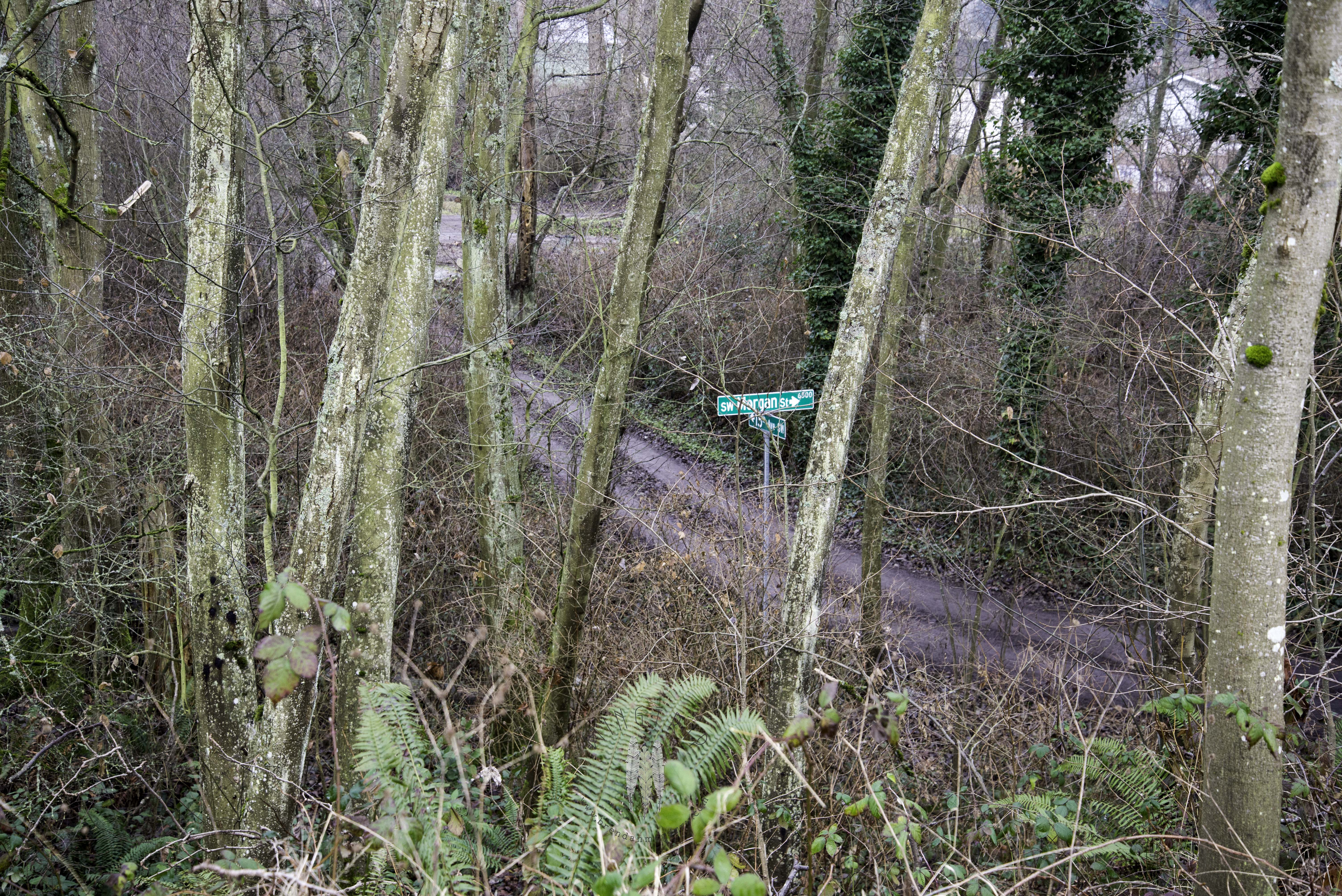
  2. Street signs that almost convince you that you’ve bumbled into a rural town, not the West Duwamish Greenbelt.Just another Seattle street.
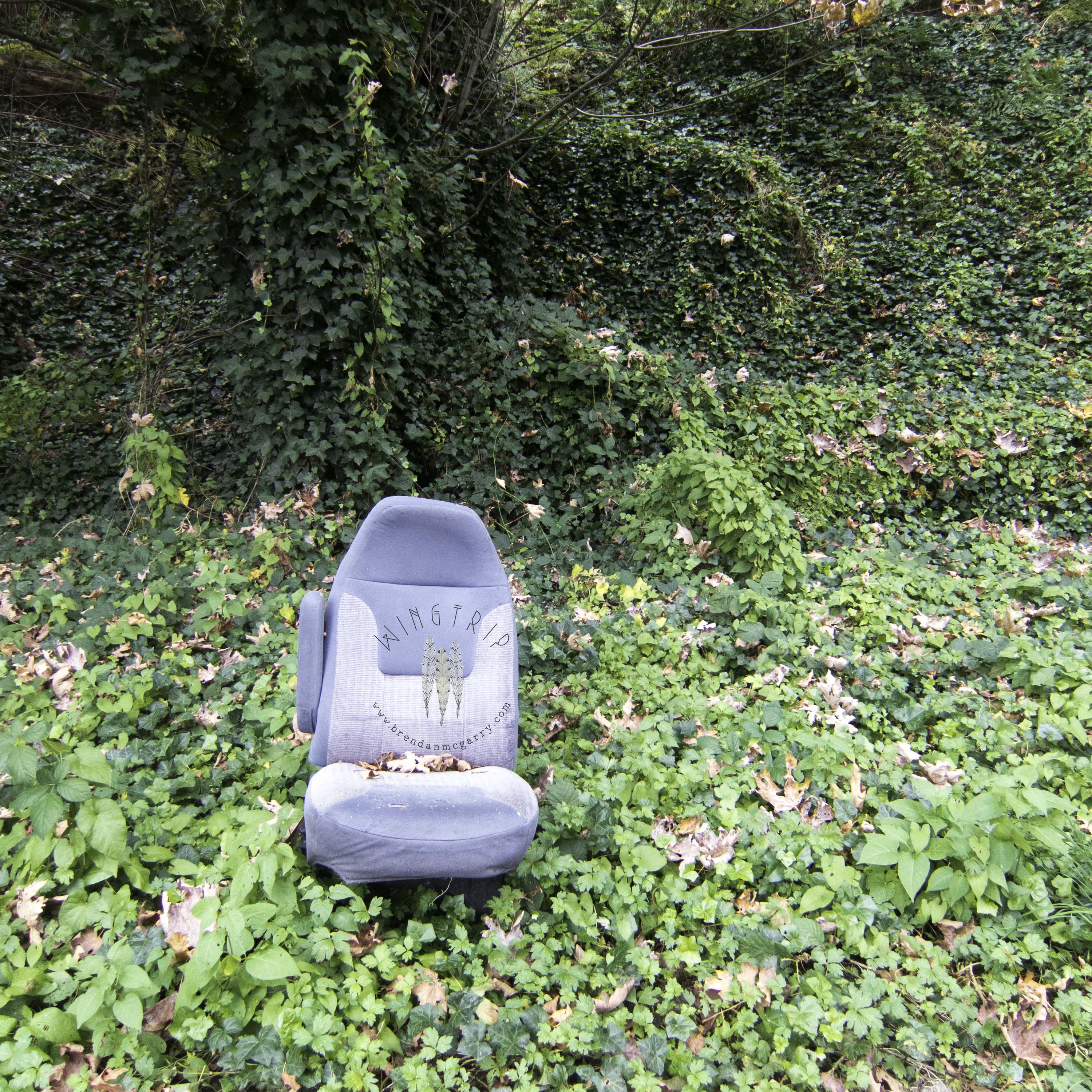
  3. Random discarded objects. The St. Marks Greenbelt does remain surprisingly free of detritus, despite being bordered on one side by a road that would encourage copious discreet dumping. I expect garbage, and I wouldn’t be surprised by couches, matresses, and old appliances people are too lazy to dispose of properly (or have tried diligently to pass on responsibly, but can’t manage to do so). But a car seat, positioned nicely amongst the exotic tangle? How strangely inviting. I guess if you are going to dump your garbage, the least you can do is arrange it aesthetically. Strap yourself in.
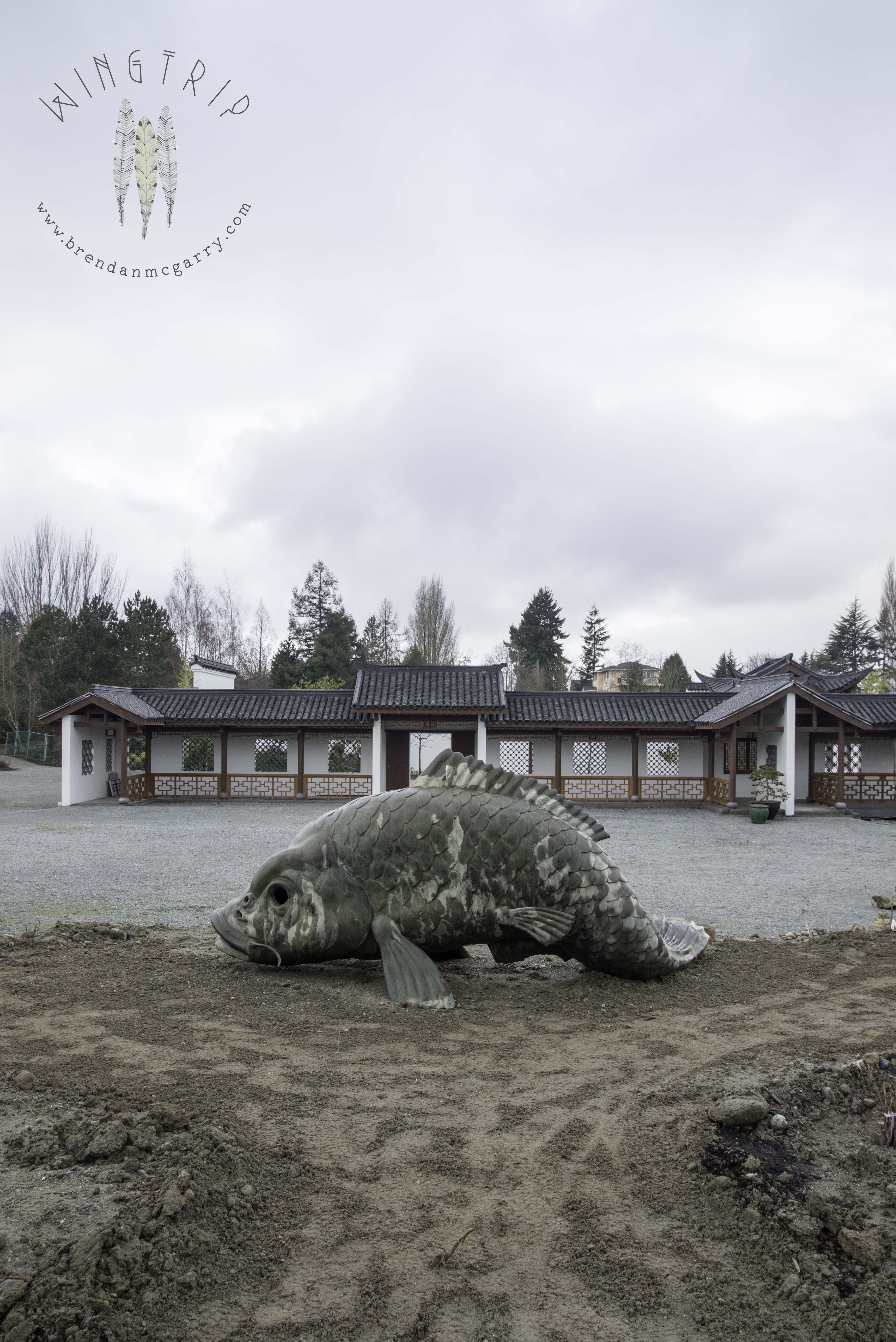
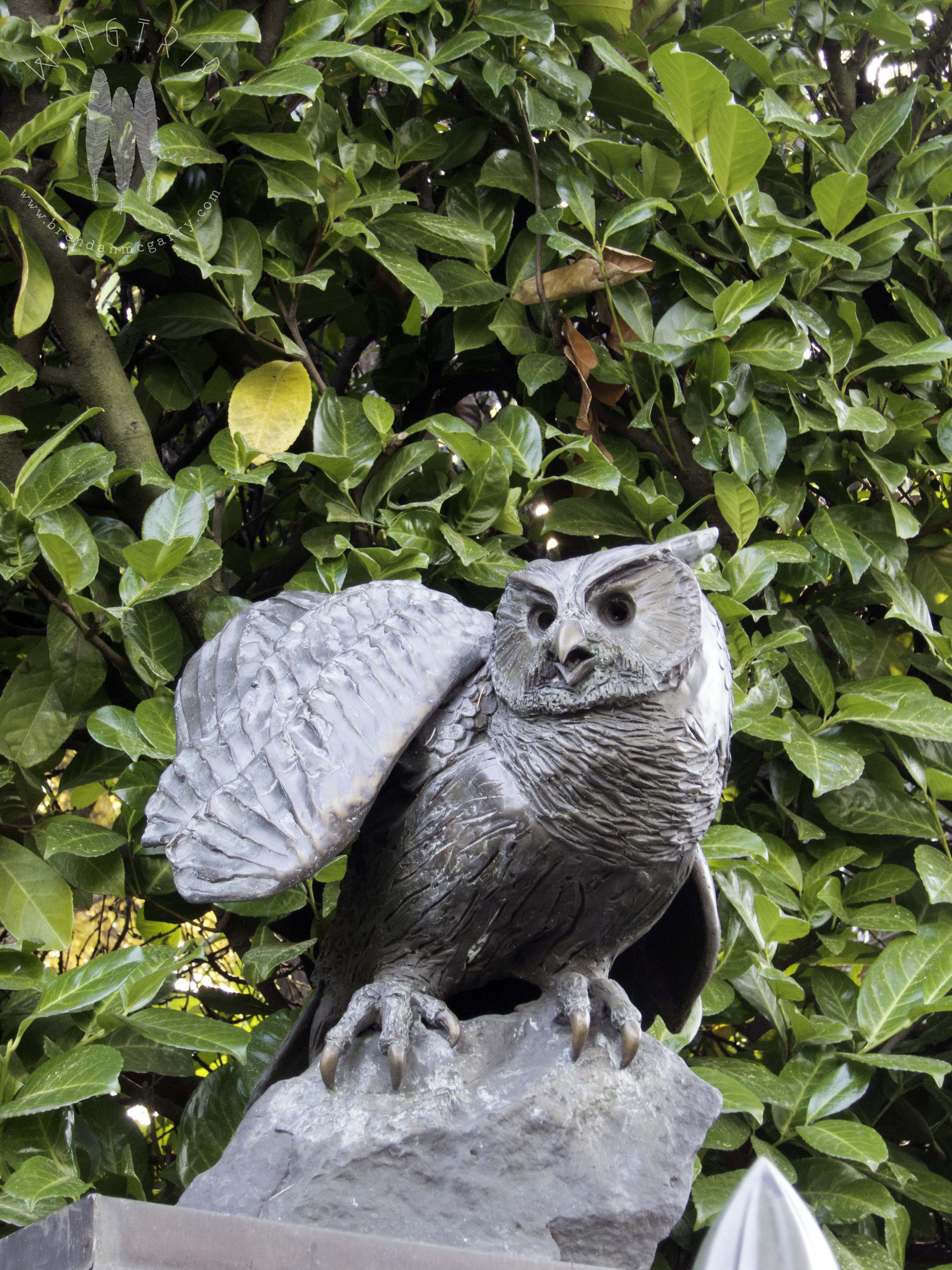
  4. On that note: Art! Art! Art! Art should be everywhere. Especially nature related work. Gate posts topped with owls. Awesome. Giant fish at the Chinese Gardens. Awesome. Don’t take art for granted.A fish out of water at the Chinese Gardens. I want one of these at the entry to my house!
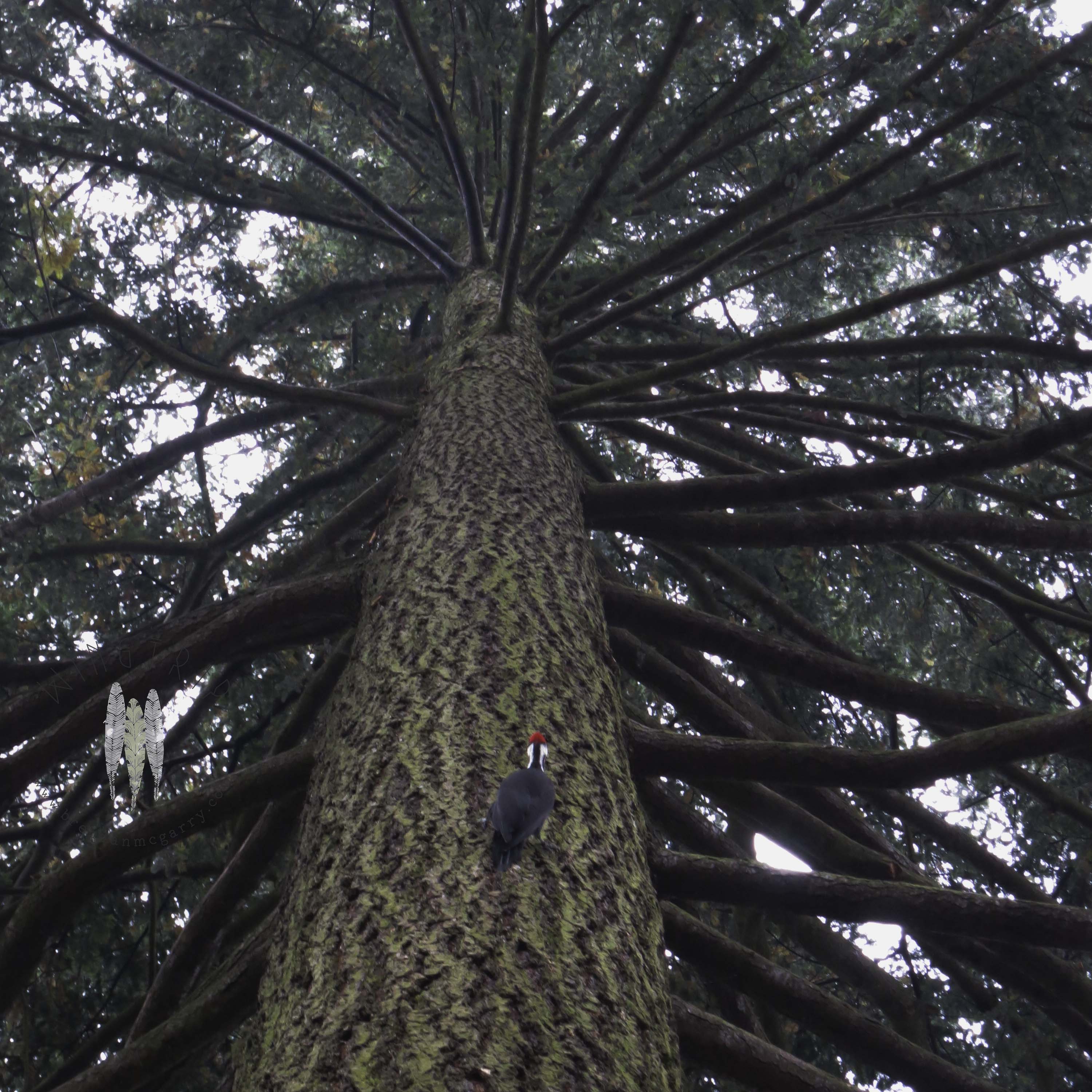
  5. Pileated woodpeckers.The bird that got me into birds, reliant on mature forests, and a big ass woodpecker, gets my heart thundering away ever time. Even their foraging detritus is fondly admired.A Pileated Woodpecker that regularly visits Seattle Audubon in Wedgewood.
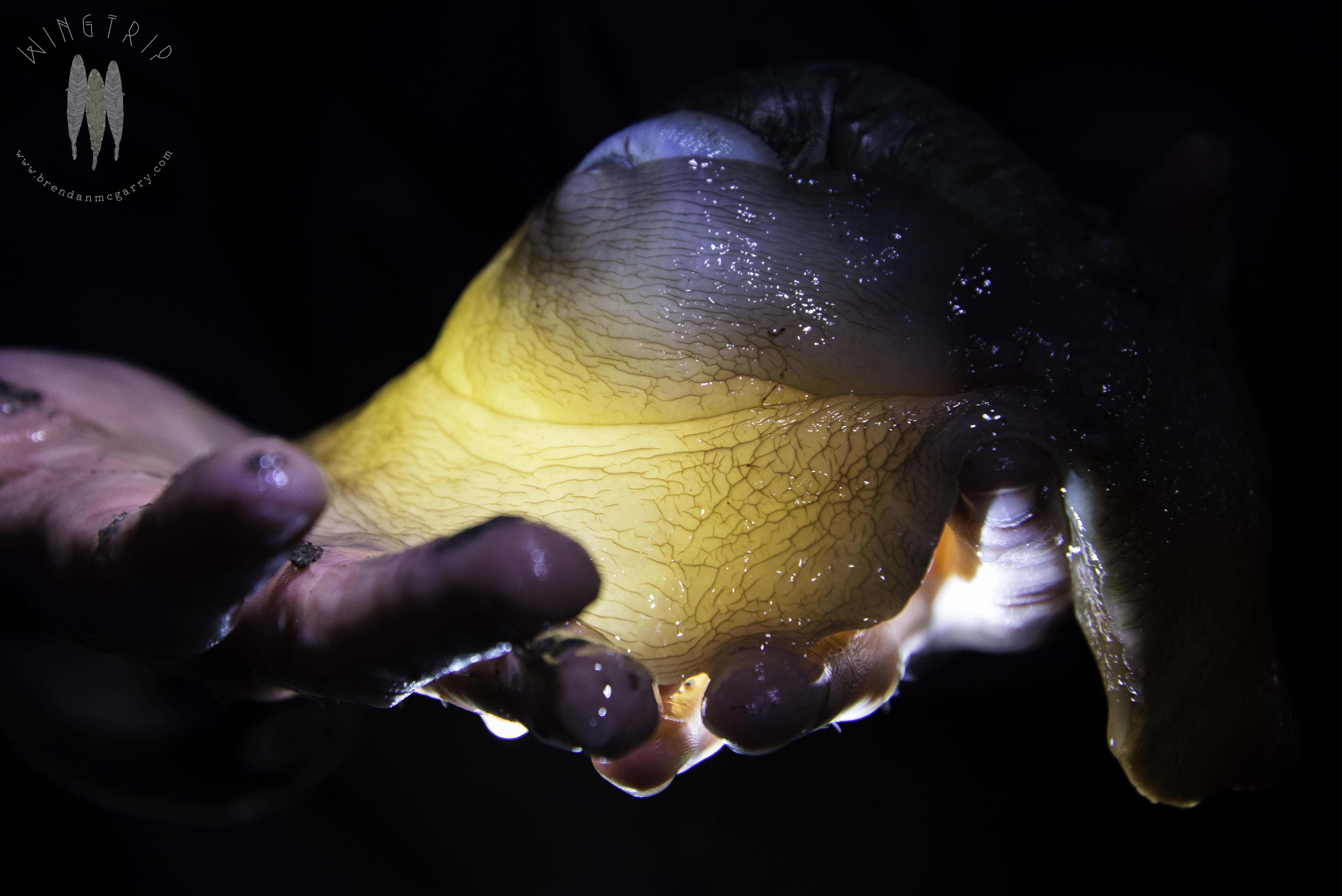
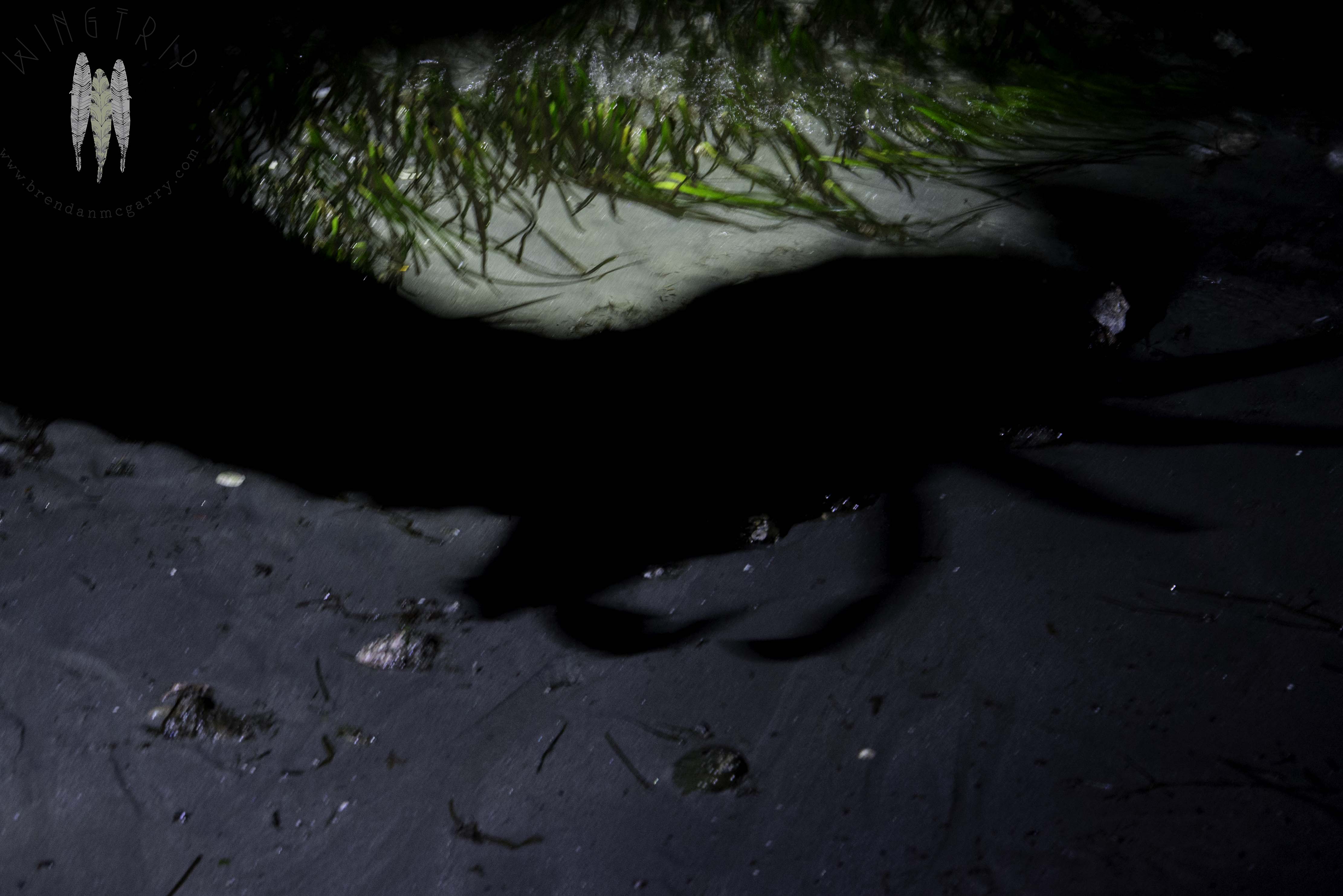
  6. How many awesome animals live in the tidelands of Puget Sound, (despite the water smelling of our gastric leftovers). A low-tide, and a good organizer, brought a group of like-minded individuals together to enjoy these wonders. If I had to admit huge ignorance of an area of natural history, it would be of marine invertebrates. While wholly a mystery, I have now found another thing I want to study. Gelatinous moon snails, wispy sea-pens (which when gently encouraged display biolumenesce), various crabs and small fish, anemones, and alien worm-like little squirts. To top it off, I’ve always read about Great Blue Herons nocturnal fishing in tidal areas. Now I’ve caught them at it, though they didn’t seem quite as pleased with the experience.The predatory Moon Snail (family Naticidae)...seriously they are voracious predators. Shadowboxing with crabs.
  7. A dyed chicken feather in the middle of a Discovery Park forest path. How did it get there? Was it from a colored feather boa? Did a dandy have it tucked into the band of his hat? Was orange significant – I imagine an orange feather boa bedazled Broncos fan running for their life from blood-thirsty Seahawks. Was there an orange chicken here?Just the one feather.
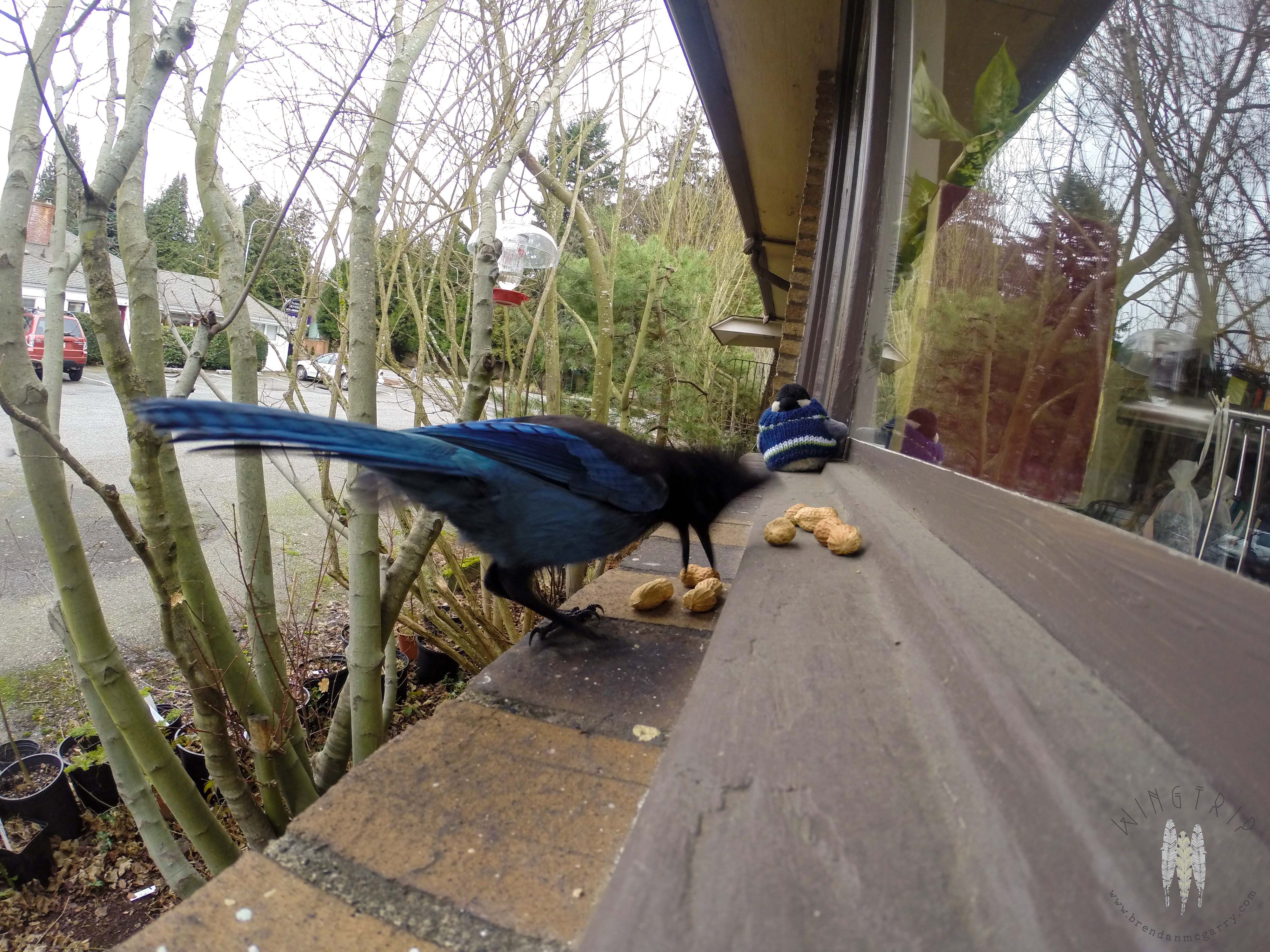
  8. Steller’s Jays like peanuts. One of my co-workers likes feeding them peanuts. They knock on the window for her. Squirrels also like the peanuts. I enjoy trying to take pictures of them remotely with my new GoPro gizmo with the help of Rufes the Bird (though not so successfully). Watching their coy efforts to cache their larder in the rain gutters and in leaf litter out my office window is the best part. I think this would be labeled #Offtask, in the decay (of which I am sadly a part), of language and communication.A Steller's Jay snagging a peanut.
  9. Urban birds of prey. Apex predators in the middle of the city! We’re lucky to have them. Even people who dislike bald eagles have to admit it’s awesome that they nest all over our city (despite their impacts on heronries). Peregrine Falcons, Merlins, Kestrels, Cooper’s Hawks, Sharp-shinned Hawks, Bald Eagles, Barred Owls, Red-tailed Hawks. I’ve seen all these in Seattle, all in the last few months. (But all you get is this crummy eagle photo. Did you know they control the weather? Just ask Thunderbird).A bald eagle at Discovery Park, eating a fish on the Westpoint weather station.
  10. Color in the winter. We have our share of green, but I have to admit the least bit of yellow, red, or orange give me a giddy feeling. A Townsend’s Warbler coming down from the trees is prime example. So are the plants in the Volunteer Park Conservatory or a the Washington Park Arboretum.Tall Oregon grape at the Arboretum. A winter bloomer and a huge attractant to Anna's Hummingbirds.
  11. And finally weather. I write every day (if i’m being good) and usually I talk about the weather at least once. Some people may find this mundane. Wake up! It dictates our life and that of the natural world around us! Seattle is especially good. If you don’t like the weather, just wait a few minutes. Oh wait, it’s still gray.
  12. (bonus: Bare treetops and winter sunsets)
comments 5

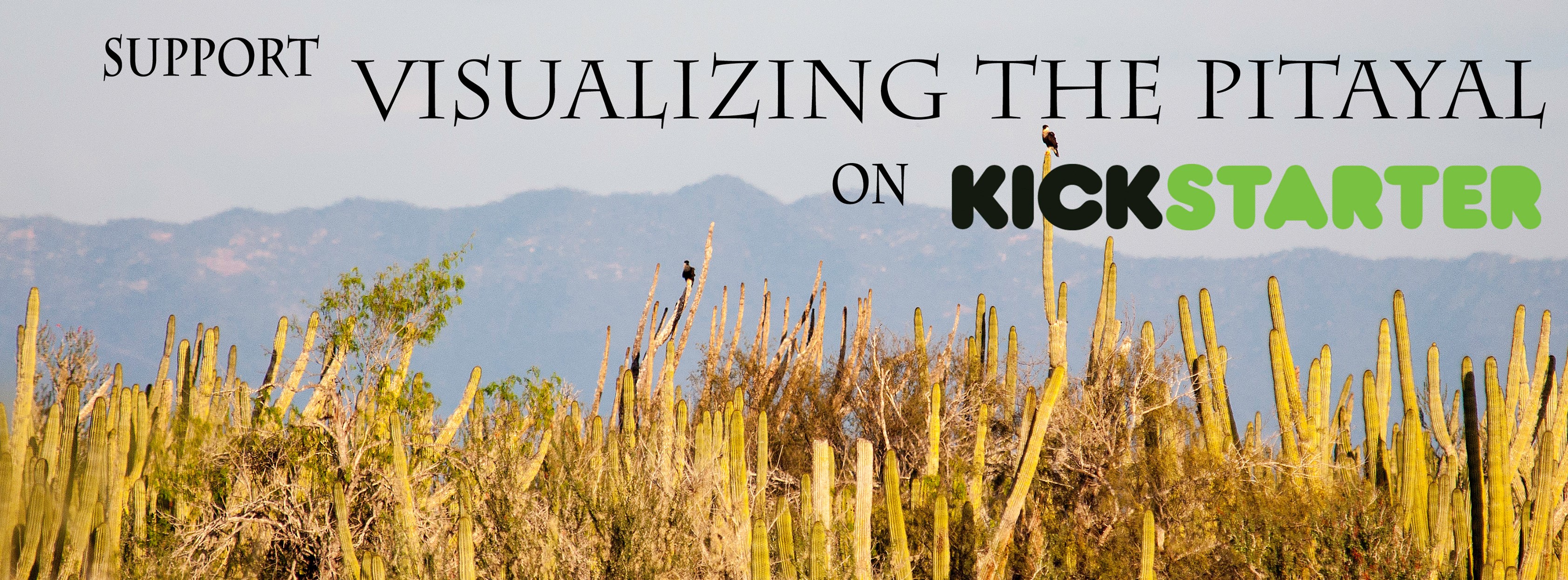
Support Visualizing the Pitayal!

1506368_650025502344_865564815_o

Over the years I’ve been working on Wingtrip, I’ve visited a number of locales in search of birds, nature, and adventure. While I never try to rank my experiences, because I learn as much in a local park as in Borneo, there’s been a few that have stood out. One in particular was in February of 2010, to Northwest Mexico.

We drove the dusty freeway all day from Nogales to a small town south of Navajoa, Sonora and struck west on the beaten earth road in the dark. Sneaking in under the cover of darkness, we were all so tired that we barely took in our surrounding, flopped out our tents, and slept hard. In the morning, I found myself in a wonderland of fog, lichen, and cacti.


The following days at the Navopatia Field Station were nothing short of magical. Some of our group had spent months of their lives as interns at the station, others, like me, had never set foot in the state of Sonora. All of us were convinced this was a winter paradise, full of life. Seeing the biodiversity of the Pitayal, the coastal thorn-scrub dominated by the organ-pipe cactus, I soon understood why my friends went into raptures just thinking about it. This ecosystem found nowhere else in the world was so unlike how most people see the desert.

I explored the scrub, bustling with life, seeing the desert birds in the field station’s mist nets and at dawn and dusk. I sat along side the Agiabambo estuary and saw how many ducks, terns, herons, and shorebirds called it a full or part-time home. I paddled out to the islands and the mangroves and listened to mangrove warblers and the constant clacking of the crabs that lived about the stilted roots. In short, I was thoroughly captivated.


The locals, who alternate between this winter fishing village on the saltwater and further inland during the insect heavy summers, enjoyed a truly special place. However, it was also clear there was no guarantee it would be around for many more generations to come. Industrial agriculture and aquiculture threatened to turn the vibrant desert and waters into wastelands. That was the reason the Alamos Wildlands Alliance (AWA) was working at the Navopatia Field Station and had been for 8 years at the time of my visit.


So I vowed to come back and by the time that opportunity arose, I decided that I could do more than simply visit for fun. I could make myself useful. A plan was hatched and this February I’ll be visiting Navopatia to create a portfolio of images that will aide AWA in their fundraising, their bids to convince those in power of the necessity of an intact landscape, and of course, in educational outreach for locals and those abroad.


The reason I’m writing about this here is that I need your help. One of the age old traditions of photographers, writers, and adventurers is finding sponsors for personal projects. I am doing all this work for free, because I believe in AWA’s work and because I want to use my talents to help conservation efforts and to spread knowledge. That said, I can’t completely self fund this trip. Ten days ago I began a Kickstarter Campaign and I’m hoping you’ll support it. I’m not asking for a lot, I’m asking for enough to cover costs.

When I’m finished with this project I’ll come away with photos and video of the landscape, the people who live there, the work AWA is doing, and the animal and plant inhabitants. I’ll be using a large number of devices at all hours of the day to create vibrant imagery for you to enjoy and to help AWA. I hope you’ll support an artist with a journalistic bent, a non-profit working to save an endangered landscape, and most of all the Pitayal itself. Thanks for your support!


comment 1

A 2013 (Photographic) Year in Review

A Gray Jay and I share some airspace.

Another year has passed and with it, more images and words have been published on Wingtrip. I’ve been busier and seen far more than I realized in the past year. This will be the third time I’ve done a photographic year in review. Reviewing is valuable because it allows me to contemplate my never ending exploration of the natural world. However, for you all, it’s a nice summary of what’s happened on Wingtrip in the past year in photo form. Enjoy them! (You can see my entire year of photos here on my flickr site).

In January I visited friends in Oakland, but managed to see the Cal Academy of Sciences. As someone who wants to spread the word about natural sciences, they are an inspiration. And the museum allows for great photo opportunities with sea nettles.

I’m always amazed by the wildlife that can be found in urban Seattle.

A bad photo of a pretty amazing bird for Southern British Columbia. This Red-flanked Bluetail showed up last winter in Richmond, B.C. I still count birds, but have mixed feelings about the whole thing.

Falconry is a sport I’ve never wanted to get fully immersed in; it eats your time and becomes your life. However, it’s fun to tag along on adventures with Simone and her Red-tailed Hawk, Chase.

I spent a good deal of time on the Olympic Peninsula working on an expansion of Seattle Audubon’s Puget Sound Seabird Survey.

In Puget Sound we’re lucky to have so many amazing waterbirds. The bulk of the brant who breed on Melville Island, in the Central Canadian Arctic, winter on Puget Sound. I’ve no more eloquent to put it, that’s awesome.

When I hear a place described as a county park I never get too excited. However, Salt Creek County Recreation Area outside Port Angeles is a beautiful spot for tide pooling.

In April I helped lead a group of eight high school students in Seattle Audubon’s Birdwatch program on a trip to South Texas.  I always come away exhausted, but these trips are incredible. I even passed my (long overdue) 600th ABA mark with the Aplomado Falcon below (I’m tired of explaining bird listing, so just know that this is a pretty good benchmark). I started to write about it here but didn’t finish because I was frustrated with the potential for the program being cut (thankfully it didn’t get the axe). Finishing the writing is now a goal for the coming year.

This millipede was sharing the cliff I sat on, waiting with a few of the more patient high schoolers to see Black-capped Vireo. These birds are endangered, cryptic, and take some time to see well. As a pair below me circled around their territory in a series of laps, we had time to contemplate our surroundings in Lost Maples State Park. Immersing oneself quietly in a new place is a great pleasure but difficult to find patience for.
No trip to the Edwards Plateau is complete without visiting a bat cave. This one is in Concan, Texas. Seeing such large numbers of animals in their daily routine is always stunning.

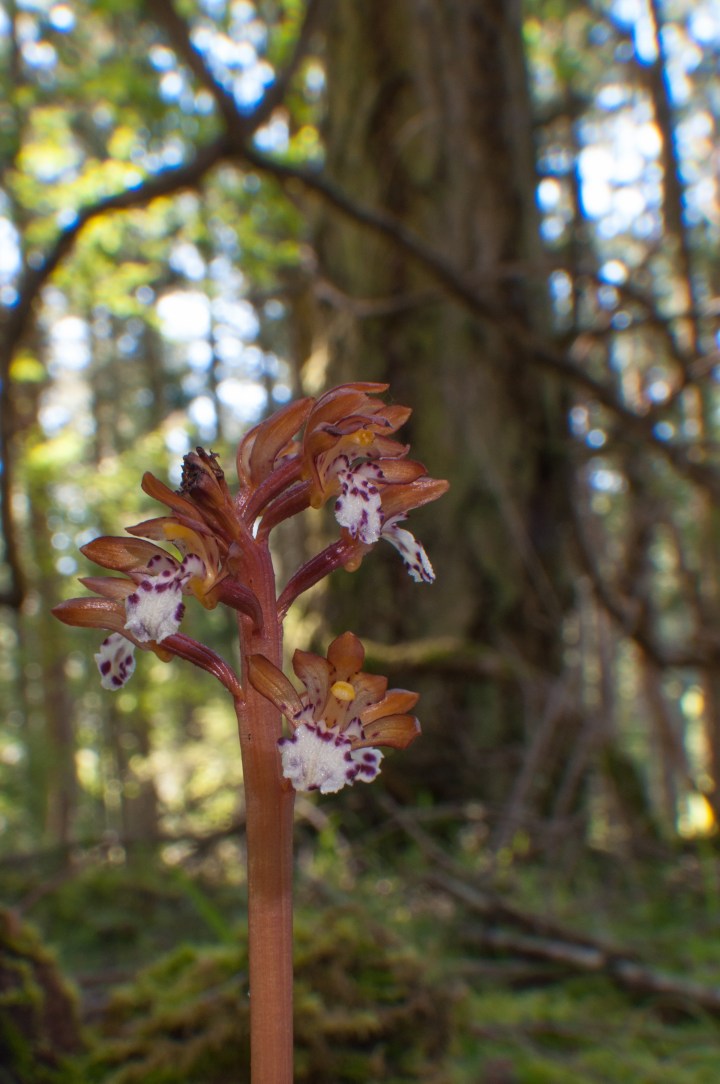
Even though I don’t often write about it here on Wingtrip, I visit the San Juan Islands frequently. This is part fun, part work with a friend’s farm starting on the island. I can’t help but fall in love with a place so beautiful as Shaw Island; with clear nights and coralroot. (Spotted coralroot – pictured below – is a parasitic orchid that doesn’t photosynthesize [no green = no photosynthesis] but instead relies on snagging energy from the network of (fungal) mycorrhizae below the ground, which are in a symbiotic relationship with the trees above them. What a world we live in!)

Tyler Davis is a good friend and a wonderful birder. Along with our fellow guide at Evergreen Escapes, Penny Rose, we had a really long day of birding. A big day (one of two I did this year). Sure, we didn’t do so well, but it was still fun!

Every year I try to head to a gathering of like minded people at the Malheur Bird Observatory. I learn something new every year. Like how dwarf, a dwarf monkey flower is. What a newly hatched Killdeer looks like. And finally, how to take a decent night shot of a scene I’ve been a part of for quite a few years.

I began writing for Seattle’s Capitol Hill Times in the past year, which has taken some steam out of Wingtrip (You can see my images and words on a broader array of topics relating to the urban environment on their site). That said, they tend to let me write about nature, especially if it’s urban. This is a Columbia tiger lily planted in Seattle’s Pollinator Pathway.

Clark’s Nutcrackers are members of a favorite family of mine: Corvids. I wrote about them earlier in the year. I enjoy them anytime I encounter them.

No Northwest summer is complete without a couple visits to Mt. Rainier National Park.

Nor a view of Rainier from another mountain in the Cascades.

We have mountains, we also have the sea. Both are entangled, folded into the metamorphic bedrock of my imagination. These purple stars were along Hood Canal. They make want to scream “These are amazing creatures! How can you people stand it!?”

I can’t fathom living without wilderness. Being able to visit wild places is a massive privilege. No year would be complete without facing a land where man doesn’t (obviously) dominate.

Sooty Shearwaters happen to be one of my favorite birds. Washington’s Pacific Coast is an excellent place to witness their migration.

Simone and I “rescued” a Barred Owl this year.


And like any year, I strive to see the unseen, to visualize the natural world in new ways.

I barely left the U.S. in 2013 but no matter. There’s lifetimes of stories to tell here. Going farther doesn’t mean you always see more (though it can and I will). Have you dug in the dirt lately and realized how little you know of the organisms that dwell there? In contemplation of the year past, I realize I have no resolutions. No matter the time of year I am learning, making art, and trying to improve the world, in short, by doing the things I love. I did a lot in 2013, despite feeling it was slow period. I think that means I can do much more without a slip in enthusiasm. Here’s to another year of exploring the natural world. Happy New Year!


comments 2

Sea Changes: Birding on Washington’s Coast pt. 3

“The sea is a really nice thing, isn’t it?”

“Yeah, it is. Makes you feel calm.”

“Why is that?”

“Probably because it’s so empty, with nothing on it” Hoshino said, pointing. “You wouldn’t feel so calm if there was a 7-eleven over there, or a Seiyu department store, would you? Or a pchinko place over there, or a Yoshikawa pawn shop? But as far as the eye can see there’s nothing – which is pretty darn nice.”

Haruki Murakami, “Kafka on the Shore”

The rain started sometime during the night, making me thankful I decided to put a tarp over my hammock. It wasn’t a heavy, stormy rain, but a rain of sea fog, the kind squeezed from air and dripped from the trees ceaselessly. The kind that would have soaked my sleeping bag just slowly enough to not notice, until I was shivering at 4a.m (you might guess this has happened before).

Kalaloch campground is a place of personal mysticism. At face value it’s simply a campground, not very interesting, up against highway 101 and short, sand cliffs on the ocean. I would probably never think twice about it, having seen hundreds like it with the same spartan, damp bathrooms, meticulous lists of rules, and the same people who sprawl about the best spot in their fantasy trailer park of beer cans, ropes, tarps, barking dogs and sniveling children. Forgetting that, Kalaloch is where I was struck by my lifelong passion for birds.

The story itself is a little too perfect, verbose in my telling, and I’ll save it for elsewhere. Secretly I’d hoped we’d stay the night in the same camping stall where I came face to face with a Pileated Woodpecker. The Sitka Spruce seemed taller than before, which I realized was possible, considering it was twenty years since that summer vacation. I was a bit crestfallen when the approximate space was filled by a large camper van, so I decided to not delve too deeply into memories. Besides, this wasn’t meant to be a time to reminisce but to go birding. Forgoing breakfast for later, we rose at daybreak, hastily packed up, and headed North.

Ruby Beach might not be the best vantage for seabirding, but it is definitely a beautiful place to explore. We arrived to the quiet section of fine sand and immaculately rounded stones, appreciating the stillness of the morning mirrored in the freshwater lagoon. The sea stacks, broken off hunks of land carved from the mainland by time and waves, wore skirts of fog.

Someone was camping down between the drift logs, which was a surprise because the parking lot was empty (and it’s not strictly, allowed). We settled not too far from the tent, finding a suitable log to sit on. Adam, much more businesslike than myself, got right down to scoping for birds. I fired up my stove and got water boiling for coffee.

Breakfasting on bread and cheese, coffee in hand, I got around to earnest seawatching. The gray fog lingered, imperceptibly receding, revealing reefs and breaking waves. The shearwaters were out there, still streaming by. I thought about how many days out of the year they spent coursing back and forth against the West coast of North America and fantasized about being able to observe the entire year of their activity off Washington. Having the patience and luxury to spend that time would certainly provide personal insight at the very least.

DSC_6319

A pair of Peregrine Falcons flew by, no doubt living a successful life of eating seabirds. The slender male first, the bulky female second, they casually winged down the broken coastline. Their presence, despite the fact they are among the most common raptors in Seattle, finally gave me that warm feeling of being in a place not actively augmented for people. We’ve visited, but we’ve never stayed and the rich profusion of life told that story.

Scoters, gulls, grebes, and alcids dotted the ocean in front of us. A Sea Otter lazed about on its back. Black Oystercatchers blended perfectly with the rocks until their red bills rotated into view.

I am always quite focused on vertebrate life, but I knew that the foundation for all these creatures I observed was atop thousands of complex interactions between things we couldn’t see with the naked eye. You could easily feel insignificant in the face of this web of life and you should. You should think about all that you don’t know more than what you do. Could I name the crustaceans beneath rocks I overturned with careless feet? No. Did I care that they were there, when I noticed them? Yes. The naturalist’s compulsion to name is generally a good one, but it shouldn’t distract from an appreciation of form and function regardless of which dead white guy its named for.

Before I noticed the people in the tent rising, I knew they were contemporary hippies. From Alaska they told me, headed to San Francisco, whichever way life took them. The old folks who creaked down the path to stare at the sea gave them wide berth, as did Adam, but I wanted to know their story. I’ve always considered myself an introvert and shy, but I’m never troubled by a friendly conversation with strangers. Adam and I both seemed to enjoy this because we gravitated towards the interaction. Some people find a random approach off putting and you can always tell when they do. What’s more off putting is standing in proximity to other people, in the presence of a wonderful place, and not acknowledging them with a simple smile or joyful comment.

Ready to move on, two things thrust me back into modern human existence. The first was a training, for what appeared to be negotiators (like those who speak with the hostage holders), running an extremely noisy generator in the midst of their huge vehicles (they all also happened to be huge people), in the middle of the parking lot. The other was that when I rolled down my window to say goodbye to the hitchhiking hippies, regretful that I couldn’t offer a ride, the winder motor failed and my window no longer rolled up. Were these signs we shouldn’t head back? Maybe I could let Adam hitch back with the hippies and I could just stay there and eat starfish and kelp and live in a wave carved cave.

We made a couple more stops, talked to a couple more people, and saw many more birds. Destruction Island was a beacon for birdlife and a high vantage along 101 gave views of more seabirds. Several Black-legged Kittiwakes (the best gull name ever) flew by, distant but diagnostic. More Sea Otters were out in the rocks surrounding the island and a section of sandy beach was piled with lounging Harbor Seals. I remembered Roger Tory Peterson’s telling of his experiences on Destruction Island during his “Wild America,” jealous and grateful for his words at the same time.

The final conversation we had while scanning the rocks at one of the numbered viewpoints (what an absurd way to distinguish such beautiful places), was with a couple from Minnesota. New to the birds here, they were curious about what we could see, and as it turned out they too were birders (in a casual sense). We had a pleasant conversation, discovering we had mutual acquaintances and that we all loved ravens (they fed them at their home). Parting, wishing them luck and advice in their travels, they told me they’d look for my books in the future. My response was to blush and mumble a thanks. The random kindness of strangers in America is often startling.

One final stop was at the “Big Cedar Tree;” a signed attraction. Like any of my travel companions, I subjected Adam to photography hi-jinks, climbing about the twisted tree for a few shots. Cedars this large smell as much of decay as they do of their fragrant oils, and this mangled behemoth was carved by plaguing rot, but still seemed elegant and powerful standing against time. It seemed familiar, so familiar that when I got home I looked through some old photos and discovered an out of focus photograph of my dad, my childhood friend Mathew, and I standing at the base of this same tree twenty years ago. Nothing seemed to have changed, and likely not much will for another twenty. I’ll make sure to come back and check.