comments 2

Seasonal Notes from the San Juans: June

Like many writers, I keep a (sometimes) daily journal about my life and the natural history events, largely bird related, that I experience. The following blog posts, organized by month are excerpts from my summer living and working the San Juan Islands of Washington State. Enjoy!

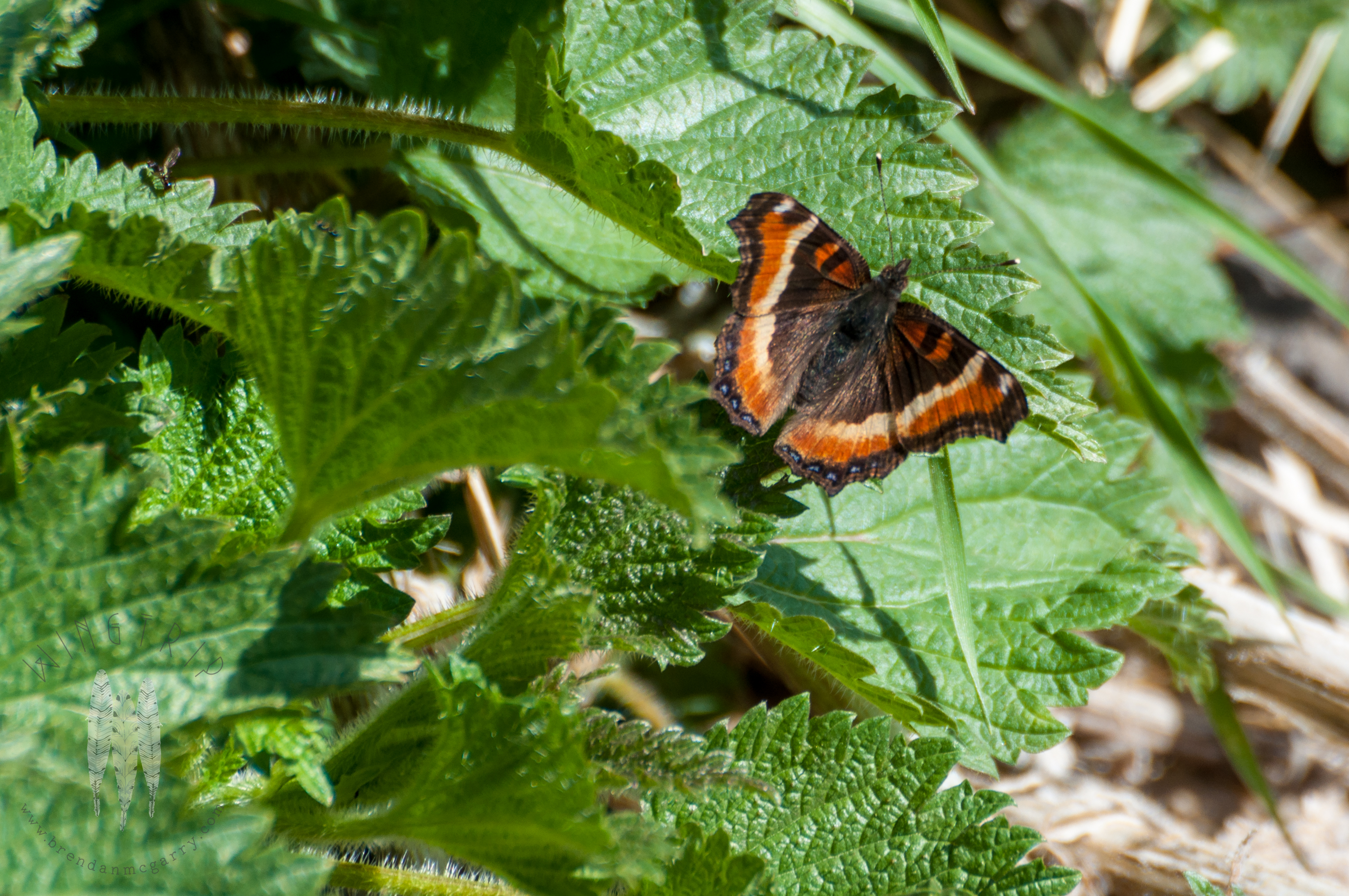
6/1 – I’m sitting watching my landlord whack the crap out of nettles in the yard with a grass cutter. I’d been waiting in the hopes that Milbert’s tortoishell would make use of them as a host plant. Or that I could make some food or drink with their leaves. Or perhaps both. Instead they’re being beat down for no other reason than apparent proximity to the house. Why not weed the strawberries or do something else a little more productive? Why do people have this insatiable urge to control and restrict? These are but a small patch of nettles on the island, not real tragedy, but I was looking forward to their waving green flowers and their attending butterflies. Instead I’ll watch them brown as the chloroplasts fail without vascular support.
Brendan_McGarry_120415_00509

A Milbert’s Tortoishell (Aglais milberti) on stinging nettle.


6/2 – I found a Northern Alligator Lizard in the wood pile! It amazes me that they’re on Shaw Island considering our isolation from the mainland and the climate.

6/3 – Technically it was day off, but I decided to join co-workers (soon to be friends), on a lap of alternatives to my company’s typical 5 hour tour, in the event of extreme weather. We stopped for lunch at what would become a of familiar details, from a nicely seat shaped log to a boat hammered to pieces. I was too green to be conscious of radio chatter nor the boats slowly creeping up along the coast from the South (only once was I not so vigilant). Before I knew it my companions and I were tossing our things into the boats and trying to get to a better vantage off Kellet Bluff on the South end of Henry Island. Doing the responsible thing in the face of marine mammals, we rafted our boats together and waited. A spyhop. A breach. A large wavering flag of black. A flash of creamy gray saddle patch. The whales, resident killer whales, orcas, whatever you call them, were coming right toward us. We sat and let them pass, within meters. Before they sped on, in search of salmon who followed the flooding tide North, they breached. First one, surprising us all with the burst of sound and motion, and then two more simultaneously. Now, in November, this remains the best sight of my season. We reeled from the experience the whole way round Henry back to Roche Harbor.

6/4 – Paddling between Roche Harbor and Pearl Island on a regular basis allows me to get to know the regulars. Surf Scoters will be gone soon, but I suspect the Harlequin Ducks will last longer. Bald Eagles nest nearby in their typically brash style, in the difficult to miss, tactless fashion only a large predatory bird can manage. Turkey Vultures surely nest near here too, though I so infrequently consider or see their nests despite my appreciation for them. Both will come and go as the seasons change, the vulture generally escaping to the south, though a few remnants will linger in the warmish, dryish bubble of the South end of Vancouver Island and will occasionally drift over to the San Juans in search of better quarry. The eagles will follow the fish and if the fish are here or there, once they’ve finished breeding or at least attempts to, they’ll be where the food is.

Unexpectedly easy to observe from my water bound vantage are the Purple Martins, the House Wrens, and the Olive-sided Flycatchers. Certainly there’s no reason to not expect any of them. The martins appreciate the homes we’ve provided in the harbor and cast high about over the white boats, gurgling away, birds that superficially look more starling than swallow on the wing. House Wrens are happy to make use of the open woodlands afforded them by human clearing and a drier climate than many other places in the Western half of Washington state. And why should I not expect to hear the constant calls of Olive-sided flycatchers posted on their favorite treetops over the slice of my paddle? The forest creeps right to the precipice of rocky shore, now I realize there’s little reason all these characters and more aren’t obvious even in a kayak.

I’ll look forward to their revolving acts in the coming months.

6/7 – I went to sleep hearing the bleating of the first Common Nighthawks and dreaming of paddling by enormous seabird colonies in Iceland, as I’ve heard tell of from Leon and Shawna from Body Boat Blade. Infrequently do I meet people I find immediately enlivening and inspiring. I realize that while I enjoy being good at things, I have little interest in being an excellent paddler for any other reason than the fact it can take you great places.

6/9 – Talked to a birder recently who said “there’s not much good birding in the San Juans.” What he meant was that we don’t have a hugely diverse landscape, despite a few pockets of different plant and animal life, we don’t have the landmass to afford lots of species. That’s all well and fine but I thought about that attitude and what it really means. If we only looked at the places with absolute, unequivocal richness then how would we really know what else is going on? I know very few people watch birds on Henry Island and while there are few chances that there’s anything magnificently unique there, there could be surprises and even baseline information is a good thing. Most of these islands don’t get regular traffic from birders. Phil Green on Yellow Island comes to mind. He makes eBird lists frequently on his little rock, providing data normally unavailable. I find that admirable.

6/9 (Again) – I didn’t end up working today, so instead I headed out for a tour of San Juan Island. I wiled away a few hours at San Juan County Park, enjoying the sun and free time. Out in front of me was one of many rocks and small islands that make up the San Juan Islands National Wildlife Refuge.

As much as the Black Oystercatchers probing the barnacles may appreciate a bit of land segregated from aimless tourists and dogs on the beach, I find these designated wildlife areas a bit of a joke. Some most certainly do provide habitat and are important resting and breeding locations for birds, mammals, and a bevy of marine invertebrates. However, mostly what I see are places that people couldn’t find a use for, meaning that the real girth of uninterrupted habitat is in places where people have gobbled it up.

“But here, lets give these marginalized rocks to the birds, they’ve covered them in shit anyway.”

It’s not different across to Vancouver Island, where I can see coastal dwellings squeezing the shoreline, reserved for the the elite. The water between us may be wild in one sense, but it’s plied by tankers and container ships day in and day out. Down South the only true wilderness I can see, still under threat from our mangling thoughtfulness, are the shrouded Olympics with a window into the upper Elwha and the great glaciers and peaks she flows from.

Funny to have such glowering, cloudy thoughts on such a sunny afternoon.
Brendan_McGarry_140609_00066

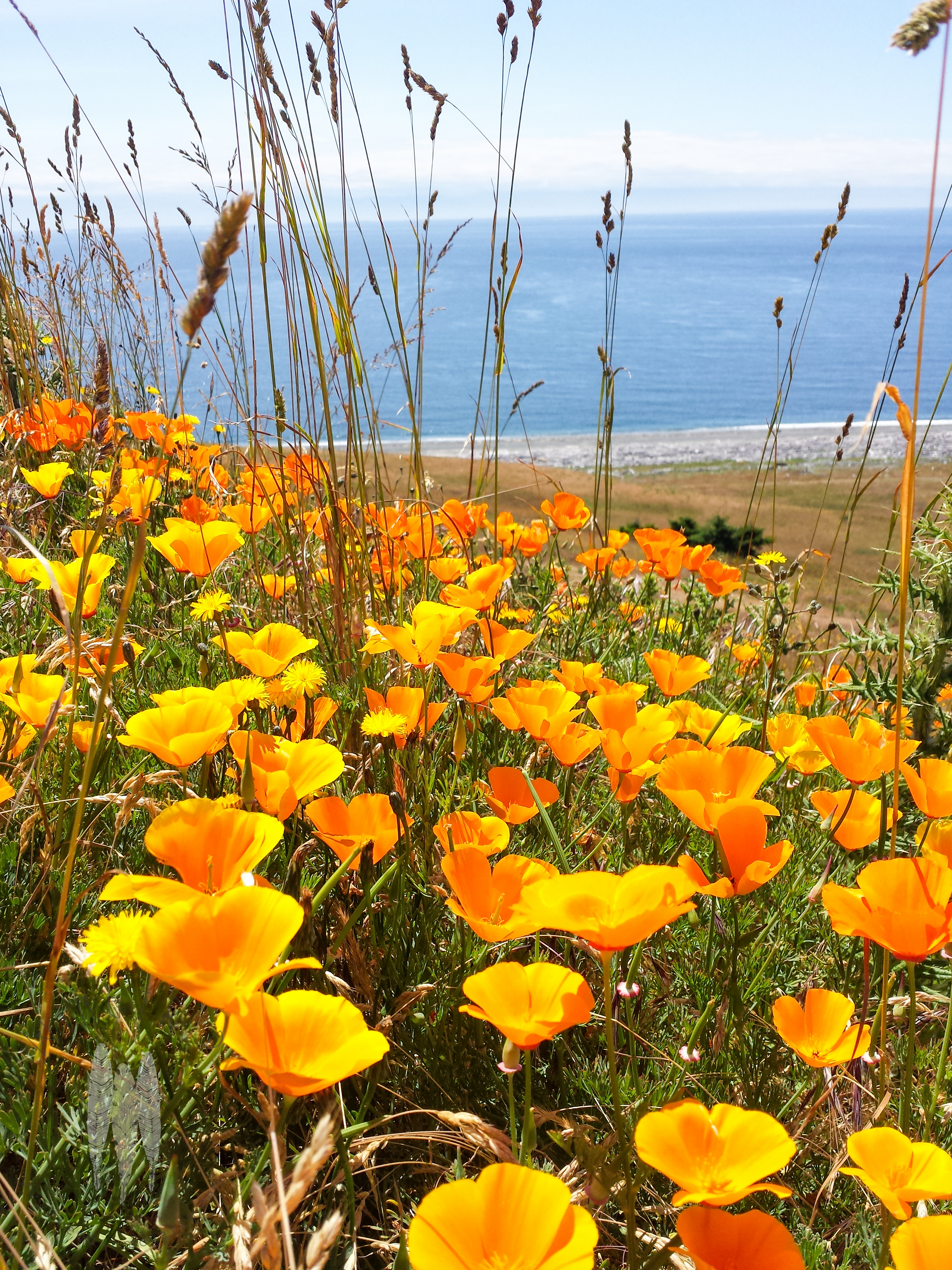
California Poppies (Eschscholzia californica) above South Beach on San Juan Island.


6/10 – Beach Verbena and Beach Pea are in flush on the South end of San Juan Island. I watched the broiling waters of Cattle Point in ebb as 300 some gulls sat unconcernedly on their breeding islands, the Whale Rocks. On the West side a Harbor Porpoise sped by in the ebb. I’m getting a better feel for this place.

Talked to some aging tourists. While I had a good chat, what I really wanted to ask them was why they’d spent their lives toiling so they could finally (financially) afford to visit places they’d spent their whole lives dreaming about, only to be able to creak about maintained trails in a half lucid state. That sounds harsh, but I wondered if it was worth it to them, because that’s exactly what they’d done. I probably should have asked.

6/13 – See something. Don’t know it. Go home. Read about it! Do that over and over. Write about it. Photograph it. Hope someone pays attention.

We had a really low tide yesterday and it made for great intertidal action along the West side of Henry. Tons of stars. Gumboot Chiton. Snails galore. Direct quote from the journal: “Up in the air, I’m mystified by the lifeforms below.”

6/15 – Sitting on the porch I wrote down the birds I observed in the yard. With 22 species evident, I have now seen 51 birds in this open patch of woods. The male Spotted Towhee is still in a ceaseless battle with his reflection in the kitchen’s big picture window.

6/17 – Between limping from a silly soccer injury and trying to be a good guide to my current charges, I managed catch a glimpse of what I am certain was a Black Swift on Young’s Hill. I’m also certain I have no idea why one would be here. I see no storms that would push them from the high altitudes on Vancouver Island nor in the Cascades. Still, I can only trust my eye and this glimpse of a speeding black parentheses was only momentary.

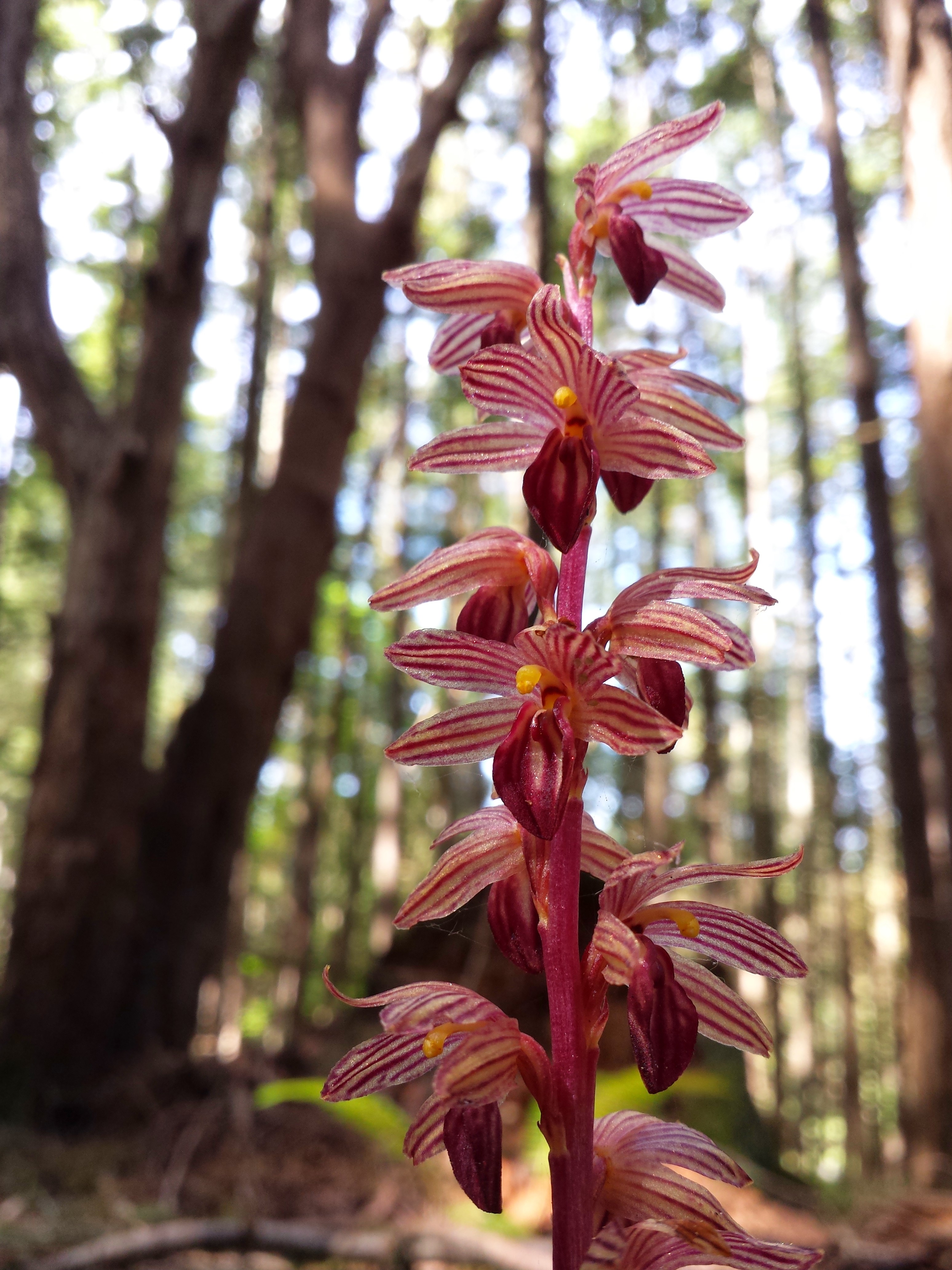
The one-flower indian-pipe or ghost plant (Monotropa uniflora) is just starting to push through the mulch on the forest floor. As we ascended from the oak woodlands currently overrun with twisting vines of coastal manroot (Marah oreganus) (a wild cucumber), these plastic looking protuberances were just visible enough to point out. I thought about how this plant, totally unrelated to a similar looking plant, the phantom orchid, has developed a similar method of getting sustenance by being a saprophyte (or rather a mycoheteroph). If you see no green, there’s slim chance photosynthesis is happening.
20140522_103533_5

Striped Coralroot (Corallorhiza striata) is another orchid that doesn’t photosynthesize but instead is a parasite. No green no chlorophyll.


I love the bat boxes at English Camp. It’s like someone took a tamper and squeezed them in as tight as possible.

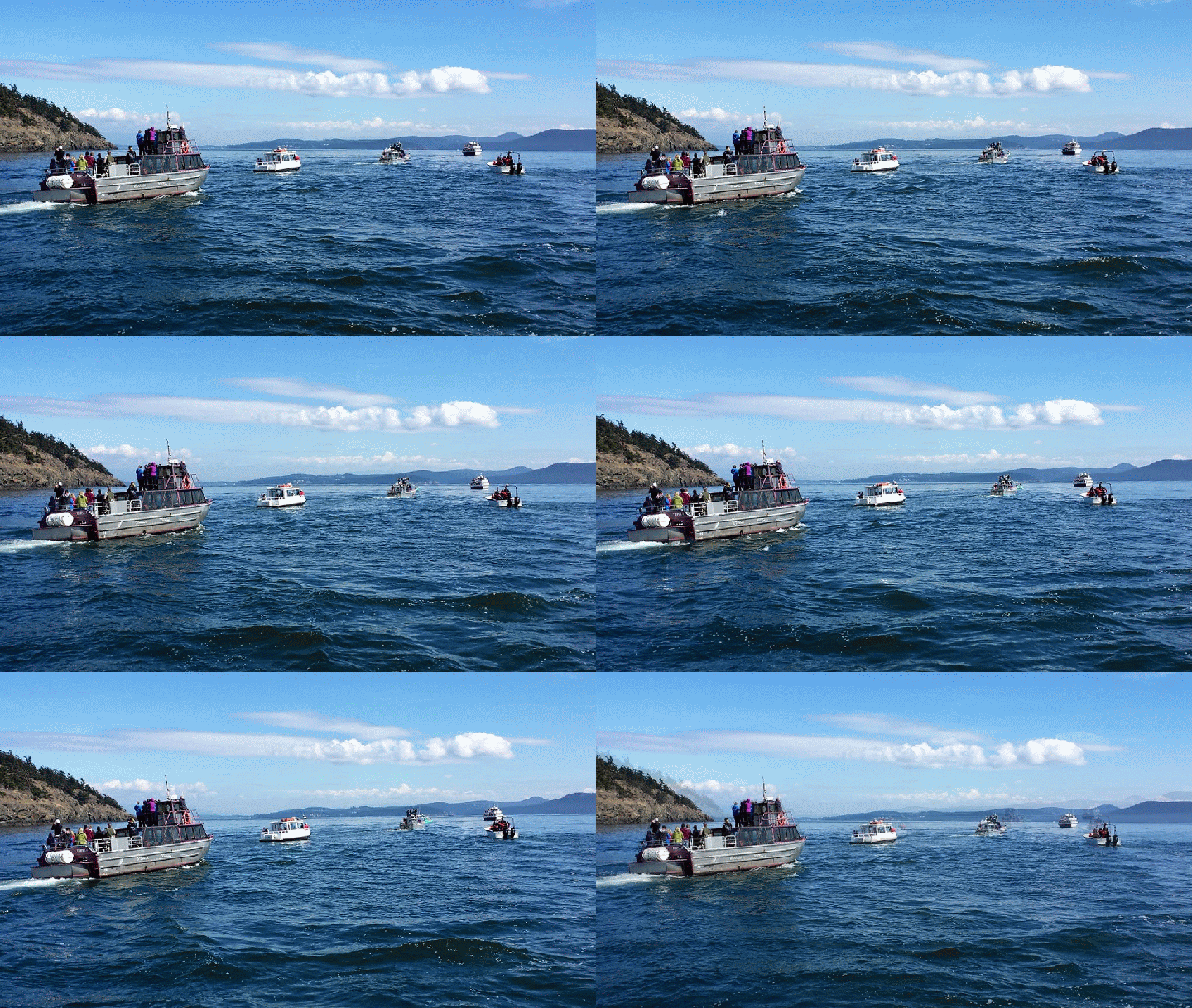
6/20 – This same group, a quite enjoyable troop of hikers from California, another employee of my company and myself are all standing at the Cattle Point lighthouse when my scanning binocular view takes in a strange shape wobbling in Haro Strait. A male orca’s dorsal fin! This is much more fun than simply locating them by following the ridiculous stream of whale watching boats in their arc of lawful observance that still screams paparazzi. We had a couple nice breaches. I get why people are so obsessed with them, enough to have convenient notions that their trailing doesn’t influence orca behavior. I’m glad people get education about the whales by boat and get to gawk at some megafauna the same time. I still don’t feel quite right about all those boats at once.

Brendan_McGarry_140901_00003

A male orca (T-19b) from a distance. Even from afar they’re stunning animals.


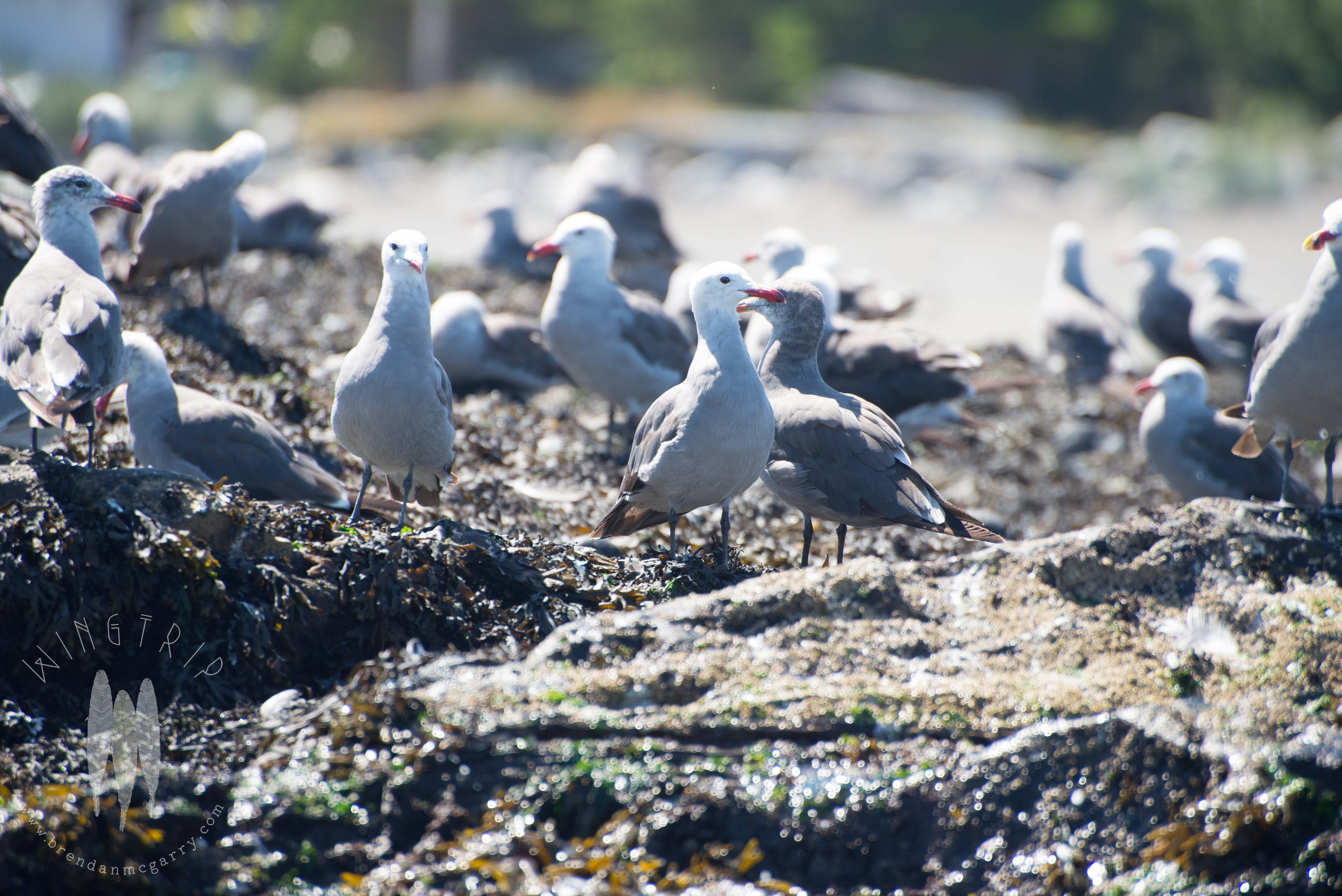
No one else cares (or so I decide without telling anyone), that I’ve started seeing lots of Red Crossbills lately. And I had my first Rhinoceros Auklet at Cattle Pass (I wonder if they are always out in the Haro, fishing for their young back on islands in the Strait of Juan de Fuca), while watching the whales. And my first Heermann’s Gull flies by. I stick to the birds, I can see them with much less intrusion on their lives.
Brendan_McGarry_140726_00089

Heermann’s Gulls (Larus heermanni) on the North side of Stewart Island.


6/22 – The longest day passed, my only time to write and think is on the ferry. Work is full steam ahead, so I relish these moments between Shaw and San Juan. Generally I try to decide where I sit based on what I want to see. Do I hope to catch a glimpse of Baker and later South to the Olympics in early morning light? Or do I want to see the Wasp Island scattering along Orcas and look North into San Juan Channel and see the distant Gulf Islands? (More importantly, are there pretty girls on the boat; in the same paragraph in the journal I also ask if I am becoming a misanthrope.) I won’t be digging in the dirt much this summer, that has become apparent, so I’ll have to settle for scarce moments to write and splashes of salt water as substitute for dirt under my fingernails.

6/28 – The past six days I was slave to work but I was able to step foot on two new islands. Gossip Island is one of the rocks that is owned by the BLM where we routinely will eat lunch en route to and from the other new place Stewart Island (as I’ll come to know well in a few weeks). We camped at Prevost Harbor on the North side of the island, with Pender and Saturna Islands looming from across Boundary Pass.

During this week I felt the monotonous drain of crossing a large body of water in a slow boat. The distant shore never seems close until you are on top of it. I heard the collective breath of hundreds of Harbor Porpoise foraging in the tumult of eddies below Lovers Leap at Turn Point. I listened to Western Screech Owls and hoped that the screaming young Barred Owls I could also hear would never find their younger cousins a tempting prey. I found myself resenting people who complained about bird song early in the morning and with no outlet or room to question such thoughts, I grew more resentful.
Brendan_McGarry_140726_00102

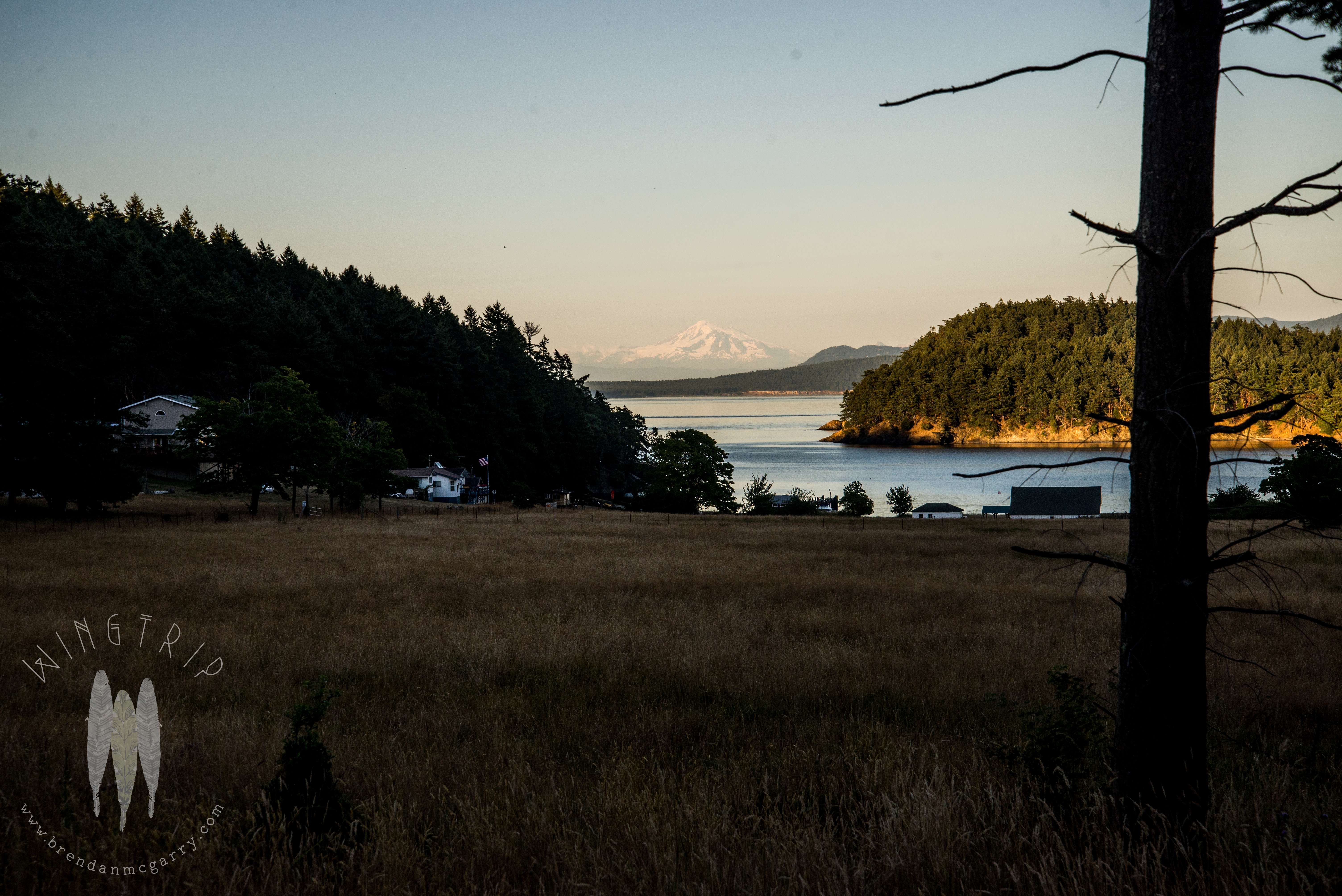
Looking toward Mt. Baker from Prevost Harbor on Stewart Island.


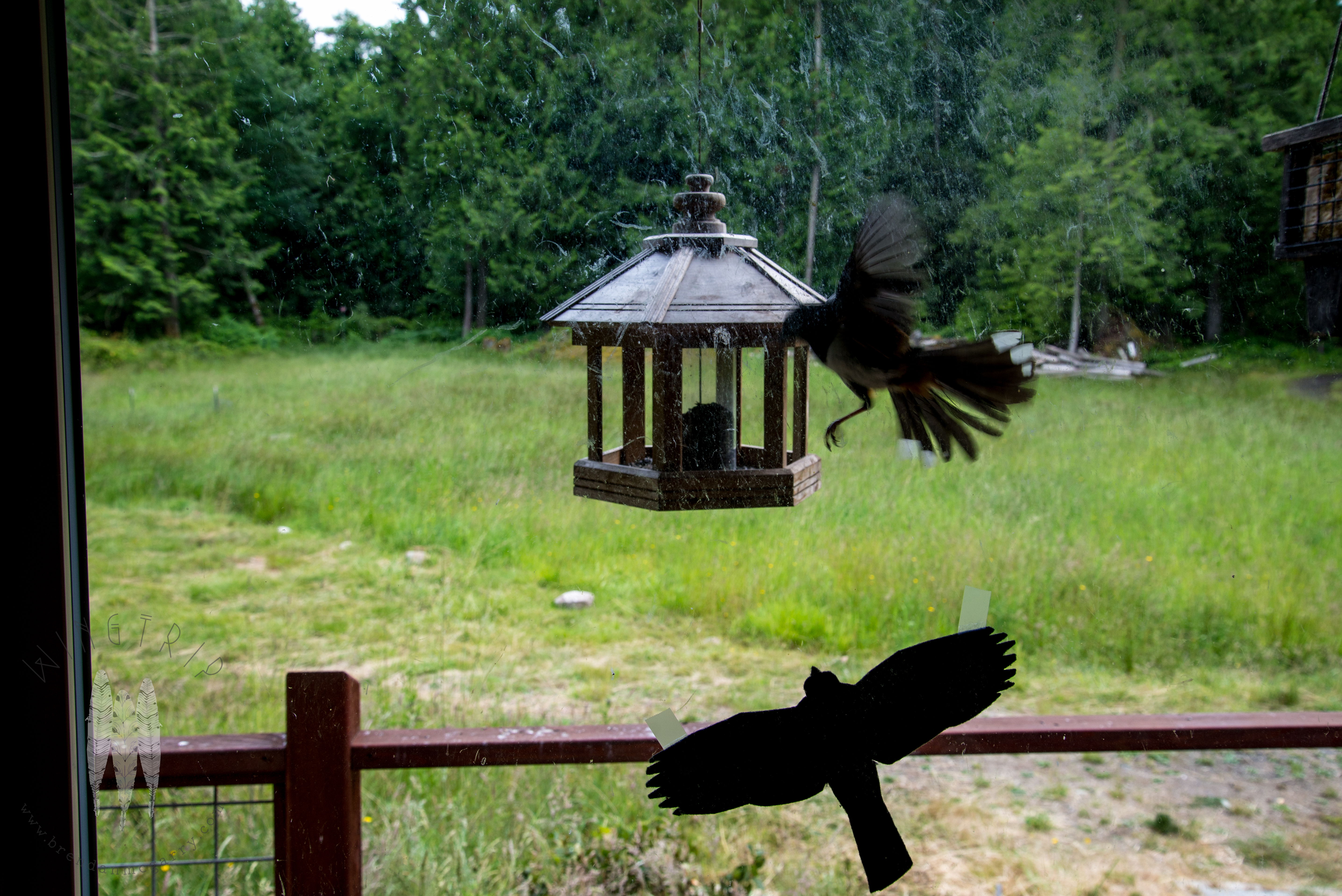
6/30 – I can’t believe it (but I knew it before it happened), there are so few bird songs this morning. No Swainson’s Thrushes nor Townsend’s Warblers whisper from the trees. The damned towhee is still headbutting the window and managed to scare off both my first Black-headed Grosbeak and Red Crossbills at the feeder with his thrashing about. I even had Red-winged Blackbirds visit, a total surprise looking at the surrounding forest. It’s quiet but the songbirds aren’t gone just yet, they’re just busy raising young or recuperating from parenthood.
Brendan_McGarry_140614_00002

The bane of my existence spring to fall, a male towhee who wouldn’t let up attacking the window.
 

comment 0

Seasonal Notes from the San Juans: May

Like many writers, I keep a (sometimes) daily journal about my life and the natural history events, largely bird related, that I experience. The following blog posts, organized by month are excerpts from my summer living and working the San Juan Islands of Washington State. Enjoy!

5/21 – I woke up listening to robins singing. Seconds later it’s alarm calls and the mew of towhees. Start of my yard list is as follows: Black-headed Grosbeaks, Western Tanagers, Wilson’s Warblers, Townsend’s Warbler, Pileated Woodpecker, Rufous Hummingbird. Violet-green Swallows investigating the house for cavities though there are none as this is a new house with no inlets for them.

5/22 – My home feels like camping. I woke up at 4:30 to the sound of robins filtering through open windows. Swallows are everywhere at the ferry landing and guillemots are twittering from beneath the ferry dock. I went to sleep to the sound of chorus frogs, voices that rise and fall for no reason that is apparent to the human observer. I almost got back up and went out to find them, but thought better of a good night’s sleep.

5/23 – Windy day out on the water Kayaking. Probably the first of many rough days around Kellet Bluff on the West side of Henry Island. As we approached the bluff a Bald Eagle made several passes at the water with talons outstretched. I assumed this was an agnostic display for the other eagle sitting nearby. Down along the bluff’s rocky edge a head popped up. A Steller Sea Lion with a fish. Call me crazy, but I think the eagle may have been trying to startle the sea lion into dropping its catch. No luck, and the eagle went off with nothing to show for it’s bravado. Kayaking certainly provides a nice vantage point.

Brendan_McGarry_140611_00034

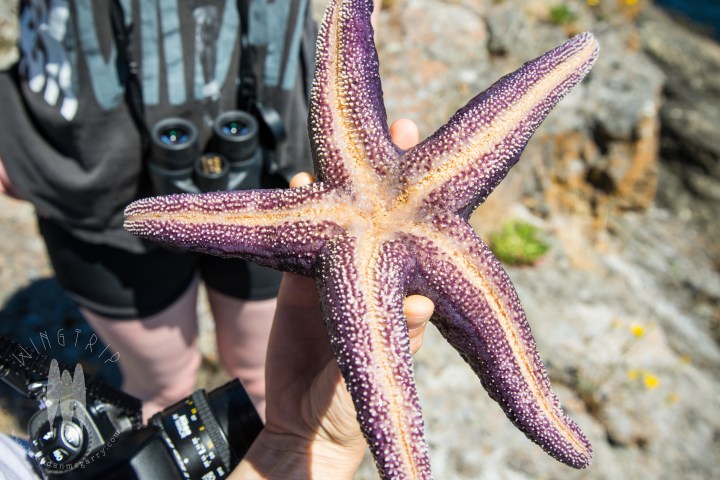
5/29 – Growing up in proximity to the Sound, lucky enough to have opportunities to explore it, I have a childhood familiarity with intertidal species. Familiarity doesn’t mean good comprehension. I can tell a chiton from a limpit and kelp from eel grass, with the briefest concepts of their natural histories, but there lies the extent of my knowledge. Today I saw three species of stars, blood, purple ocher, and sunflower. I held all three and saw the differences in their textures. I thought about the gradients they live in and about what’s going on under the surface unbeknownst to most of us. This is a start.

Brendan_McGarry_140708_00256

5/30 – It occurred to me that every gull I’ve seen since I moved to Shaw has been Glaucous-winged or a hybrid with a Western Gull. This came to me when someone on my trip asked if I knew what species of gulls we were looking at. For most birders that’s a “duh” sort of realization, but it’s noteworthy nonetheless. Almost any other gull is off breeding somewhere else.

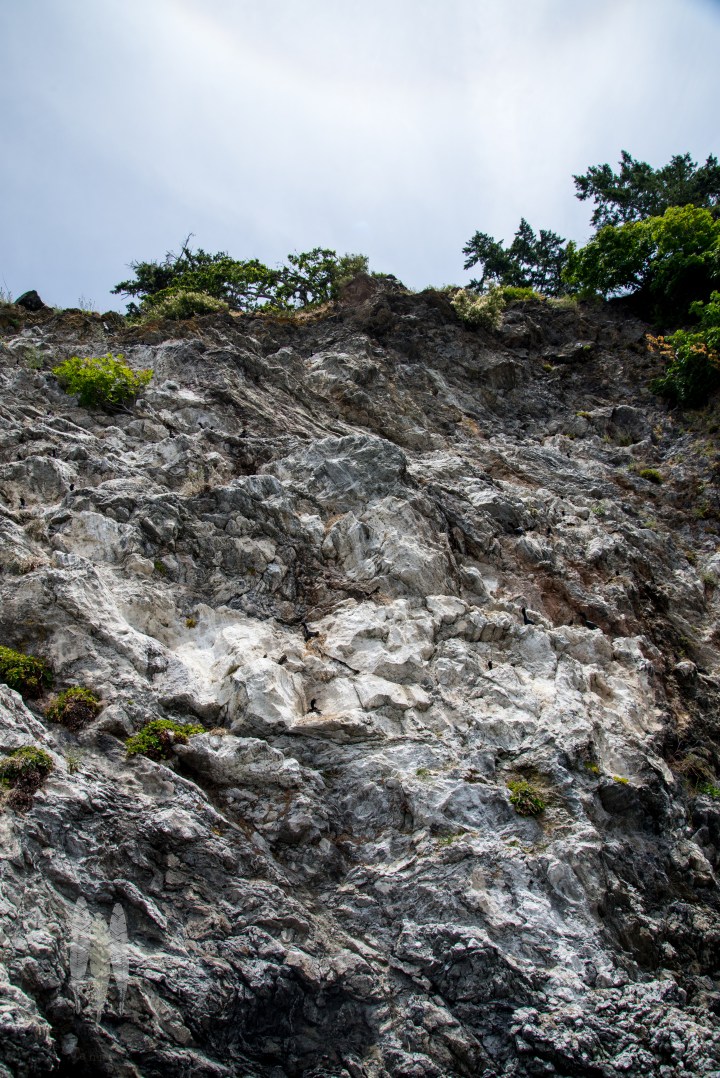
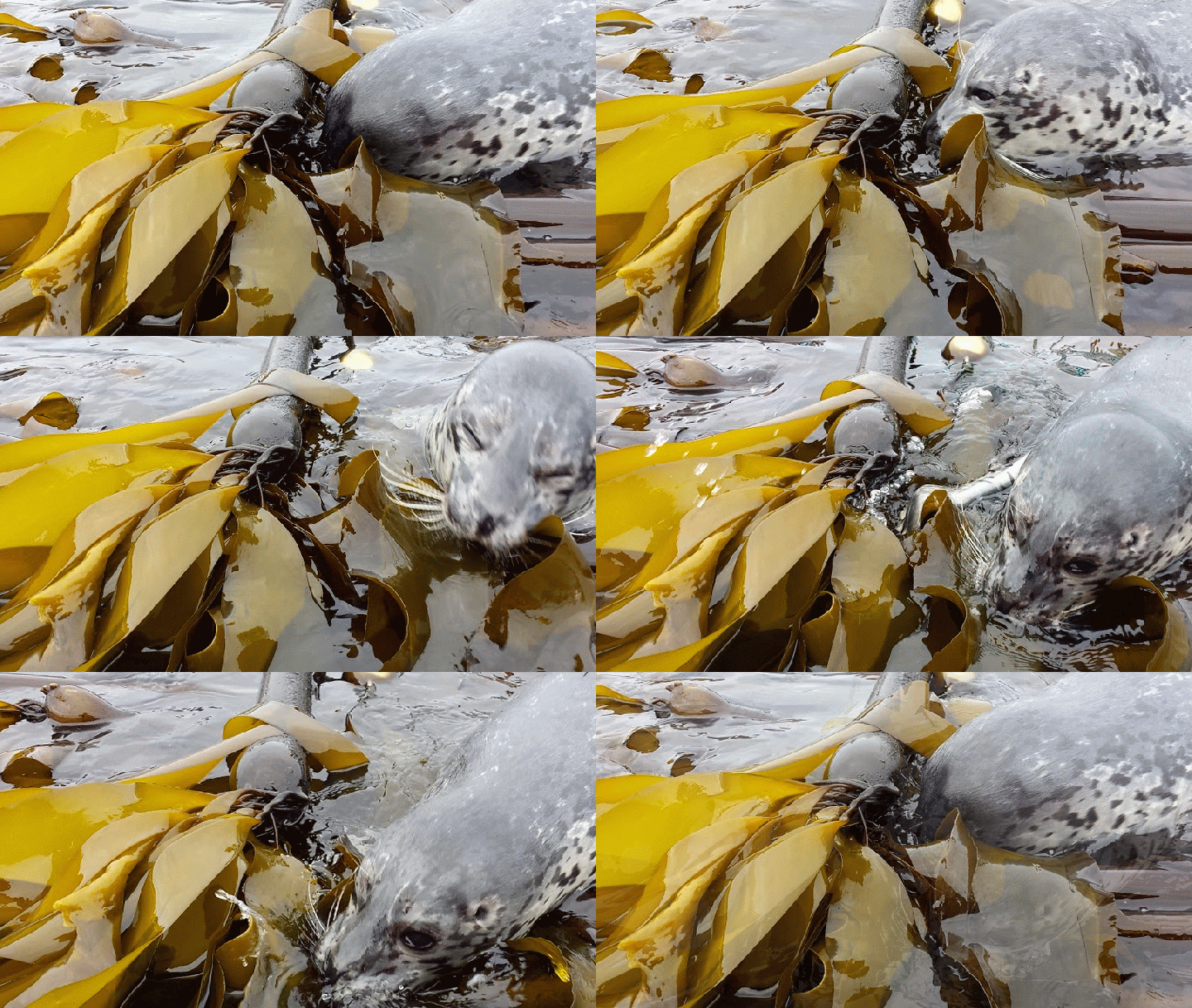
At the Henry Island cormorant rookery, we watched two peregrine falcons make loops at the birds below. They screamed, flew close, but made no contact. Sitting above the rookery on the bank and in the trees, they watched the cormorants go back and forth in their daily routines. One bird was definitely a female and both were in definitive plumage; was this a pair out for a lark with cormorants? Or were these real efforts to take a pelagic cormorant for food? They seemed too large to carry. Their proximity to the cormorants, rather than diving from high above to surprise them, convinced me these falcons were merely playing or practicing.
Brendan_McGarry_140611_00085

comment 0

A Natural History Lexicon: Mycelium

Welcome to Wingtrip’s Natural History Lexicon, a regular rundown of natural history terms. To find future and past posts on this subject, simply search “natural history lexicon” or find it in the tags. Thanks for reading!

Mycelium –

\mahy-see-lee-uh m\

-the mass of hyphae that form the vegetative part of a fungus.

Picking across the tumbledown forest floor surrounding my home, I stumbled over a branch slowly becoming one with the soil and accidentally kicked it loose from its earthen cradle. Next to it were a smattering of small white mushrooms, nothing visually remarkable in a moment in space and time where fungi are obvious and abundant. However, in dislodging this rotten branch I revealed what was below these mushrooms. A twisting cobweb of white tendrils looked as if it could be plant roots or unrelated mold, but the closeness was too coincidental. This was mycelium of the mushrooms above.

We see mushrooms frequently, various species grow in cities and wild spaces equally well. Mostly we don’t consider that they are just a small section of a greater fungal body. A mushroom after-all is just the fruiting, reproductive arm of the organism. Beneath the surface, be that soil, leaf litter, or wood, is the part of a fungus that does the bulk of the work. All fungi are heterotrophs, meaning they cannot fix their own carbon and make a life out of breaking down dead or decaying organic material into sustenance. In some sense the mycelium does what the roots of any plant would do, except once ephemeral mushrooms decay, mycelium is all that persists.

For our purposes we should know that collectively the branching filaments known as hyphae make up mycelium. They grow and spread in and around any porous matter they set their sights, on secreting enzymes to break them down. Once broken into smaller pieces, they are absorbed by diffusion through the hyphae.

Their role in decomposition is vital. We don’t notice it, but they and other detritovores are constantly breaking down the plant matter all around us (mycelium is also a great source of food for many invertebrates). Without them we’d be piled high with leaves, wood, and other plant matter (while there are fungus that have colonized constantly freezing or dry environments, fungi appreciate moisture and don’t do well without it, partially why a wooden building lasts much longer in the desert than in the rainforest).

Equally important are the mutualistic role of many myceilium with plants. The vast majority of the plants we know have mycorrhizal association with fungi, wherein the roots of the plant form links with mycelium. Generally the fungi benefit from the carbohydrates a plant creates through photosynthesis and the plants gain better mineral and water absorption. Mycelium are much smaller in diameter than most roots and can explore a greater surface area as a result. Mycorrhiza have also been noted for creating structures that house nitrogen fixing bacteria, a benefit to plants that may live in or expand into nitrogen poor soils. There’s also much evidence they protect plants from pathogens.

As there are people who explore any number of corners of the natural world, there are mycologists, the people who study fungi. I myself am not so disposed, so when I look at fungi, be it mushroom or mycelium I’ve accidentally exposed, I look more out of wonder and curiosity and questions than understanding or the ability to identify. However, that, if I may say so myself is the mark of a good naturalist: infinite curiosity, and sometimes a light touch. So, I replaced the branch as best I could and continued on, trampling who knows what else as I passed.

comment 0

The Motion | What a Naturalist Learns Guiding

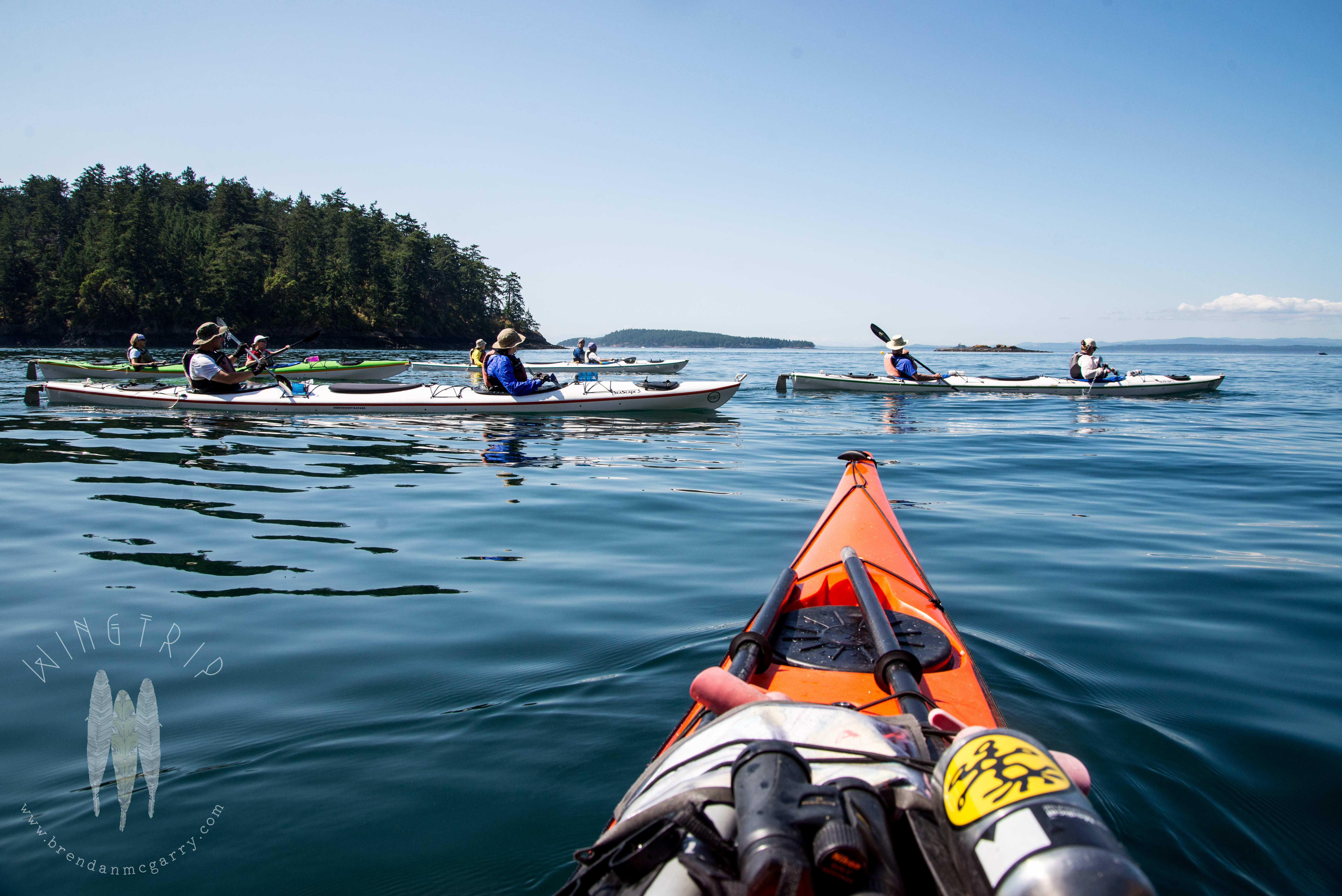
There was a quiet moment during my summer when I realized why I’d been a kayak guide for the season. I’d been equal parts frustrated, at not being able to write, read, or take photos effectively, and excited to meet a new group of fantastic people, explore a place I love from a new perspective, and learn new outdoor skills. All I’d really been after was quiet moments to contemplate seasonal changes.

In this brief space, the sun was inching into vacillating orange clouds and I couldn’t hear anything but the gentle blow of Harbor Porpoises. No engines running, no small talk from clients, just a peaceful float on a glassy stretch of the Haro Strait. Marbled Murrelets spoke up here and there, querulous youngsters harassing their parents for food, but they were an addition to the notion that I had made a good choice, at least in that moment.

Brendan_McGarry_140726_00144

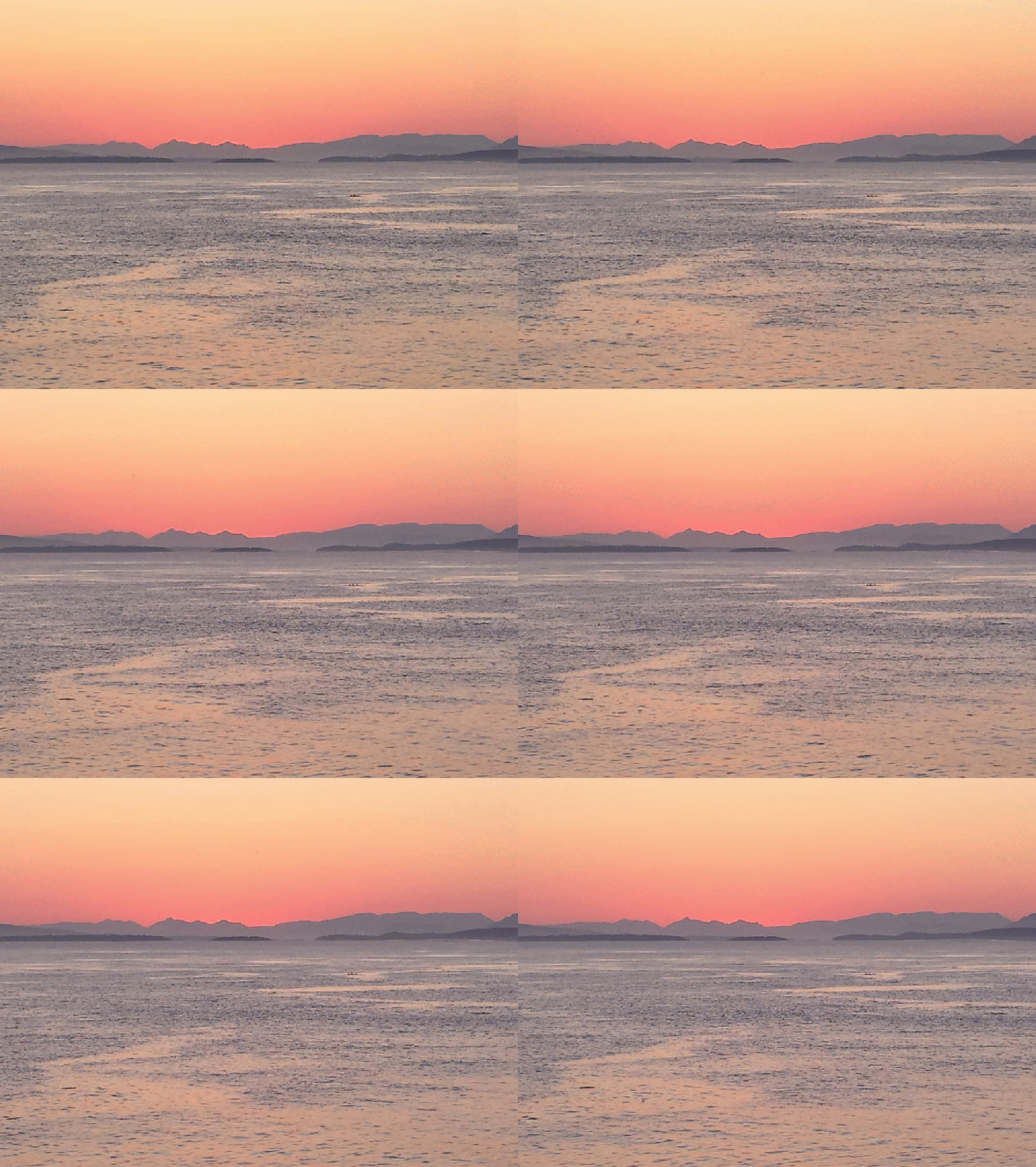
Sunset Over the Gulf Islands across Boundary Pass from Stewart Island.

When my role as a guide began in late May I didn’t know exactly how I’d feel about it. In being a naturalist there are only a few directions one can find for financial gain and I needed one to supplement my budding writing and photography career in the short term. So, knowing I had the chops to guide and an with the intent to disperse natural history information, I signed on.

For those of you who have worked seasonal jobs, you know the pains of finding yourself at loose ends several months later. However, you also know the variety offered, both in people and place. Life of course is all about check and balances. The problem with all encompassing seasonal work is that you don’t get any balance, which isn’t what I moved to the San Juans to find. By the end of the season you end up resenting a lot of people who have done nothing to slight you, except paying money to go out kayaking with you. Yes, I’m over kayak guiding at this moment.

Brendan_McGarry_140726_00038

Looking South to Sentinel Island and across Spieden Channel to Henry Island in the Distance.

But back to that moment on the water. There were others too. Seconds, minutes, hours, where I felt like I was growing from this. Maybe not in the way a person grows their portfolio as I wished to be doing, nor building one’s resume in the modern sense, but I am fairly certain I attained something even better.

Being a naturalist is fundamentally about seeing the world around you and finding moments of focus, stories being told to you, in a whirl of confusion and constant stimulus. This gets harder when you are being pestered by people who aren’t comfortable in their boats and the pressing anxiety of potential dangers on the water. Yet, still, what I came away with, even more so than a deep seeded desire to not be on the water with anyone but friends for a very long time, was a wealth of experienced natural history.

Brendan_McGarry_140624_00058

Lance-leaved Stonecrop (Sedum lanceolatum) on Gossip Island.

I bring this all up because as much as we think buying a field guide or having a smart phone will help us come up to snuff on natural history, they won’t get you all the way there. Being a terrestrial biologist, with only a briefest of knowledge on anything but seabirds, I found myself pushed out of my comfort zone. I didn’t know everything like I did when talking about birds or plants (OK, yes, I never knew all anyway). And for the most part I didn’t have that field guide in hand to totally explain all I saw. Basically I was getting a reeducation in observation, which is a skill birders take for granted after years of constant maintenance. After-all switching these genres of focus means developing a whole new vocabulary, maybe even learning a practically new language.
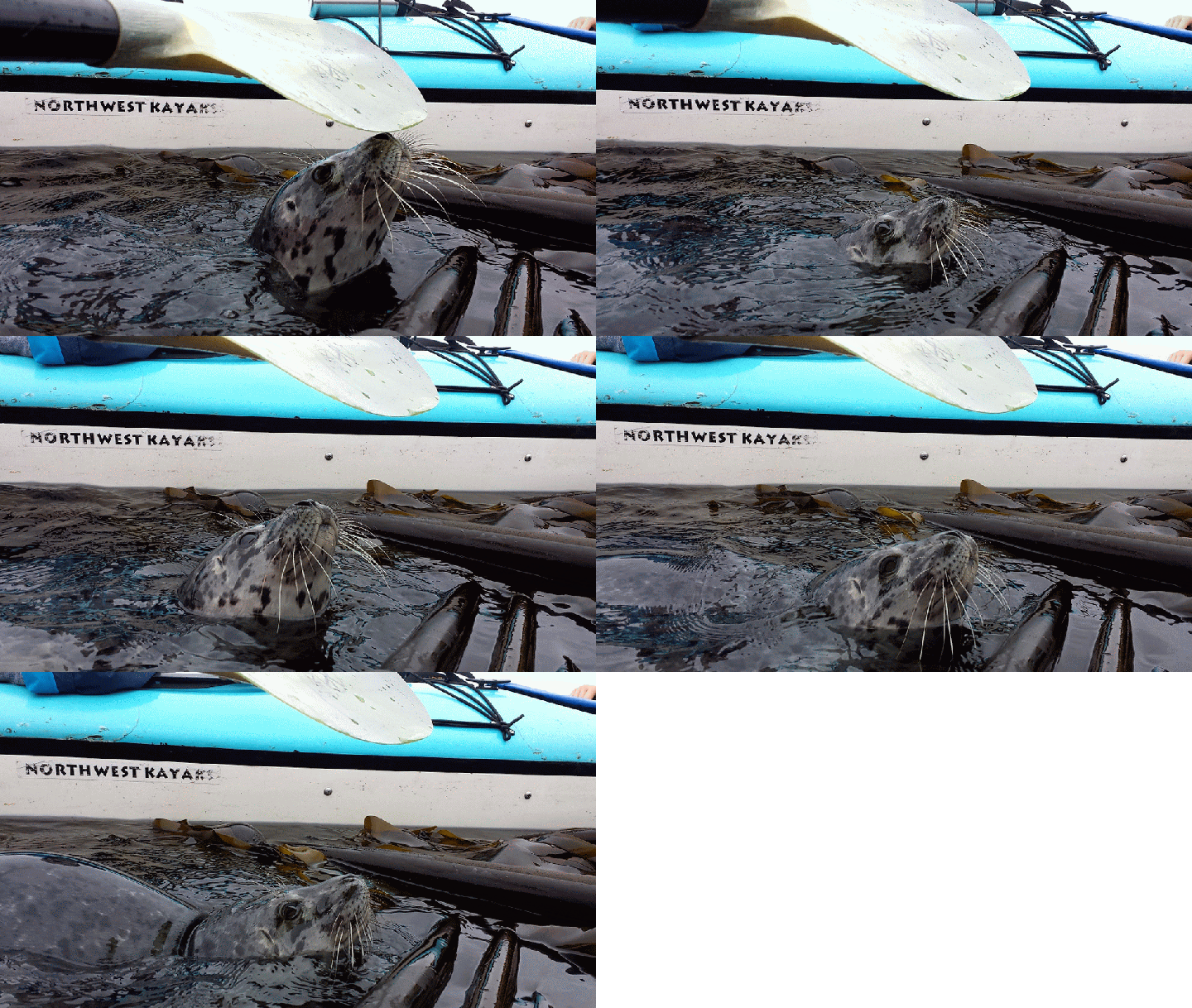
Brendan_McGarry_140808_00248

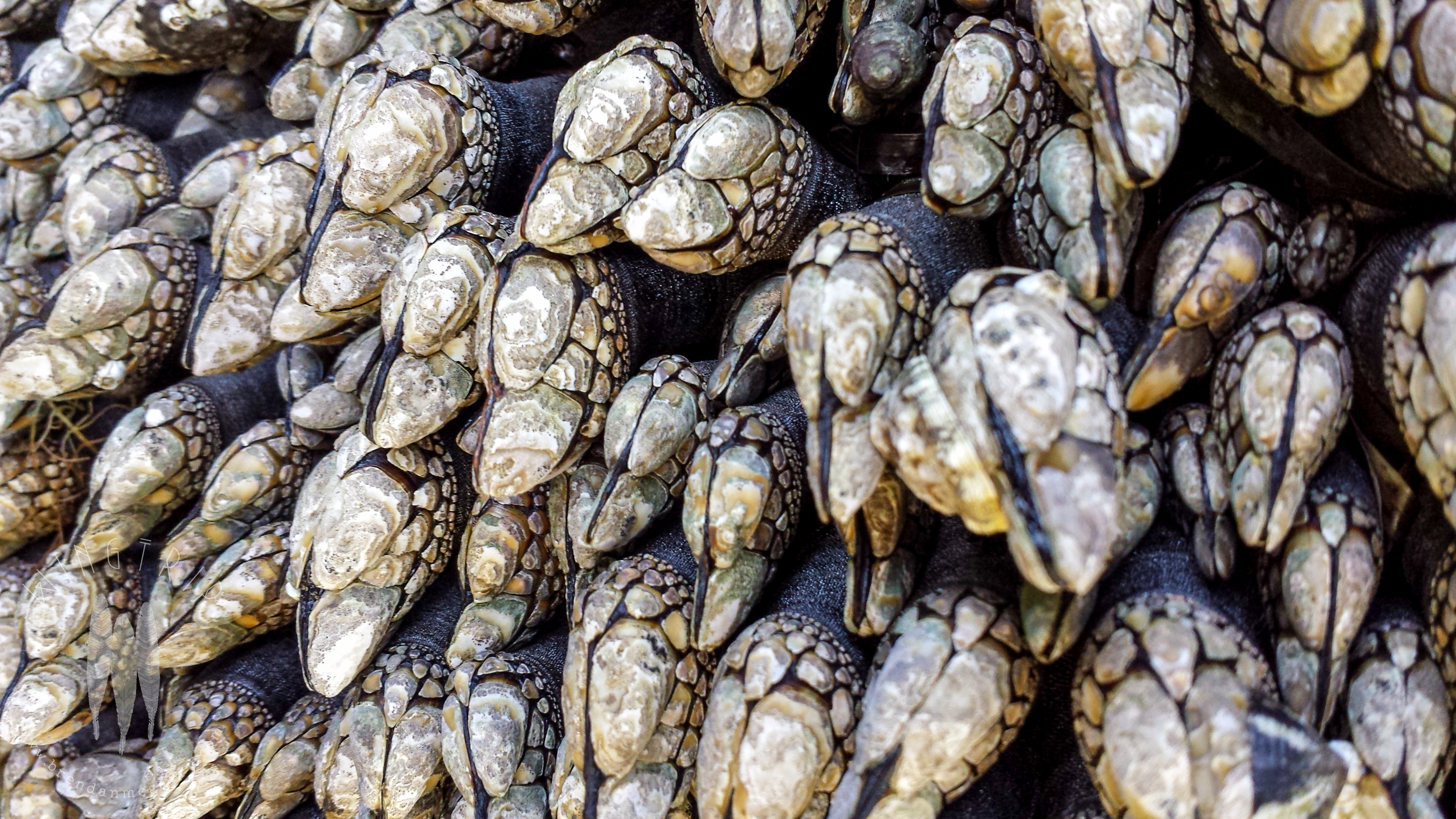
Gooseneck Barnacles (order Pedunculata).

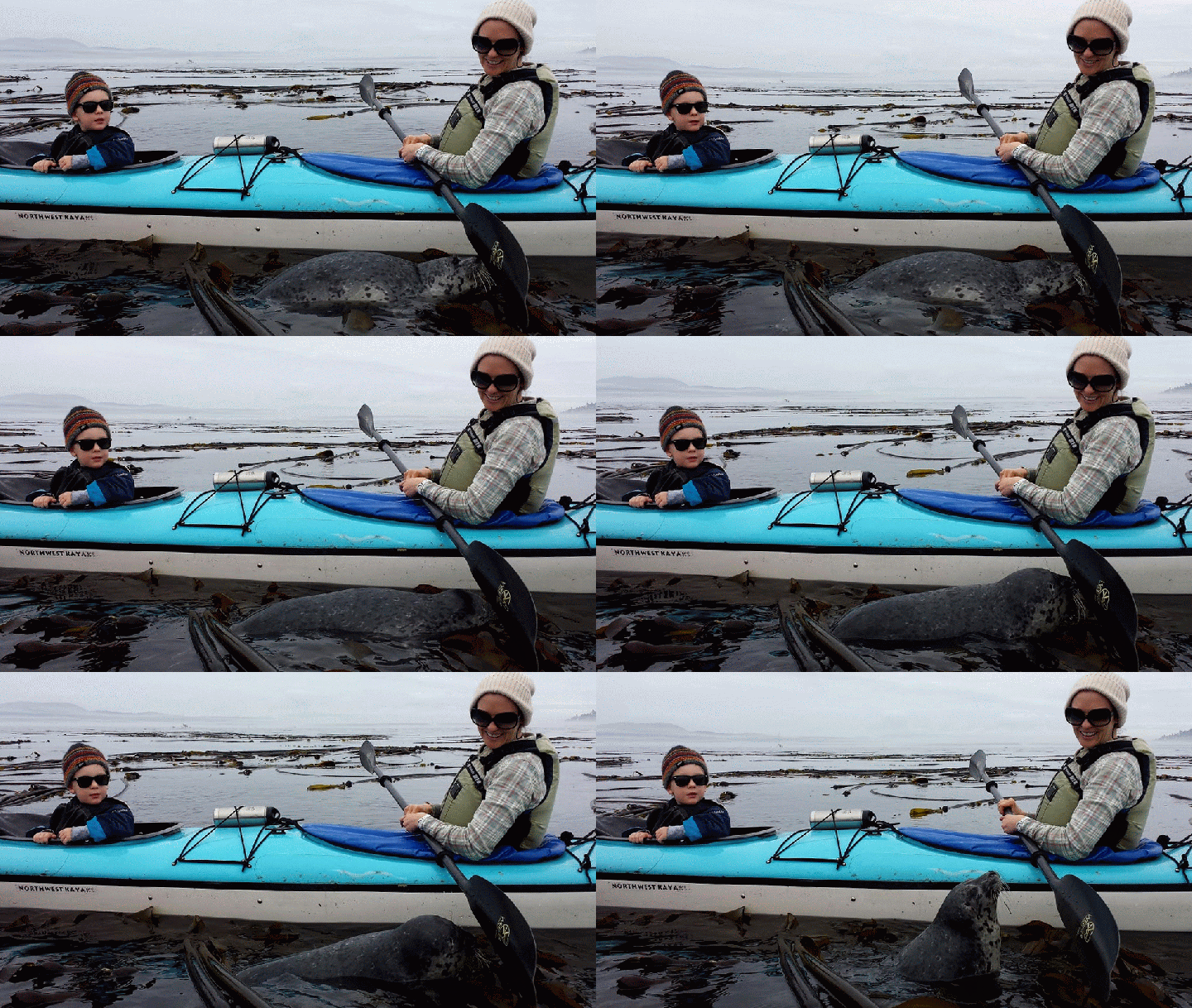
Plus, I was getting to view the world from a standstill. At least that’s how I imagined myself set down, day to day, while birds came and went, kelp beds grew and decayed, whales rode ebb and flood in trail of salmon, and tidal colors flourished and diminished. I saw days old harbor seals touching noses with their mothers and weaned youngsters naïve and curious. I watched a harbor porpoise meet an end in the mouth of a transient killer whale. And as the songs of neotropical songbirds reach penultimate crescendo, I found myself surrounded seabirds fresh from breeding near and far, ducking back down in surprise at finding my boat so close to where they surfaced.

Brendan_McGarry_140726_00089

Heermann’s Gulls (Larus heermanni) on Stewart Island. These birds almost all breed on an island off the Baja Peninsula but migrate here in summer and fall before heading South again. They’re spectacular gulls and appreciate kelp beds for food and roosting.

Brendan_McGarry_140530_00044

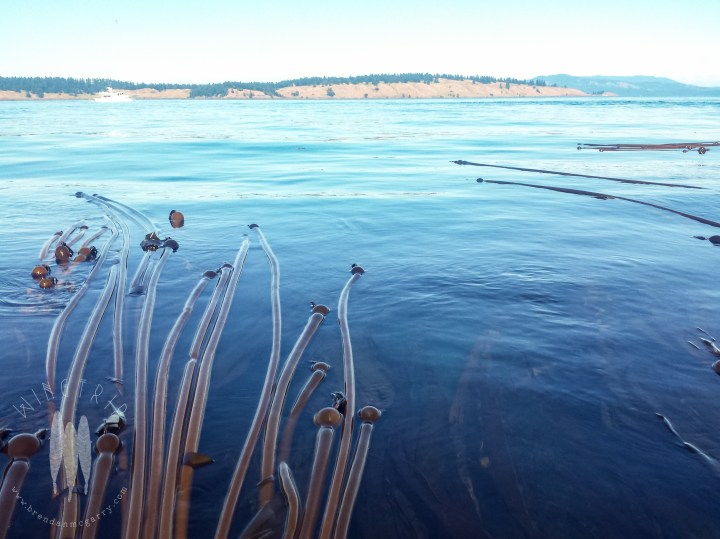
Bull Kelp (Nereocystis luetkeana).

Hard questions about what I was doing still came to me.

Was I making a difference by interpreting these natural phenomena to outsiders? I wanted to think I did but I also find my respect for people can soar and plummet in a day and that en mass, humans in general don’t do much to ingratiate themselves. Was I simply doing something selfish, to gain me money and experience?

Brendan_McGarry_140624_00034

A rest break on Gossip Island, with Stewart in the background.

While it was wonderful to follow the phenology of the islands, fathom the currents, and begin to grasp skill as a kayaker I always have this inkling that maybe none of us should be out there. This of course isn’t possible, but when think of kayakers crowding harbor seals resting on a shoreline or a flotilla of boats constantly tailing whales I get queasy. The answer of course is that without this kind of attention (and these boats do contribute to further understanding of orcas, in particular), there’d be less support for these ecosystems and they’d likely plummet even further into degradation. I don’t like the notion that we live in a world where animals on the fringe of the human edifice cannot exist without of persistent management or that ecotourism is the answer to conservation. I refuse to believe that we can’t figure out that places are important and valuable with or without us. Maybe I’m being idealistic.

Brendan_McGarry_140901_00057

Tourists and the whales they follow around.

Before this train of thought wanders too far or gets too dark, I want to go back to those moments I had on the water. What I really was experiencing was wonder and in wonder I believe is a form of salvation. Ultimately, I seek to come away from any experience in the natural world with more questions that answers. Possibly I forget these questions, never find answers to them, but I form them because I look at something and see value, in the knowledge of it and it’s place on the planet. When you start to realize these things, you start to understand that you should enjoy those precious moments far more than those moments of dark misanthropic thoughts. People suck, get over it.

There’s a lot of self in being a naturalist, whether we like it or not and while I try to stay free of ego, ignoring it as a part of the story isn’t realistic. We relate to the world around us through our selves. So, while shelving a personal library of anecdotes about birds, plants, geology, water, and all else San Juans this summer, I didn’t get a lot of work done writing nor maintenancing my professional image (I’ve always been one of raise a finger to professionalism for the sake of professionalism anyway). At times I felt like a bit of an intellectual refugee because I wasn’t getting to express myself in my traditional means of communication and I started to question my reality, my goals, and my entire life. I still am, but I am grateful to have sat in the water and felt the world move around me. The hardest thing to get down isn’t craft nor speech, it’s appreciating those moments a part from life’s too big a questions.

Brendan_McGarry_140901_00003

Mr. Floppy Fin, aka T19B, a male transient killer whale. For those who don’t know, there are two regular ecotypes of killer whales in the San Juans. Transients eat primarily marine mammals. Residents eat primarily salmon.

comments 4

Moving Images | Moving Summer

Somewhere in the continuum of not owning a smart phone out of stubbornness to becoming enamored with its usefulness, I discovered this device as a useful photographic tool. Sure, it also enables me to be even more distracted, inefficient, and brainless, but it has allowed me to take (in my mind) wonderful images in moments when it would have been either inappropriate or impossible to wield my larger cameras.

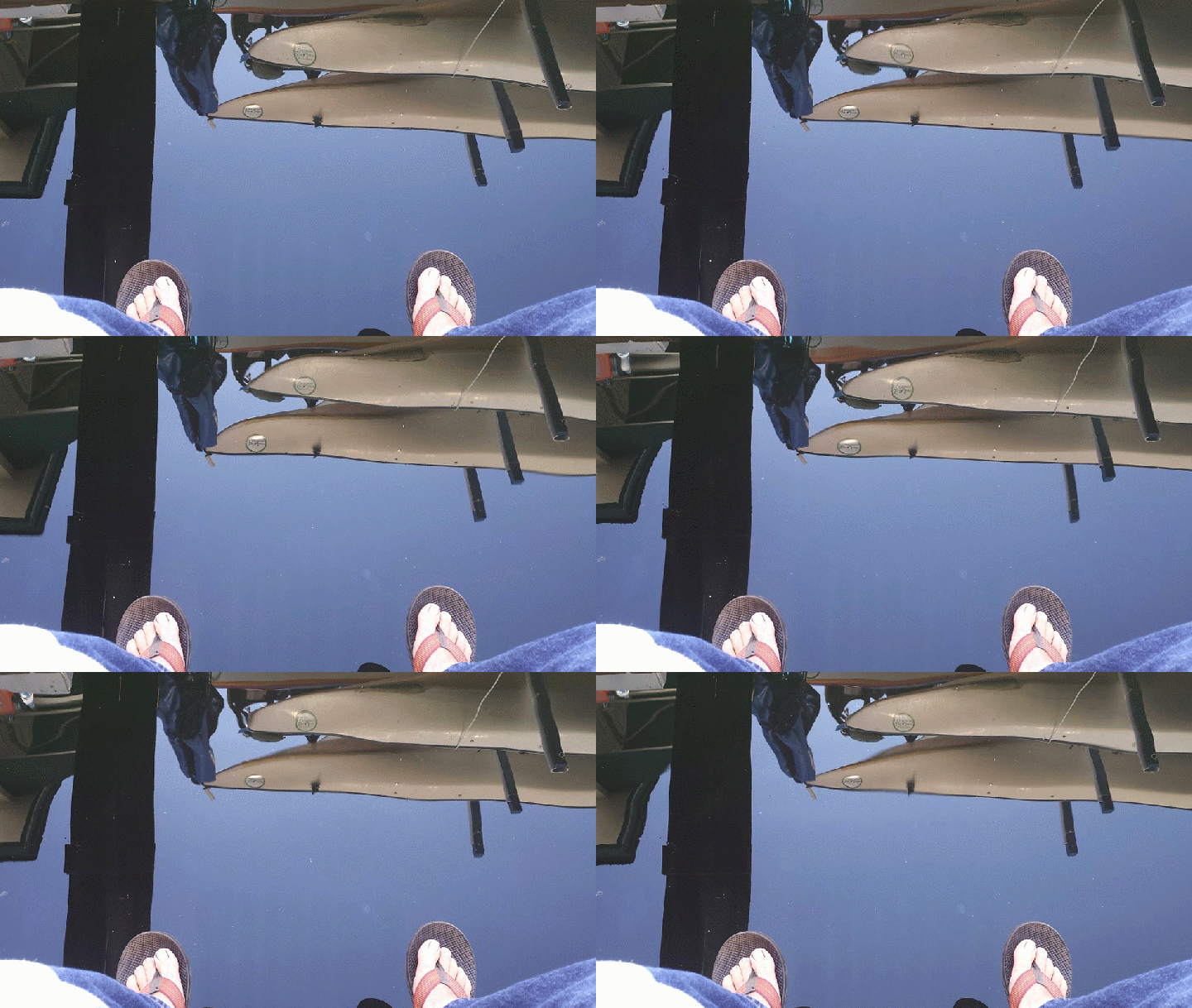
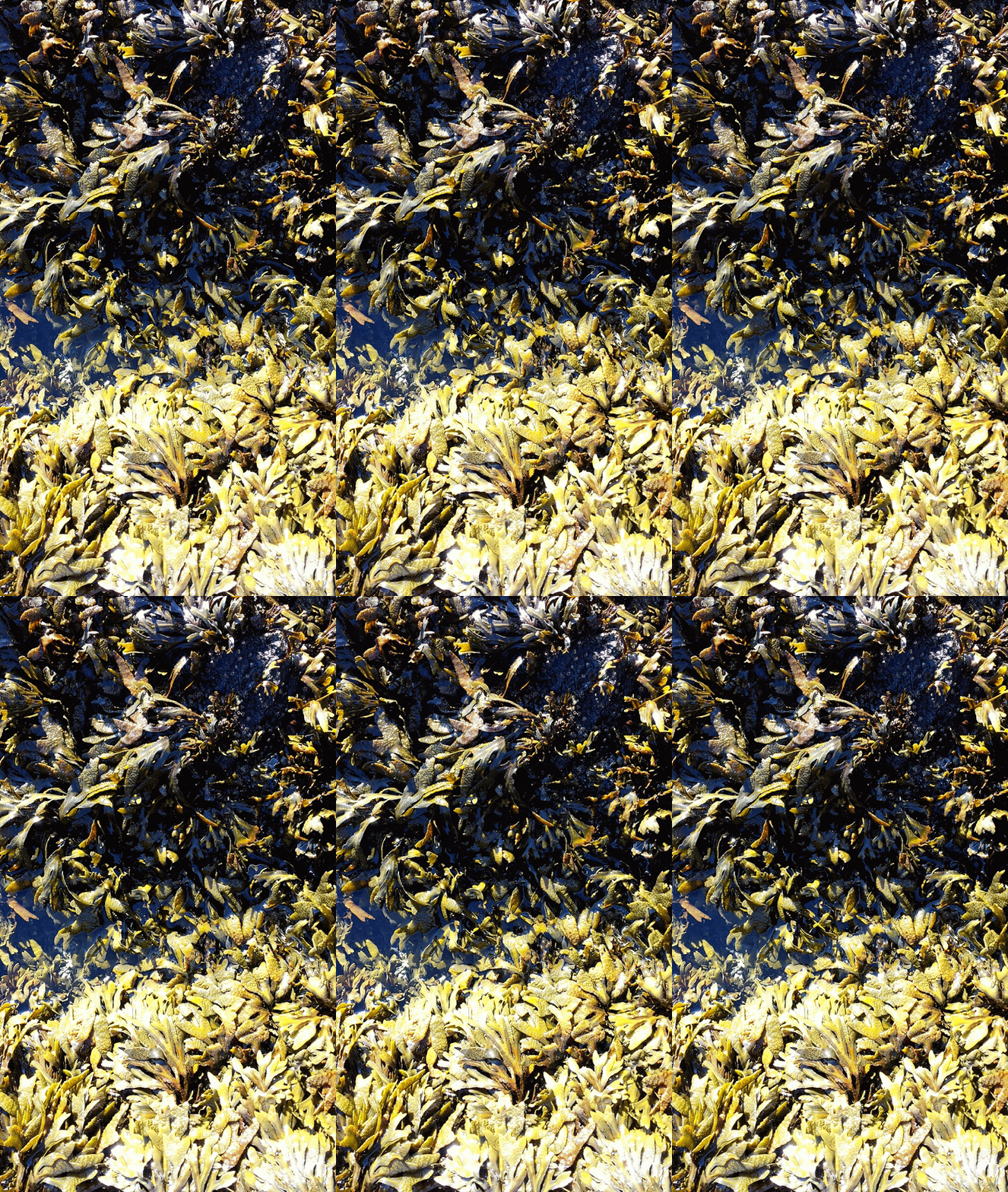
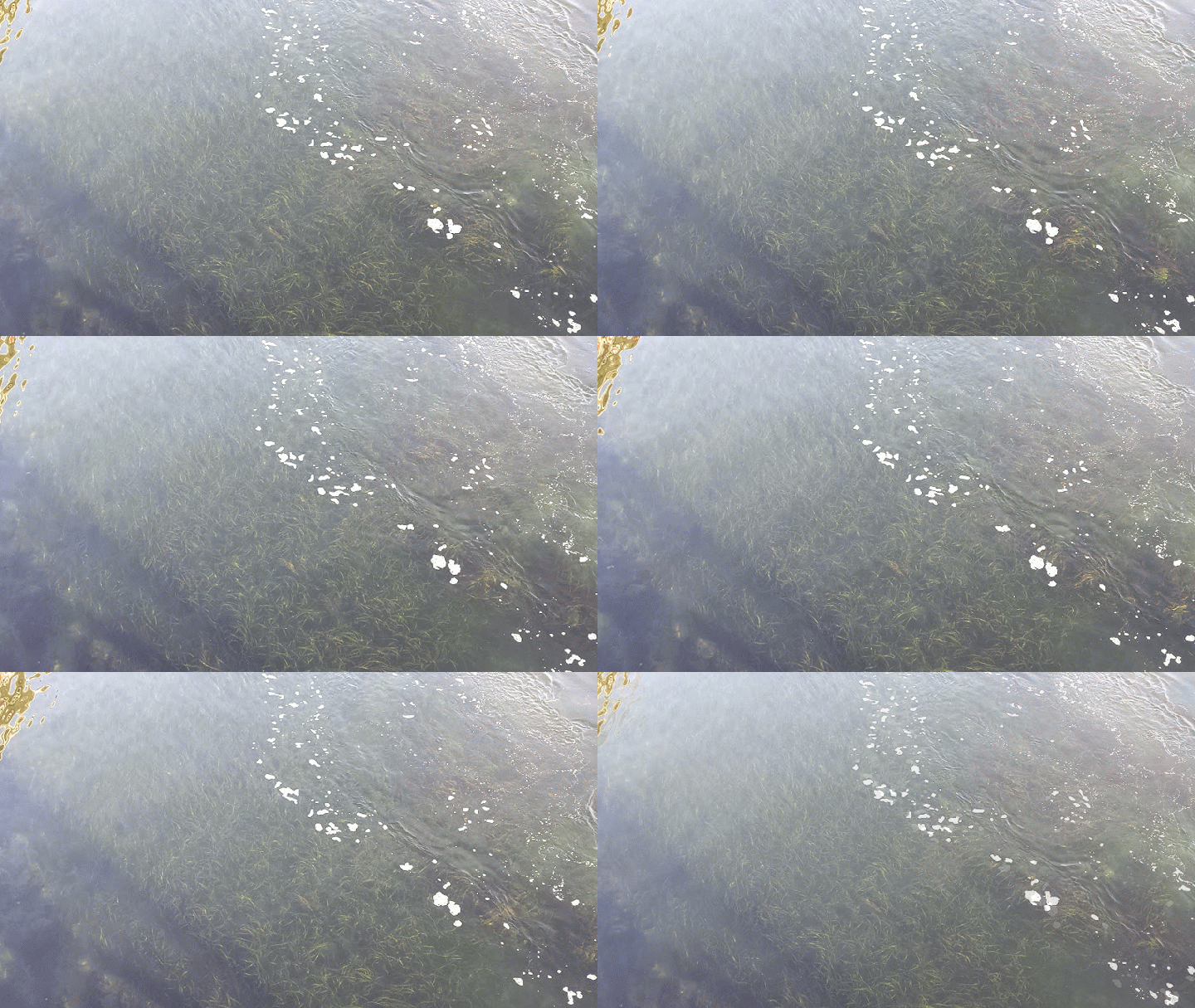
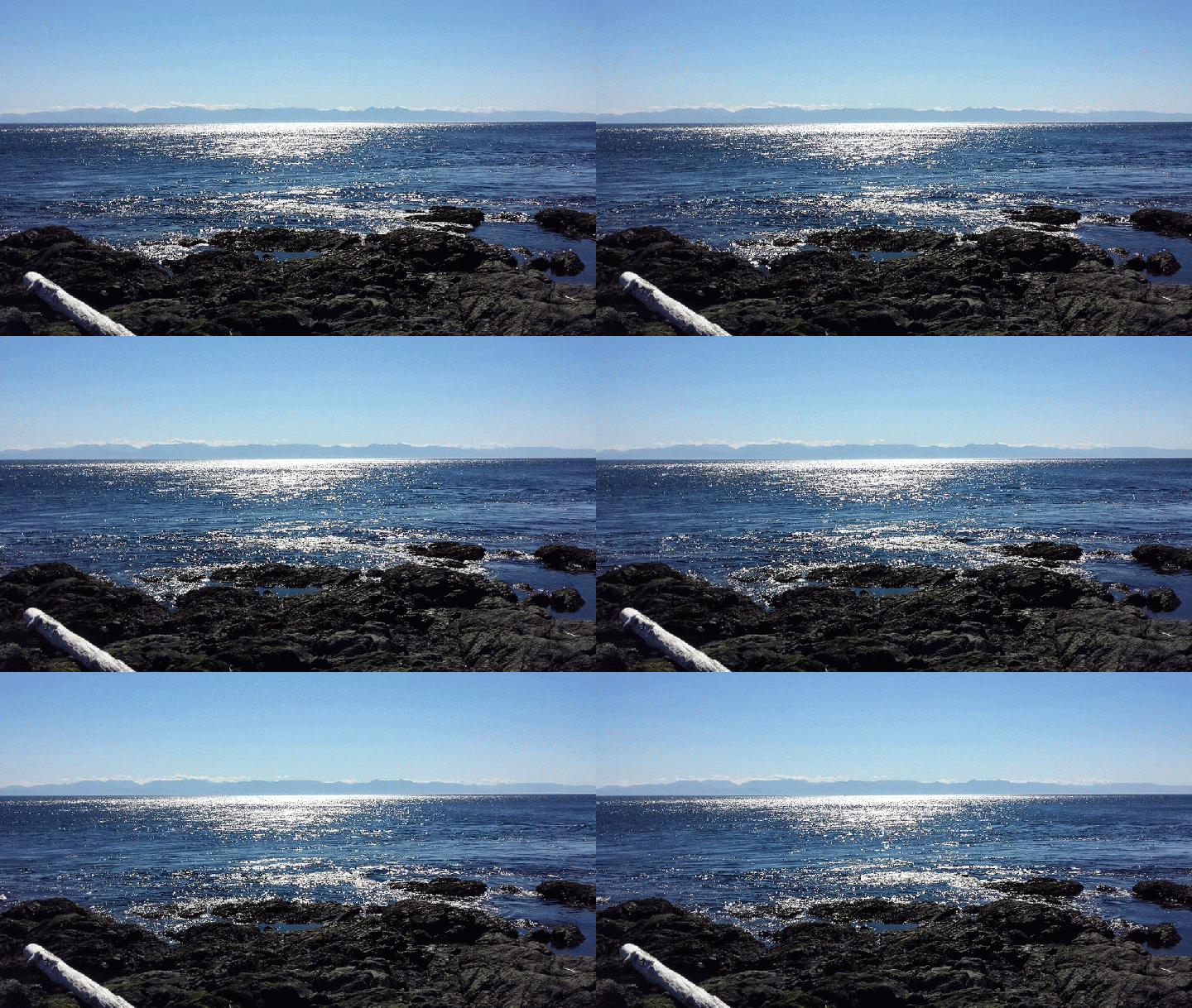
I also discovered that when I take a series of images in burst, it automates animated images. For the plethora of digital photo and computer literate people out there, an animated .gif image is no wonder nor a feat to create. However, I was allowed the opportunity to freely create them all summer while being a thoughtful naturalist and guide for the bevy of people who found themselves in my charge.

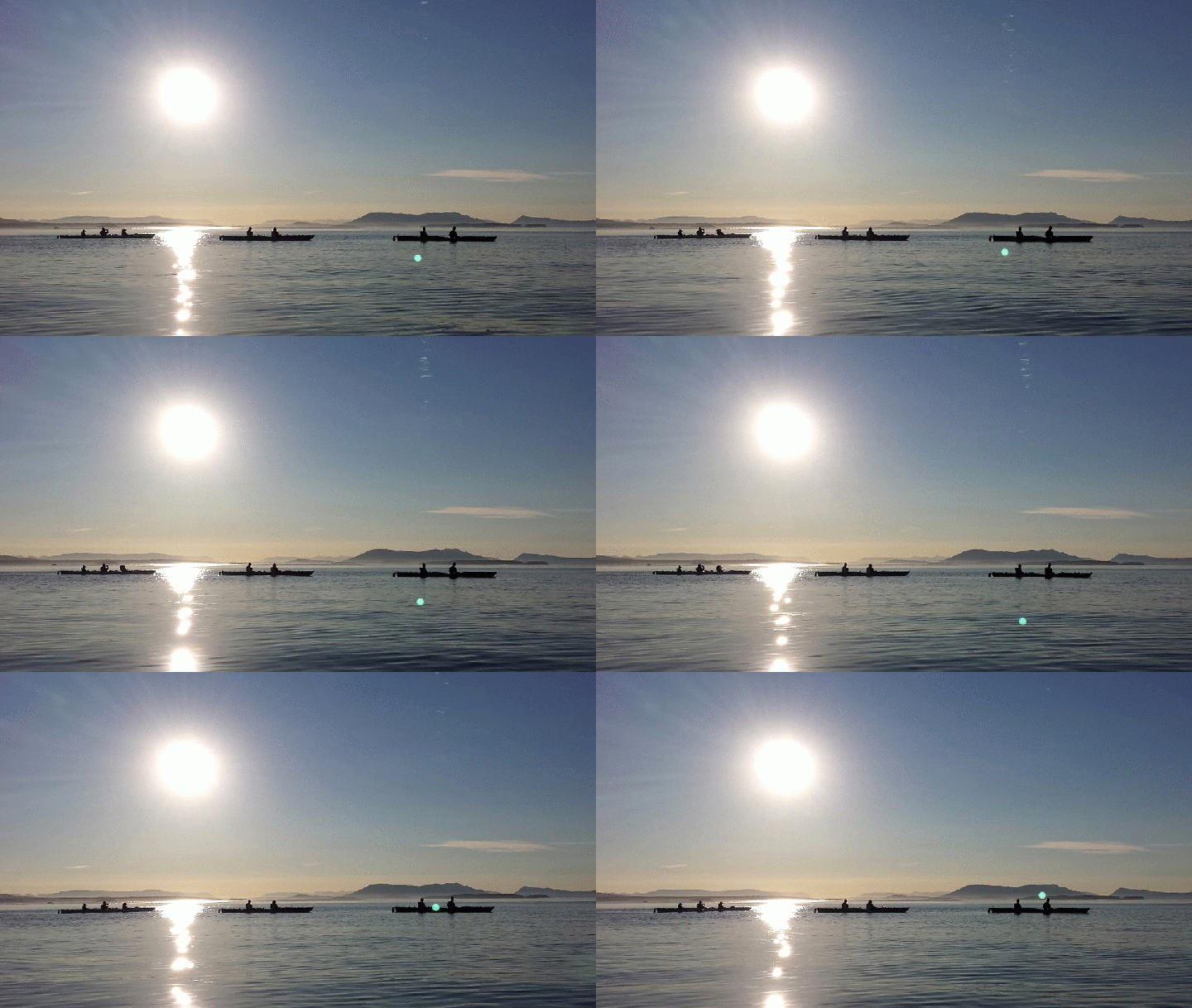
So, I present to you my moving images (not to be confused with video), from a summer on the water and on land in the San Juan Islands. Take a stroll with me.

2014-07-07-18-38-02-113-MOTION
First you have to get to the San Juans. The vast majority who do, spend some time here, waiting at the Anacortes Ferry terminal dreaming of volcanoes and saltwater. (Or irritated beyond belief at the ineffectiveness of the service.)
20140618_074413-MOTION

You may also enjoy the company of a curious Corvid while waiting.

20140531_142540-MOTION

Once on board, you’ll be just as tempted to watch other passengers as the scenery.

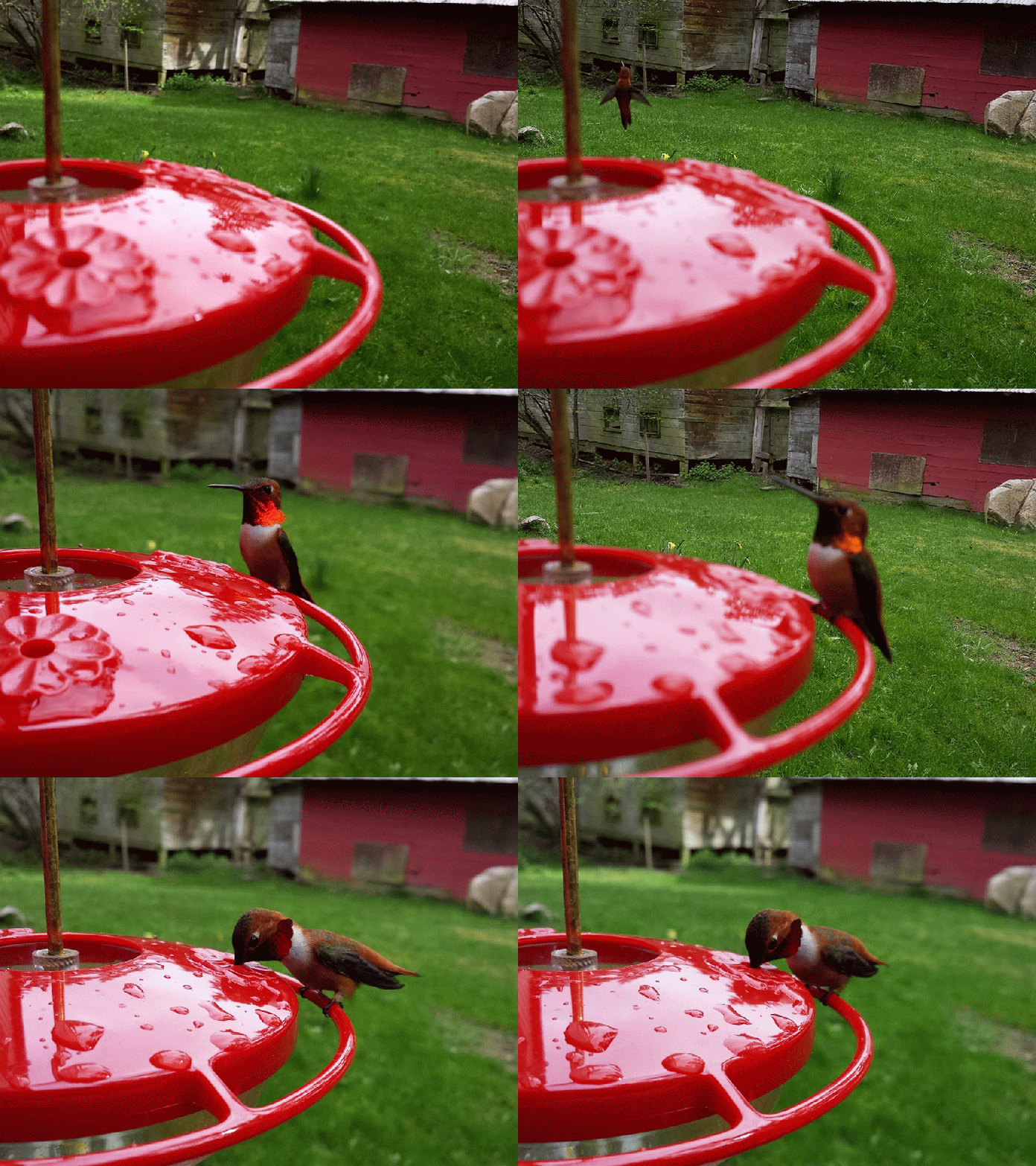
20140708_135252_2-MOTION20140406_150244_1-MOTION20140329_160227_1-MOTION20140329_133736-MOTION

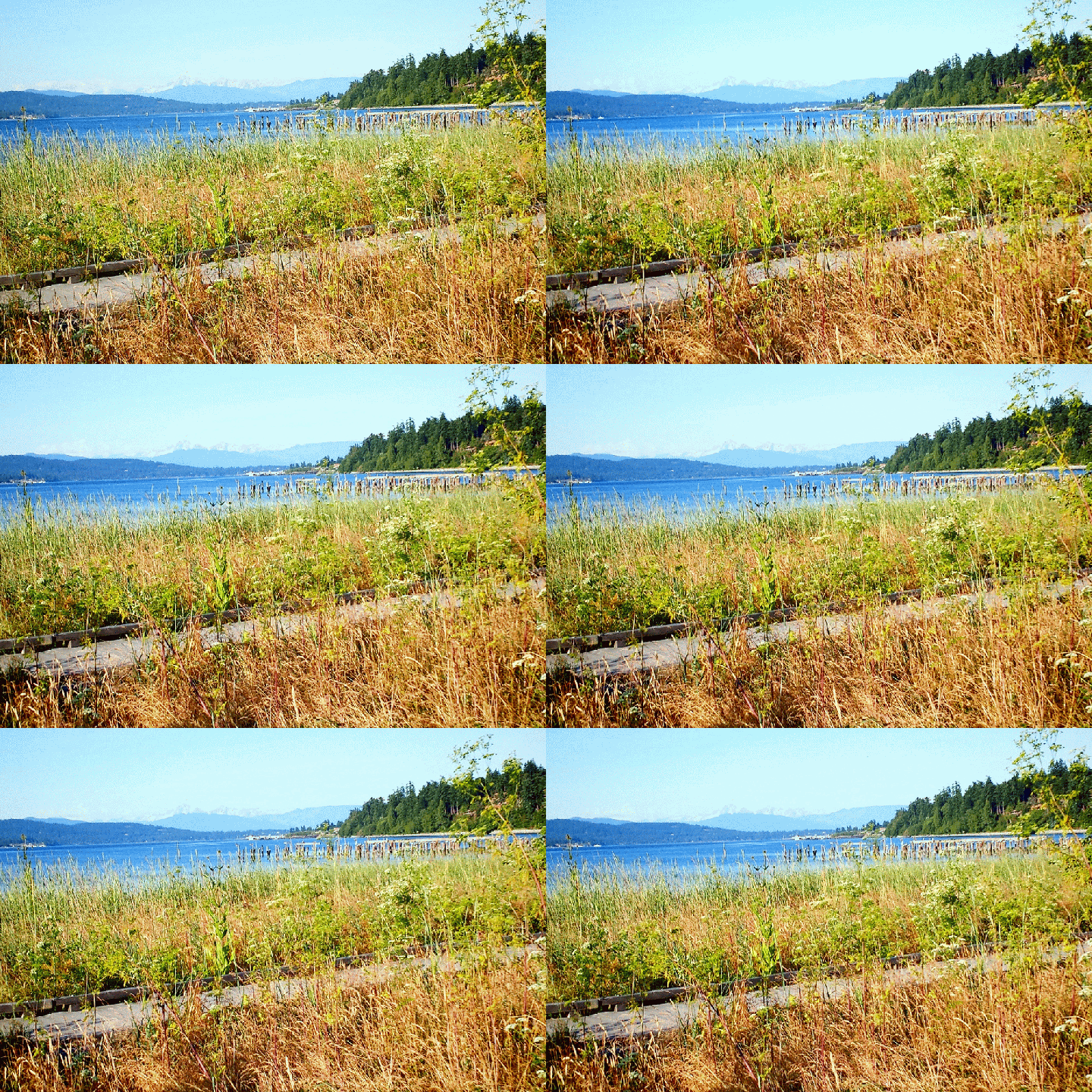
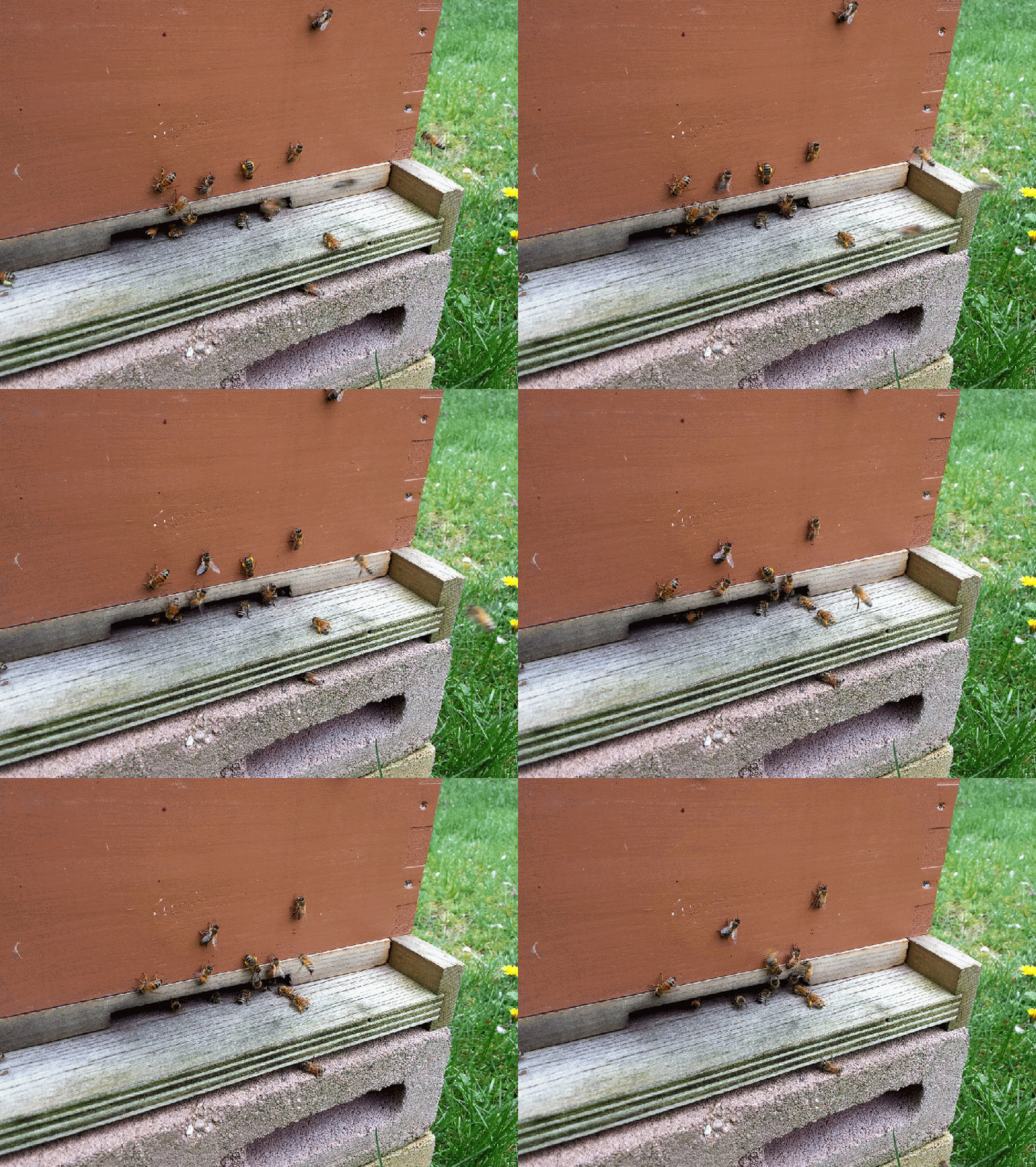
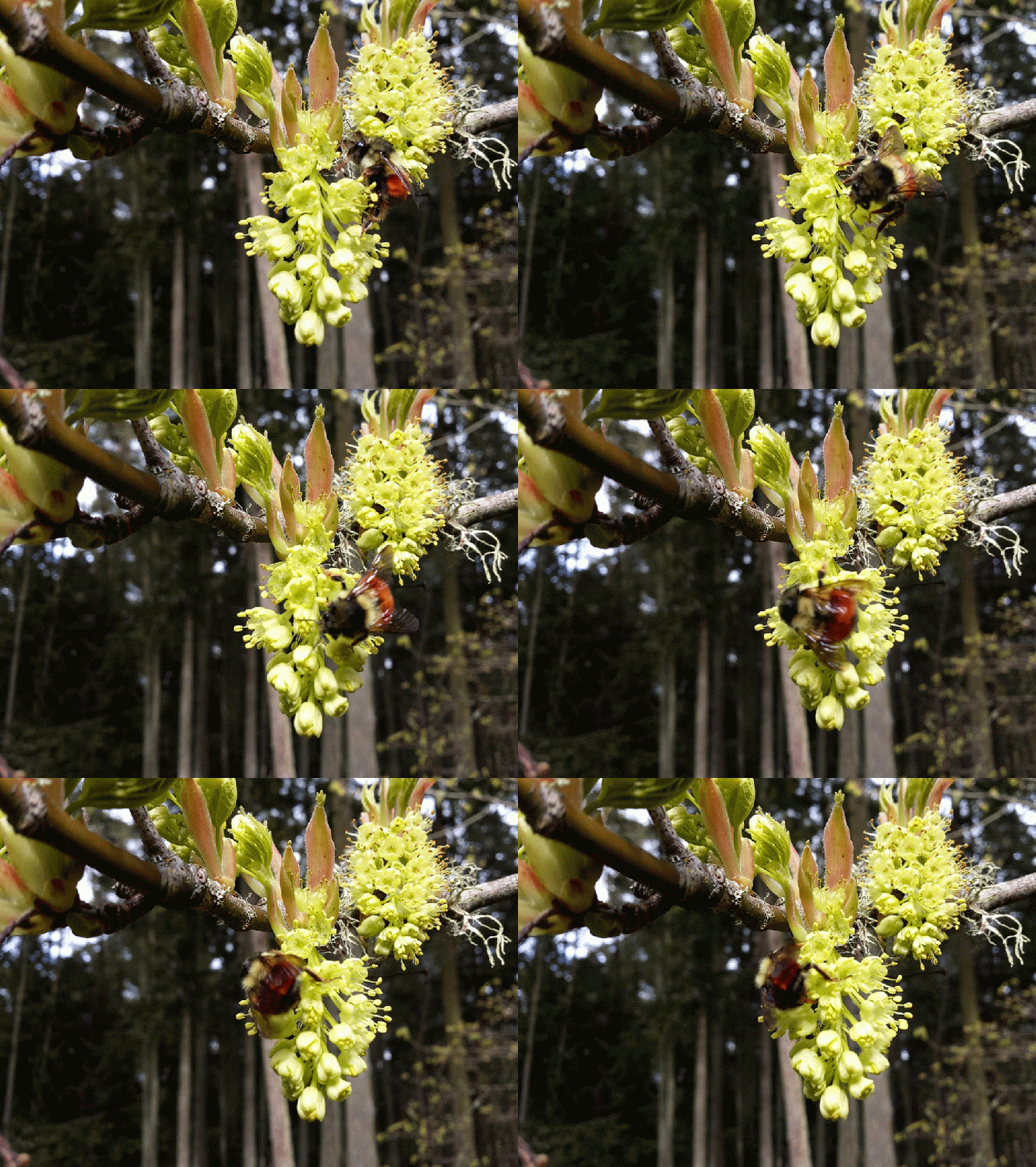
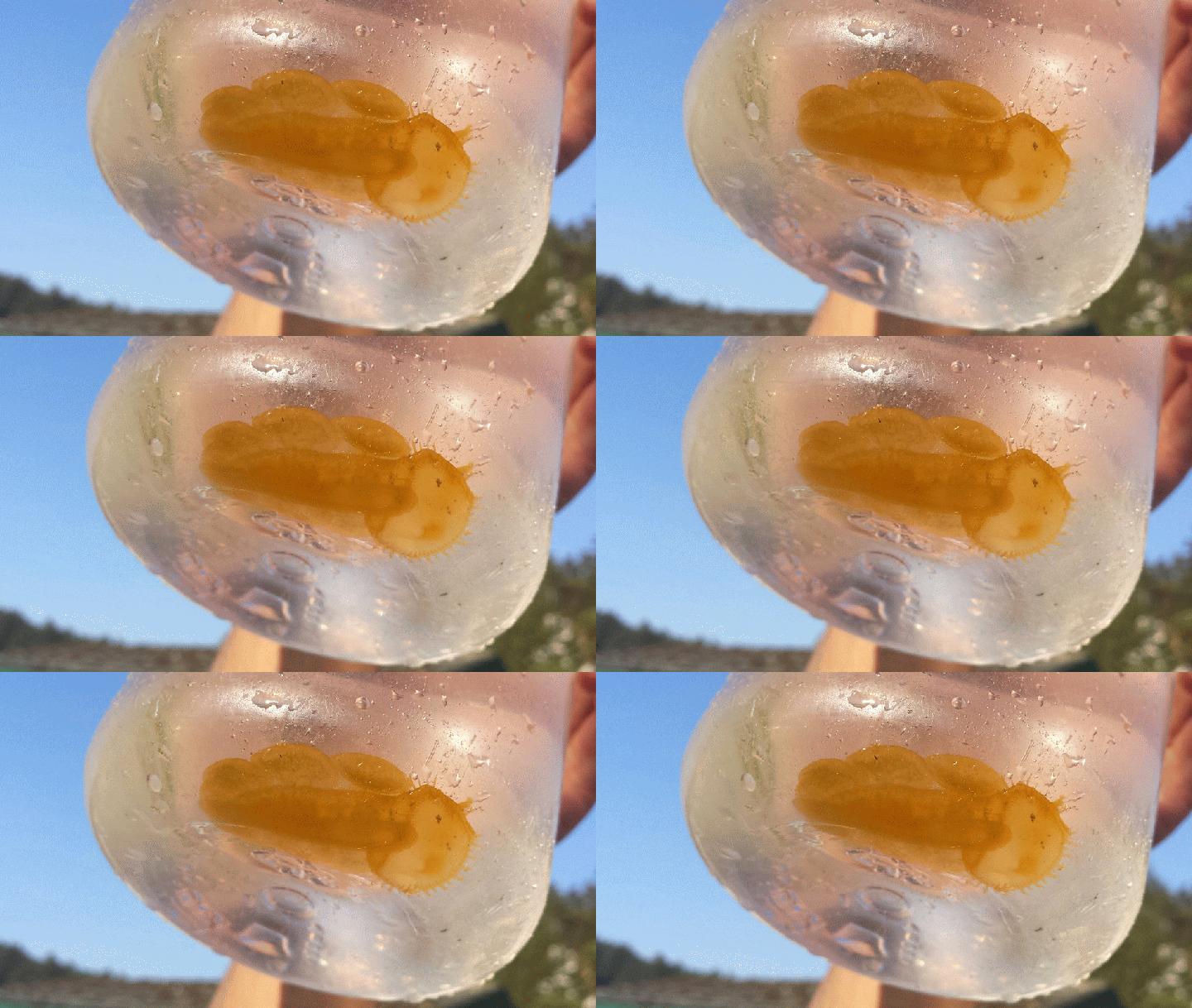
Arriving on the islands, you’ll realize that just like elsewhere in Western Washington, pollinating  animals abound. You aren’t quite that far removed from the mainland.  Many animals that fly aren’t kept from the San Juans by the expanses of water.

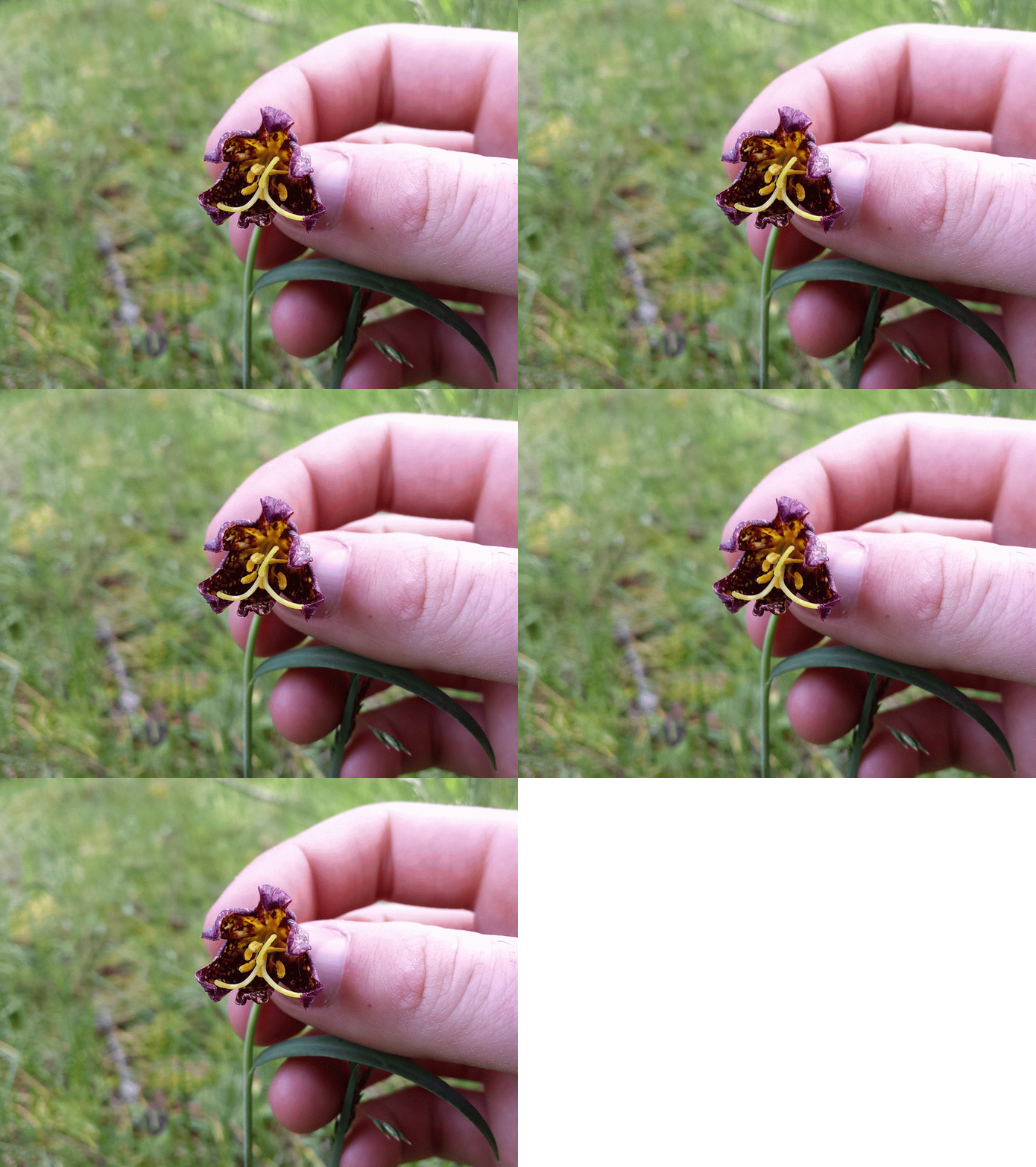
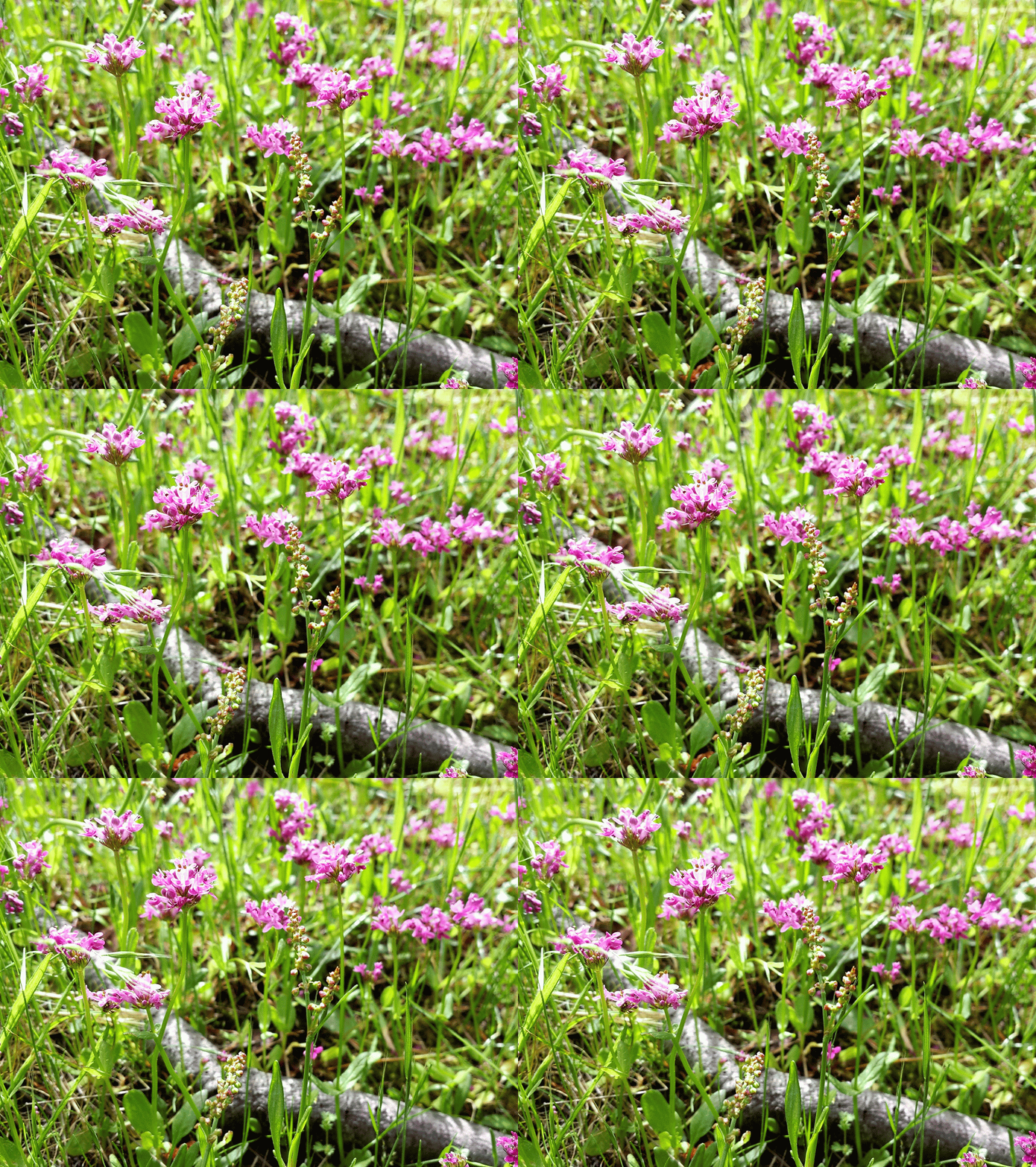
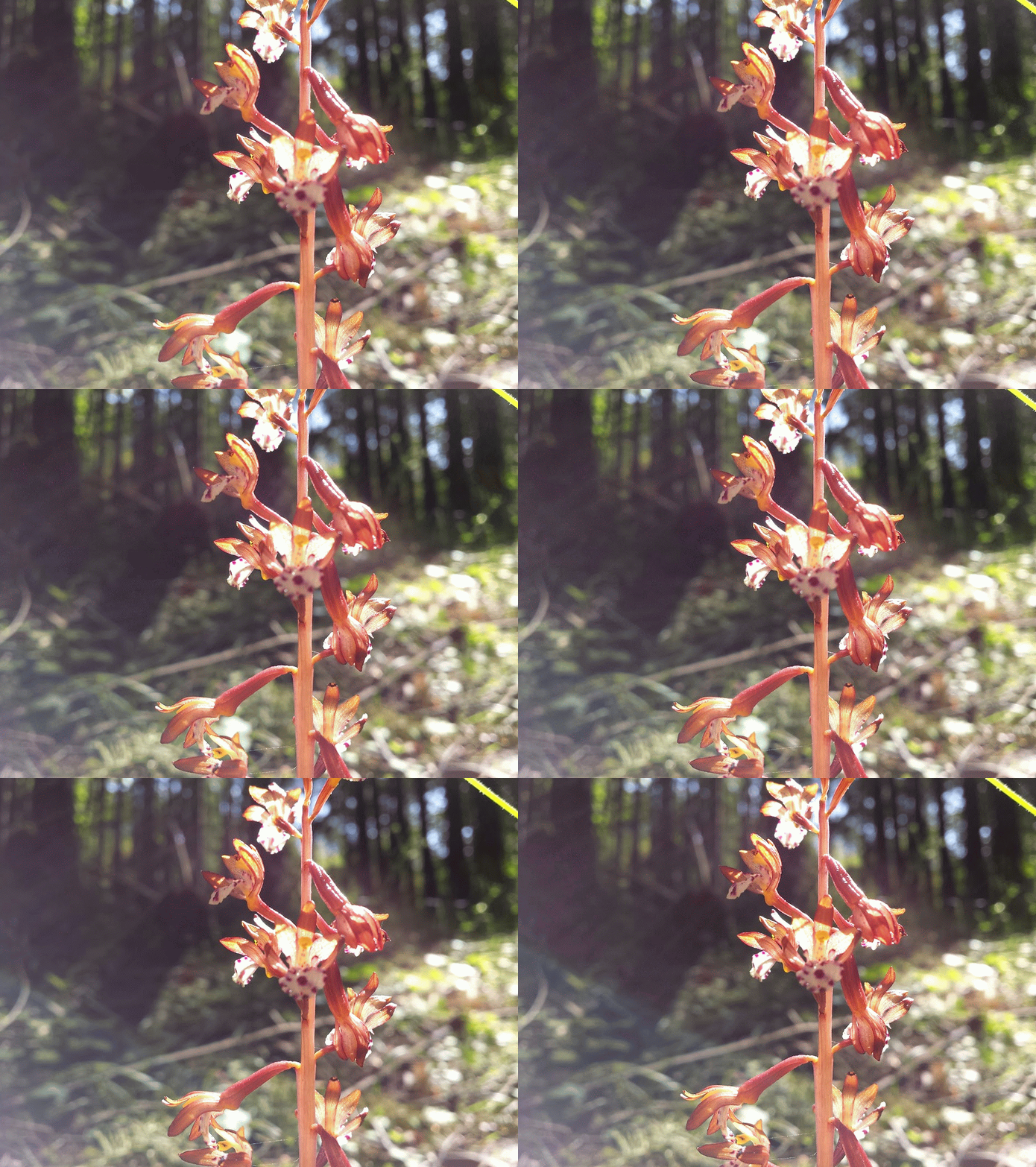
20140522_105607_1-MOTION 20140522_105450_2-MOTION 20140522_104156_1-MOTION 20140522_103617_6-MOTION 20140510_161614_1-MOTION

Naturally there are many flowers here too. The San Juans are remarkably diverse despite their separation from the mainland.

20140706_150623_1-MOTION

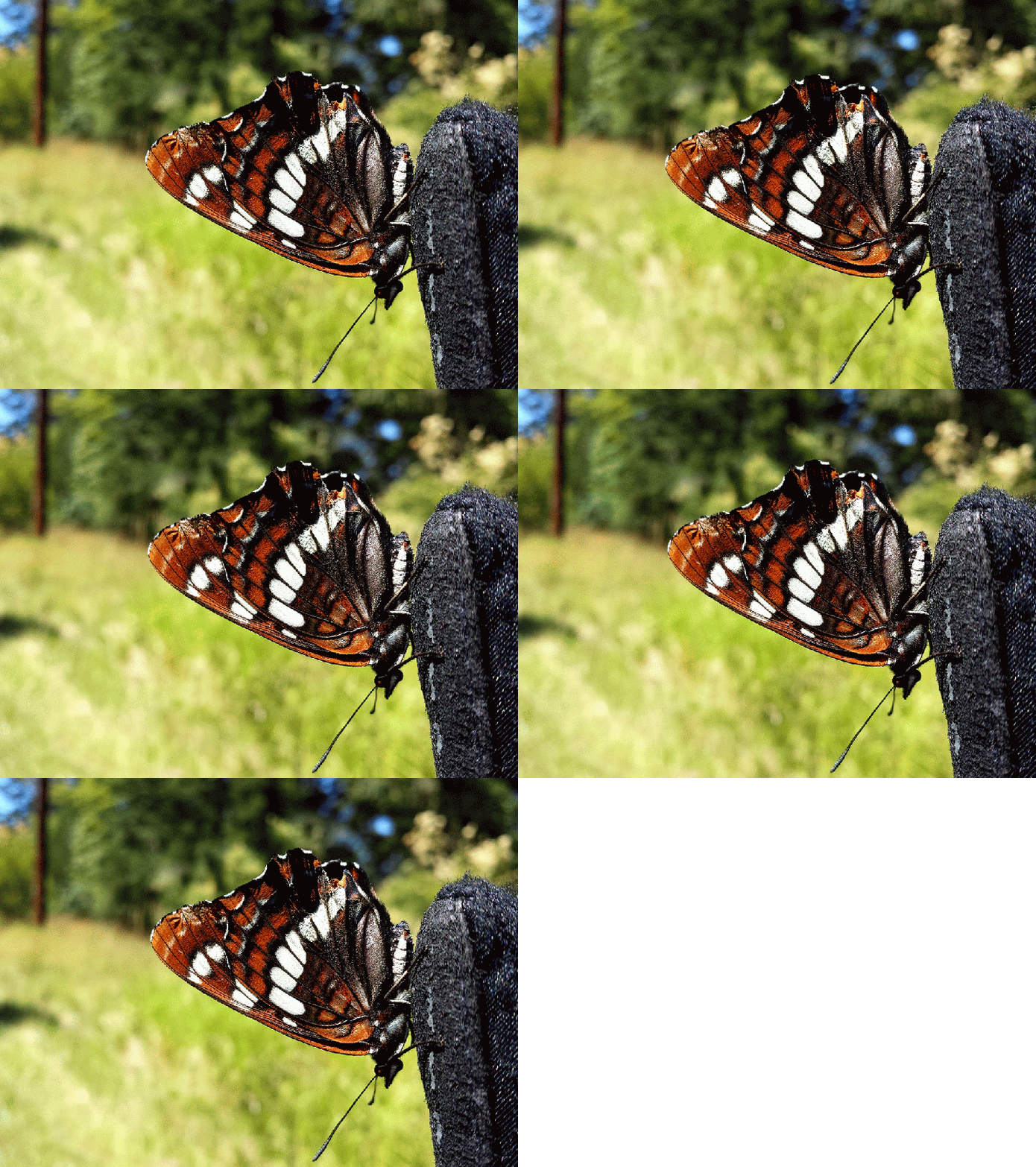
Some animals, like ground nesting Common Nighthawks, even find relative safety with less mammalian predators. The islands do restrict those that don’t wish to swim.20140817_141231_1-MOTION20140824_201321_1-MOTION

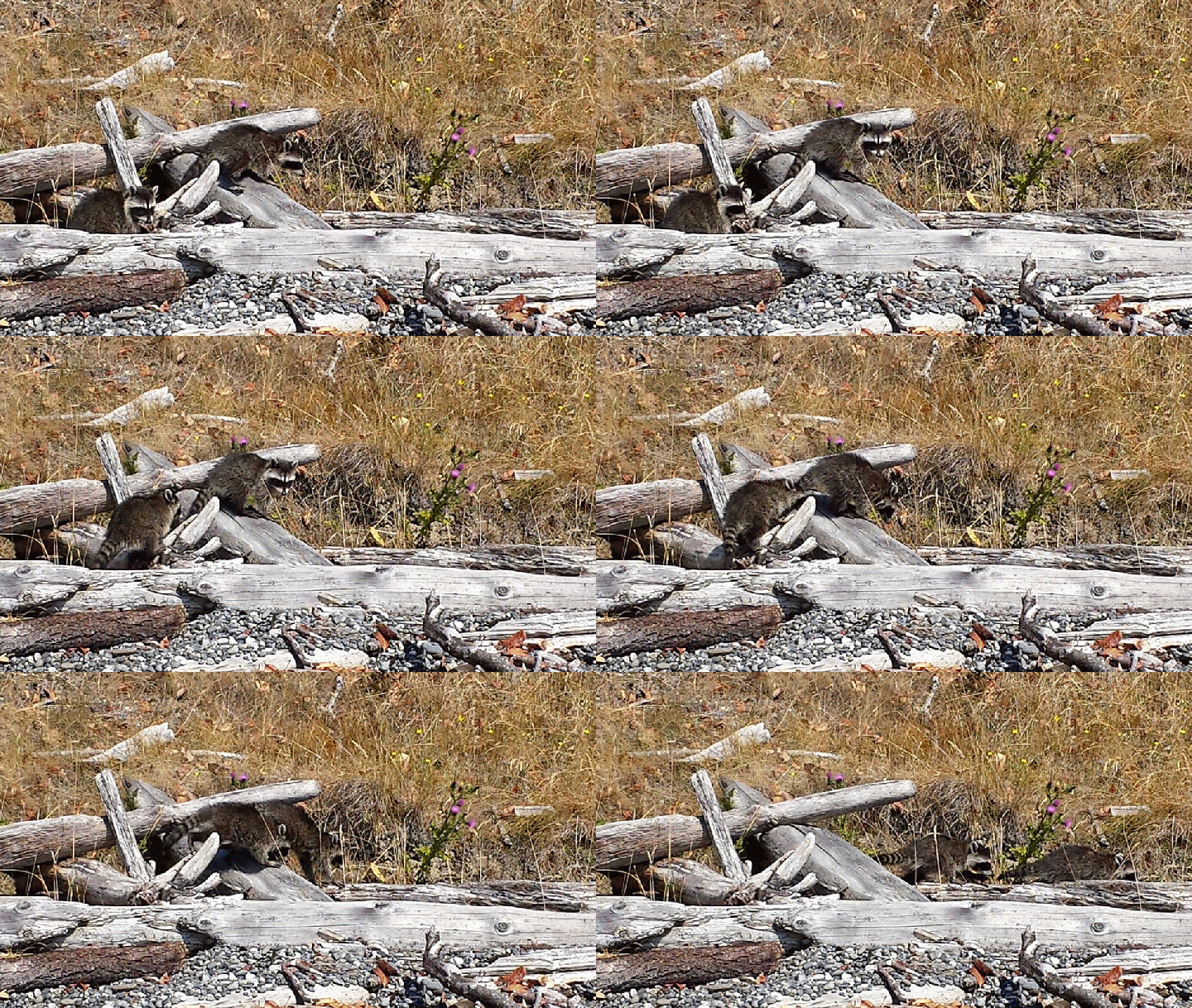
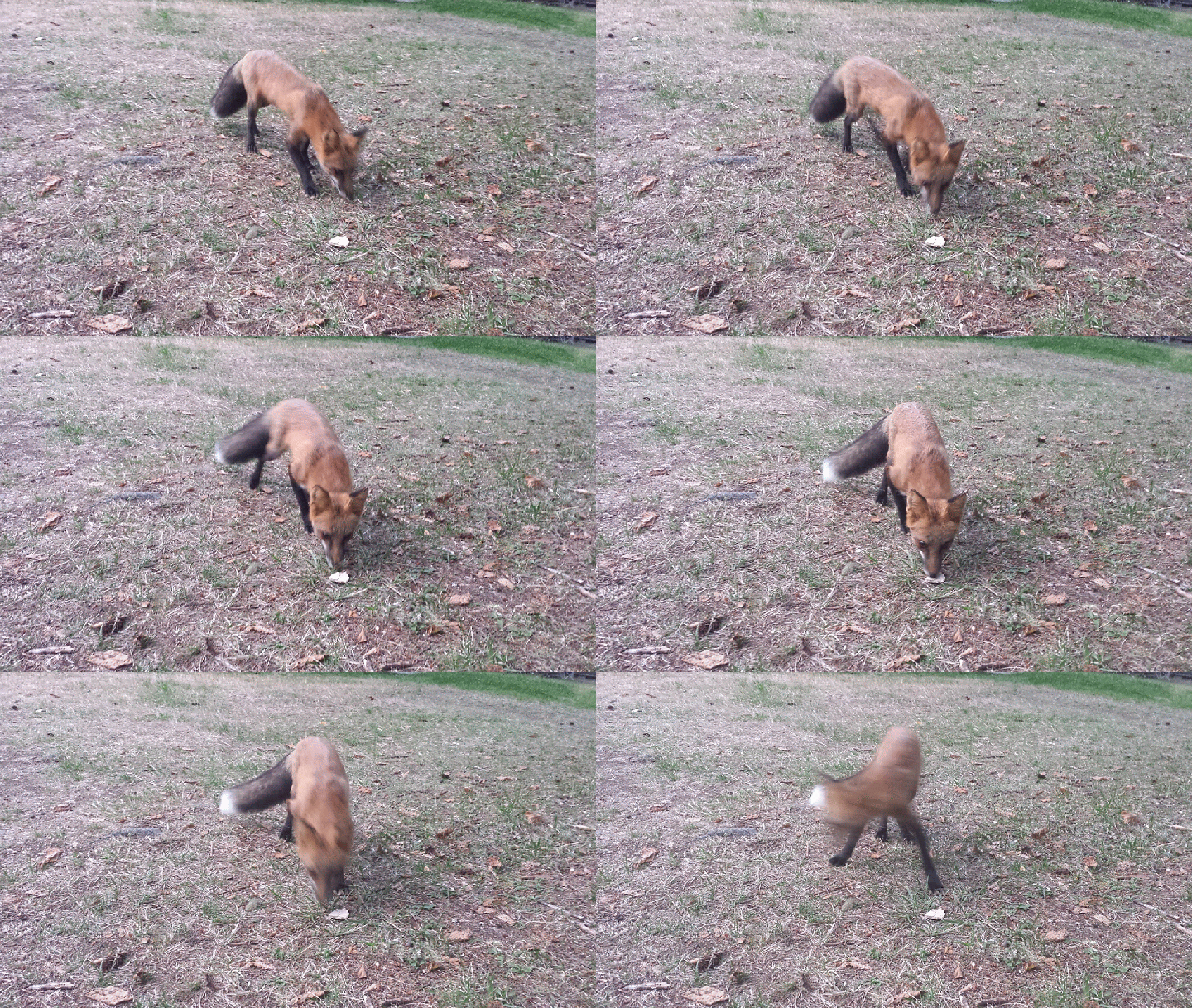
But they aren’t completely safe from native, and introduced carnivores.

20140807_171711_1-MOTION

You will naturally want to explore the archipelago and many do so by bike.

20140620_204829_1-MOTION20140525_152749_1-MOTION20140729_194224_1-MOTION

20140901_140302_1-MOTION

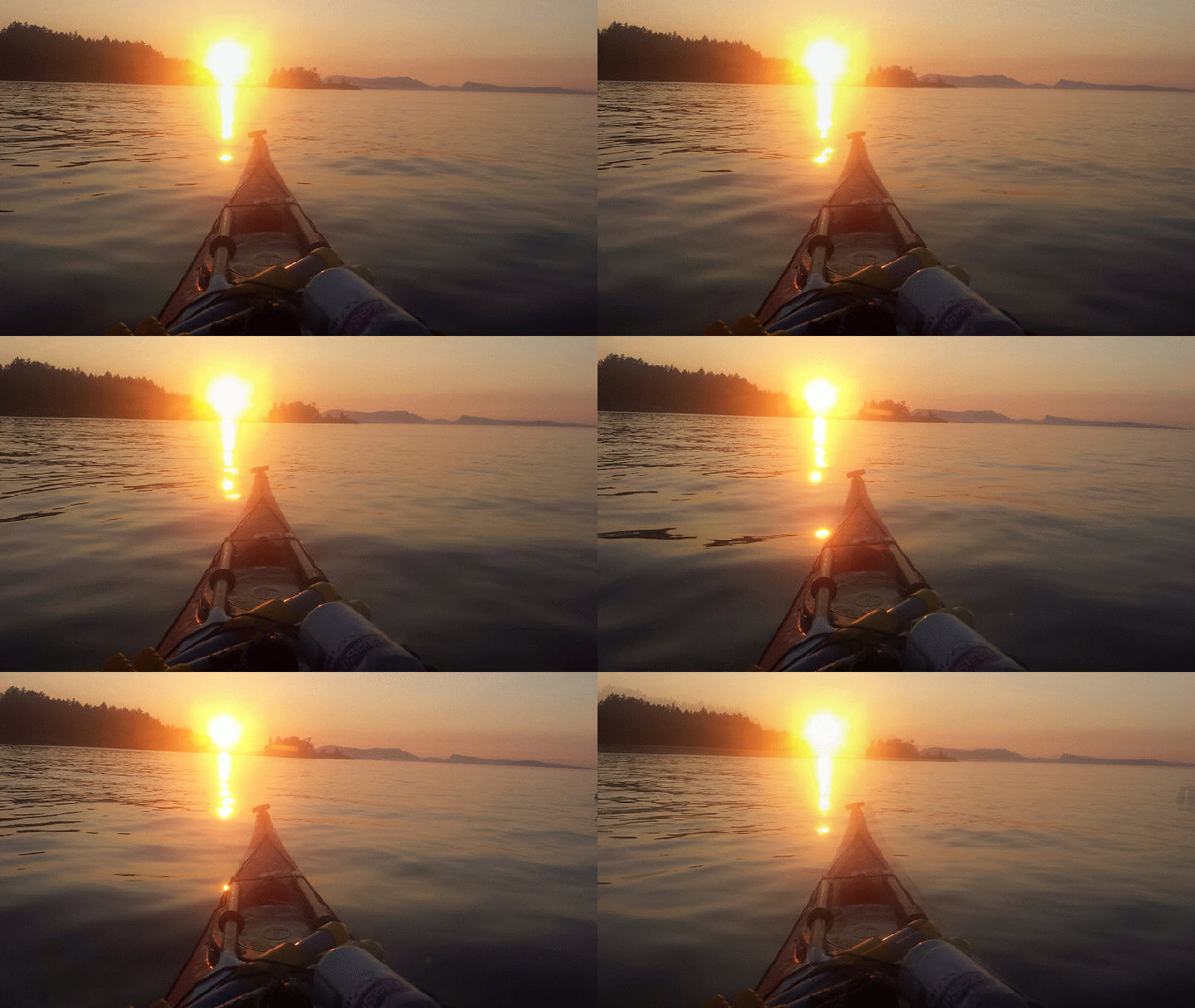
But my favorite way is by boat.

20140714_211229_1-MOTION20140712_103018_1-MOTION

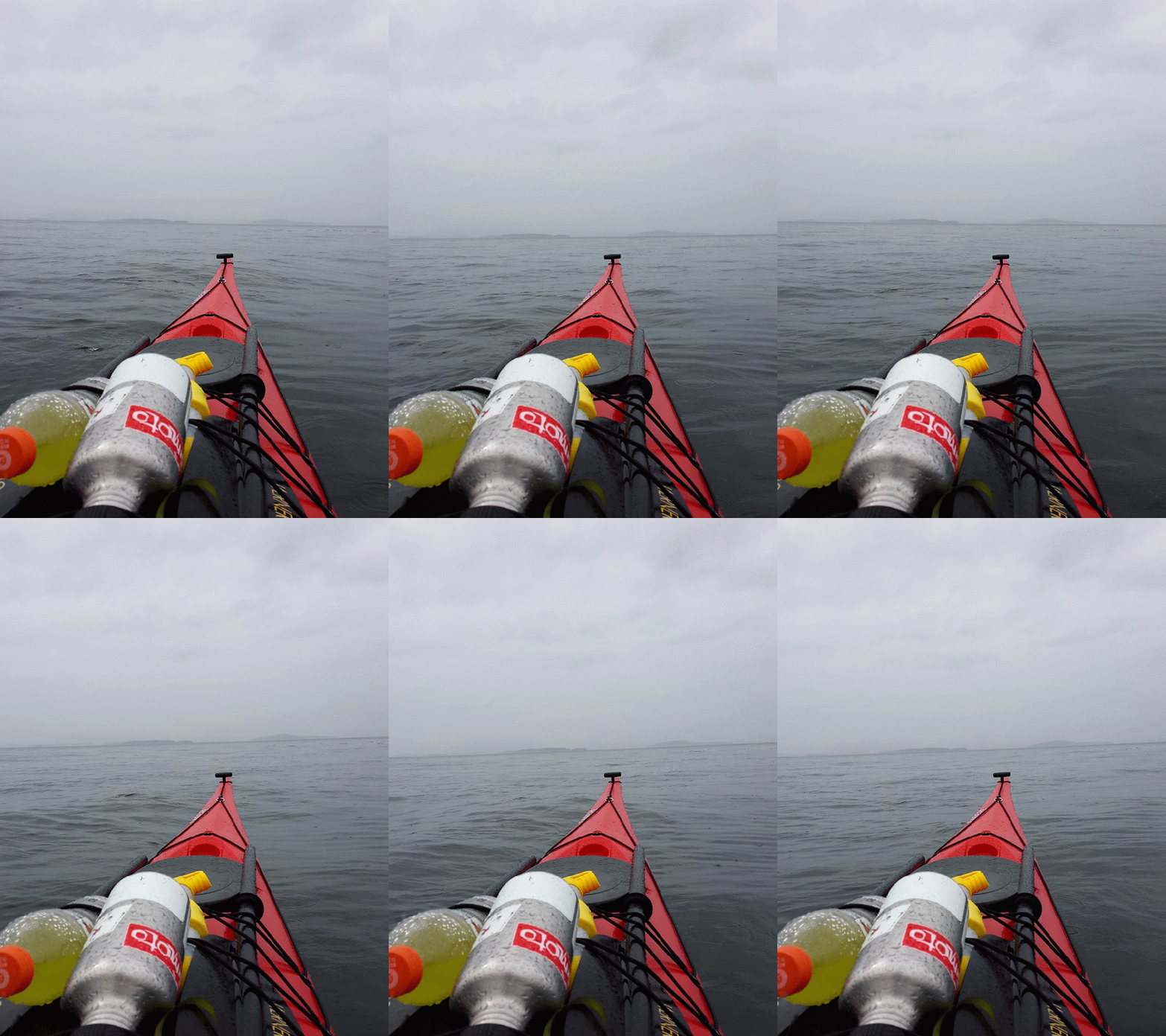
This way, you can explore the seascapes of habitat and inhabitant both near-shore and far.

20140816_122505_1-MOTION20140816_115309-MOTION20140816_120751_1-MOTION20140824_175905_1-MOTION

20140920_111951_1-MOTION

20140816_154800-MOTION

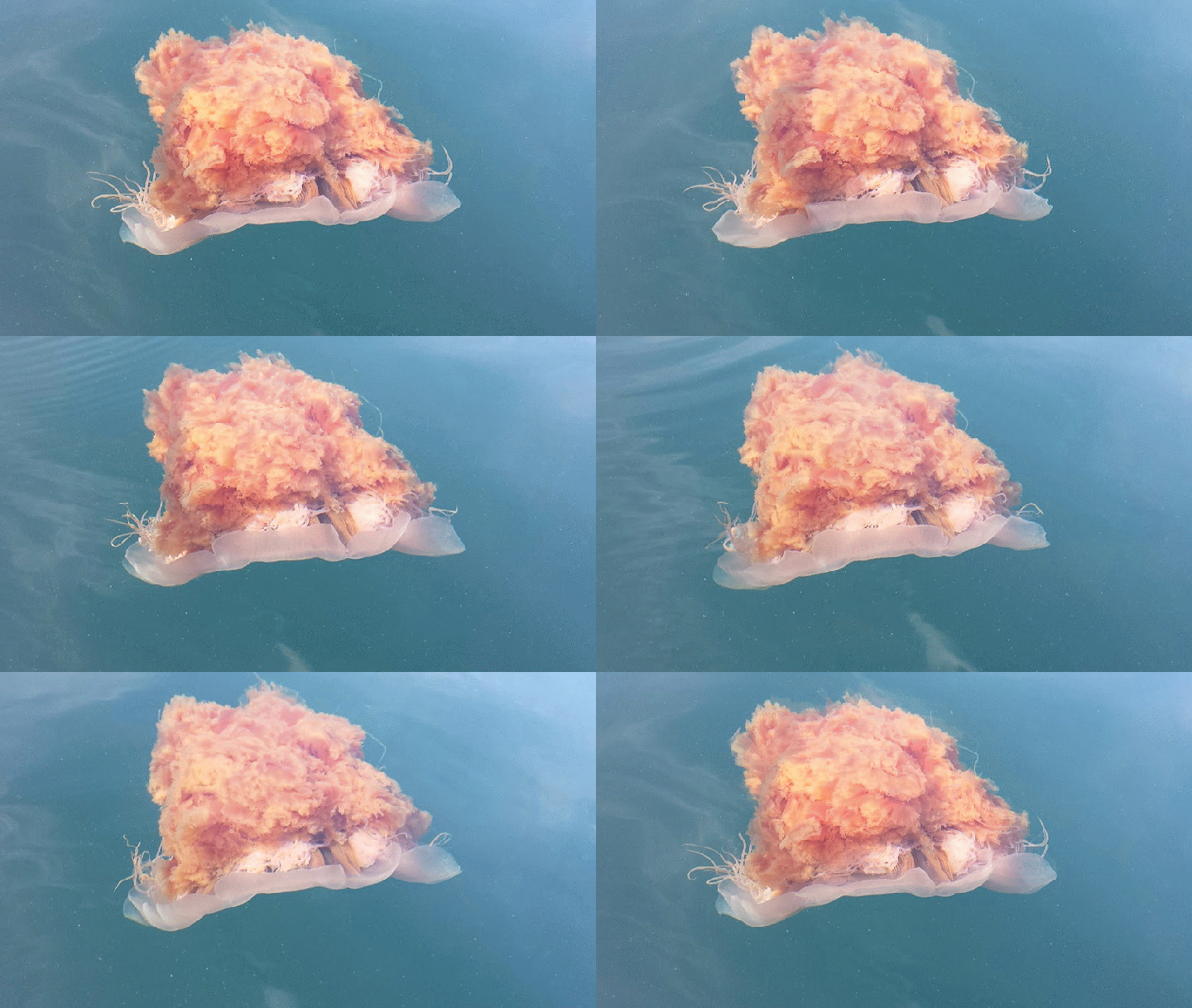
You’ll likely find yourself enamored with the locals too. Recognizablely vertebrate and amorphously other.

20140902_195532_1-MOTION

20140817_200657-MOTION

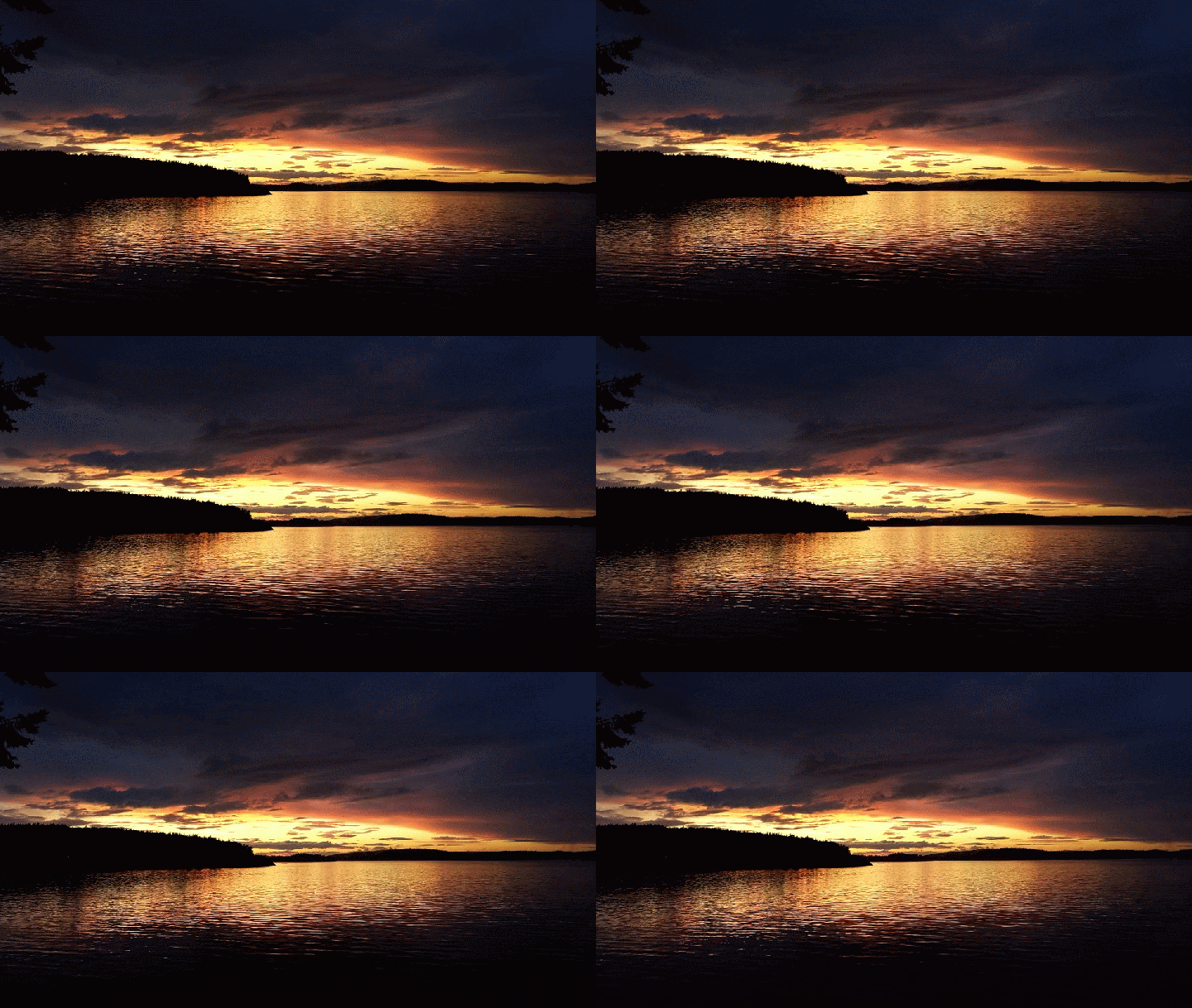
Pacific Northwest summer days last; but you’ll discover suddenly that they still draw to a close.

20140730_090156_1-MOTION

Hopefully, at some point during the day, you’ve had a moment to sit and contemplate.

20140911_121721_1-MOTION

For in those moments I’m reminded to see the small things,

20140714_213140_1-MOTION

to appreciate moments with like minds,20140920_105247_1-MOTION


20140825_081750_1-MOTION20140910_142930_1-MOTION


to see the water’s movement as more than a barrier but the life blood of these islands,

20140910_111224_1-MOTION

that life and death are both beautiful,

20140920_114133_1-MOTION

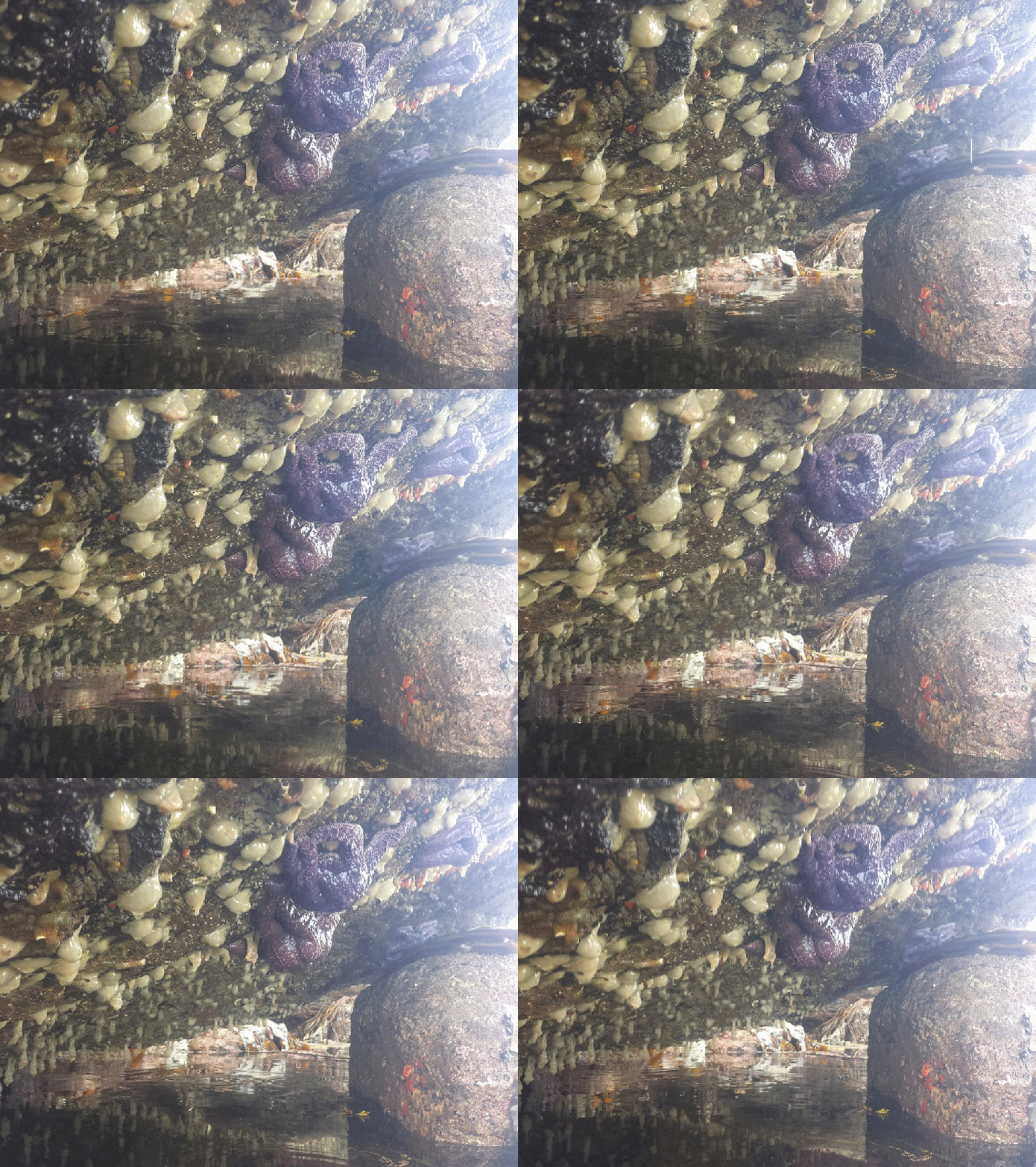
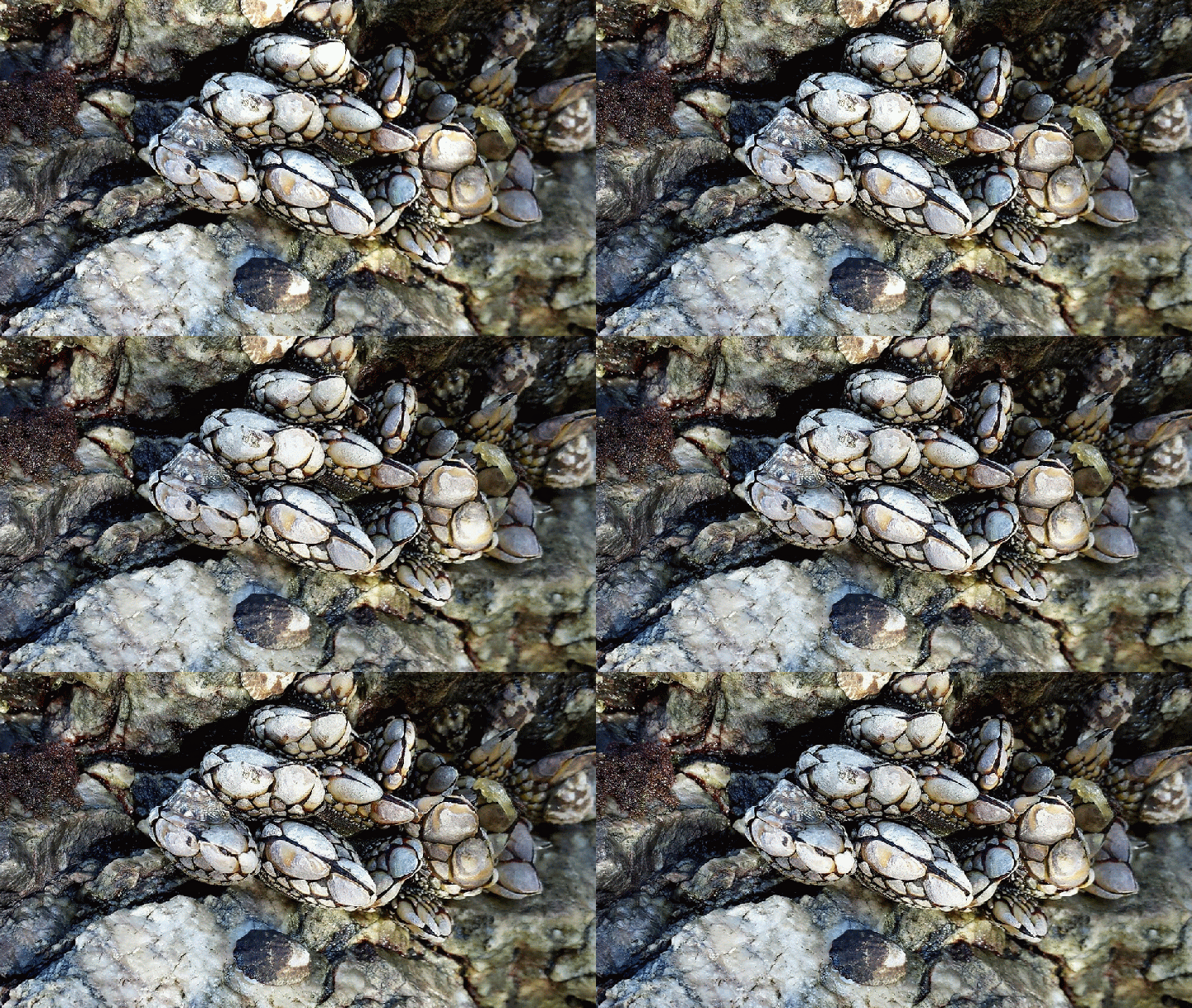
and that light playing across gooseneck barnacles is a joy no one can take away from you.

comments 2

A Natural History Lexicon: Rictal Bristle

Welcome to Wingtrip’s Natural History Lexicon, a regular rundown of natural history terms. To find future and past posts on this subject, simply search “natural history lexicon” or find it in the tags. Thanks for reading!

Rictal Bristle

\ˈrik-təl\  \ˈbri-səl\

– Highly specialized feathers found around a bird’s face and bill, that are both stiff and lack barbs on their outermost length.

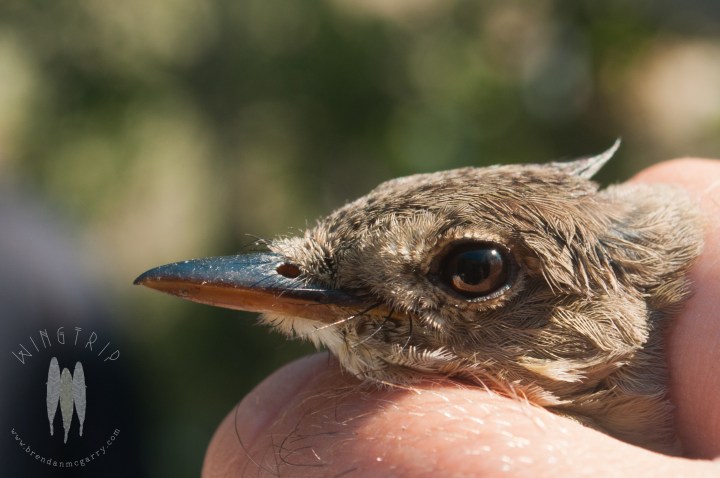
As I walked outside today, my ear caught the monotonous pipping of a Olive-side Flycatcher, topping a Douglas fir towering overhead. This was a slight surprise; our resident San Juan Islands breeders have long been silent, and absent. My assumption was that this bird was moving through from further North, bound for Mexico and beyond. Migration is afoot and the meadows and forests of the San Juans have been alive with the sounds of birds heading for better pasture. Many of these birds are insectivorous, leaving for places with winter supply. This is what brought me to the term “rictal bristle” (not be confused with rectal bristles, which are embarrassing and no one wants to talk about).

DSC_2526

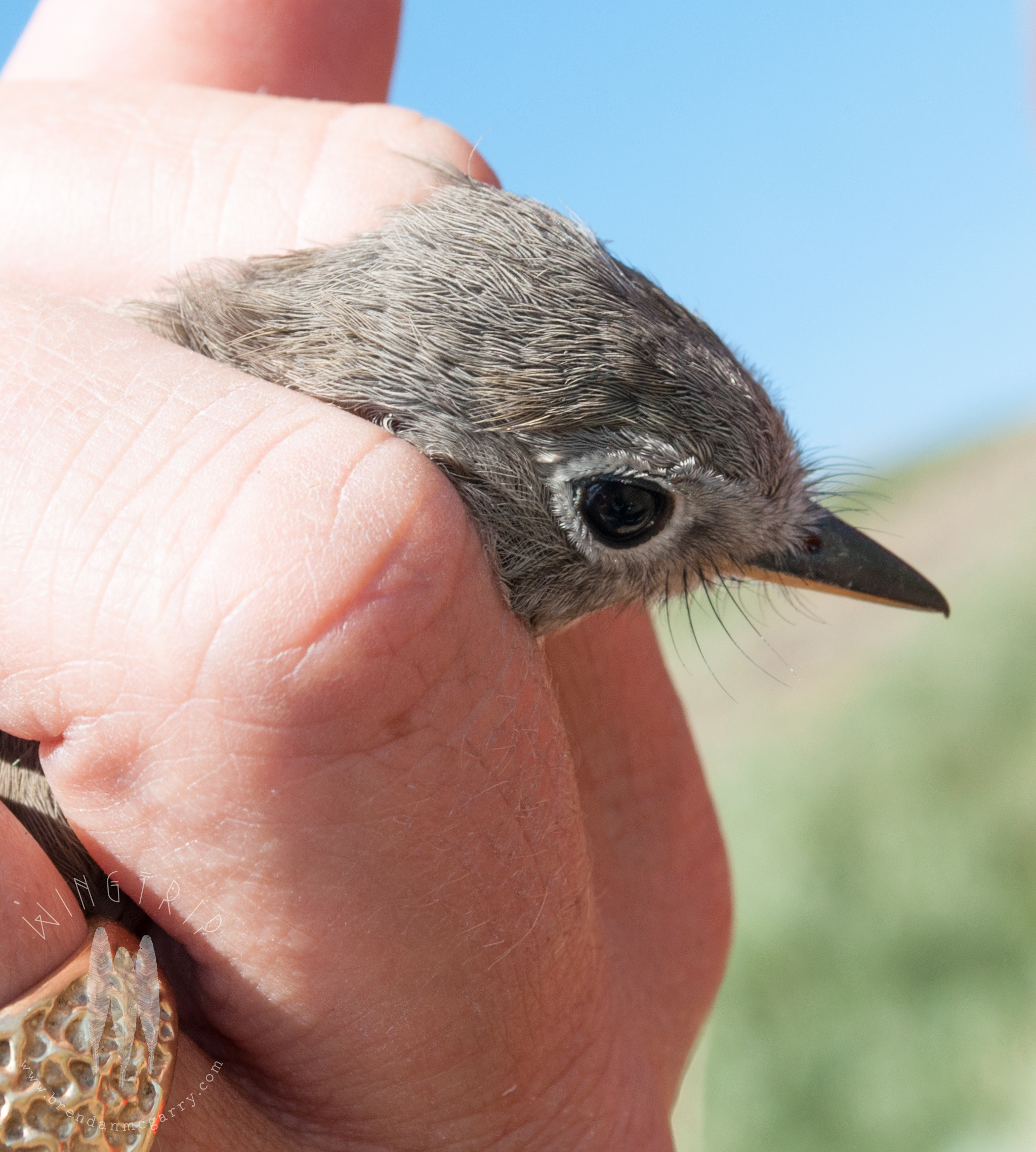
An example of rictal bristles on a flycatcher being banded by scientists in Central Oregon.

Many birds have bristle like feathers serving a variety of functions, but all hold the same profile of simple, hair-like feathers consisting of a mostly bare rachis (the shaft) and sometimes basic plumes near the base. Most insectivorous birds have rictal bristles around their mouth and it’s widely been assumed these help them scoop up insects more effectively. Because they are stiff, bristles are also thought to be protective, positioned around the delicate eyes and nostrils (think of those wriggling, potentially dangerous insect prey). They also may provide tactile sense (there’s debate of their purpose only because it’s so hard to see these feathers in action). Most evident on insectivorous birds that catch their prey on the wing, they also seem to aid birds leading nocturnal lives. Nightjars (both insectivorous and nocturnal) are the prime example. You really begin to appreciate their placement when you hold a bird such as a flycatcher above in the hand.

As I realize yet again that every season is simply too short, for the human mind and the temperate world’s denizens, I can’t help but pine for the autumnal loss of swallows, nighthawks, flycatchers, and vireos that will be gone for months on end. Thankfully seabirds will soon flood from the North and the permanent residents continue their lives nearby. Before I have time to realize they’ve been gone too long, I’ll step outside in the spring and find myself again listening to the insistence of a Olive-sided Flycatcher.

comment 0

A Natural History Lexicon: Tidewrack

Tidewrack
Noun

-Seaweed and similar marine vegetation and rubbish deposited along a shore by a receding tide.

Cruise the shoreline of a tidal water. Notice irregularities strewn across beach length horizons. Whether the beach is rocky or sandy, it makes no difference to the water, it shoves what it’s through with to land. Rubbish, however, these tangles are not. They may be jumbles of still alive seaweed, shelter for beach crustaceans, ephemoral homes til a tide again reaches them. Wracks of bull kelp wash ashore, like so many extinguished snakes, as winter takes hold and the kelp beds evaporate into dormancy. In tidewracks we are reminded of our far reaching impacts. Anthropogenic artifacts drift to us across broad expanses and unlike the twists of animal and vegetable, our forgotten objects will float memorializing a moment of carelessness much beyond our lifetimes. The tidewrack is a mystery, amorphous, fluid, and always changing.

Detritus, tidewrack, left by a very high tide, sitting high and dry.

Detritus, tidewrack, left by a very high tide, sitting high and dry.

comment 1

A Natural History Lexicon: Precocial

Welcome to the second installment of Wingtrip’s Natural History Lexicon, a vocabularly rundown of important words in the world of natural history study. To find future posts on this subject, simply search “natural history lexicon” or find it in the tags. Thanks for reading!

Precocial
/priˈkōSHəl/
adjective

-(of a young bird or other animal) hatched or born in an advanced state and able to feed itself almost immediately.
-(of a particular species) having precocial young.

You probably recognize the etymology of this term. Precocious is an adjective used to describe youthful maturity in humans. Birds, which are the species that typically are described by this term are considered precocial because many bird species span a continuum in the maturity of their newly hatched young. At one end we have the precocial, hatched with eyes open, fully feathered, even able to move about and find their own food within hours of emerging from the shell, (the absolute extreme are a few species that literally walk away from their hatchlings, which are fully on their own at “birth”). On the other extreme we have the altricial (meaning “requiring nourishment), hatching with eyes closed and completely unfeathered, essentially helpless in the nest. These strategies often relate to the life history of the species in question. Many precocial species hatch in an open nest, on or near the ground (ducks and chickens are a common example). Precociality is considered a more primitive trait in birds, because more advanced nests like excavated cavities or woven nests typically hold altricial young.

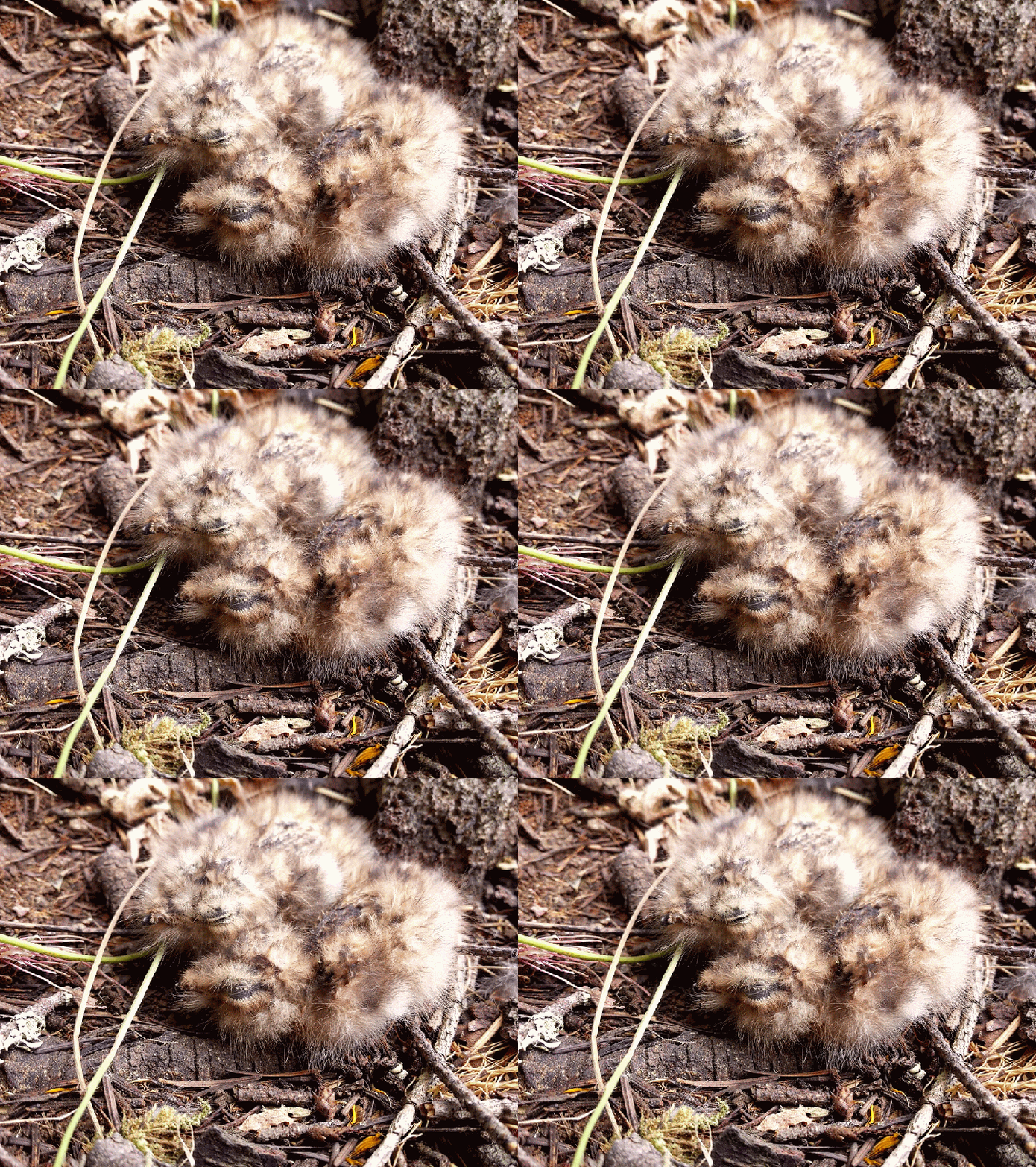
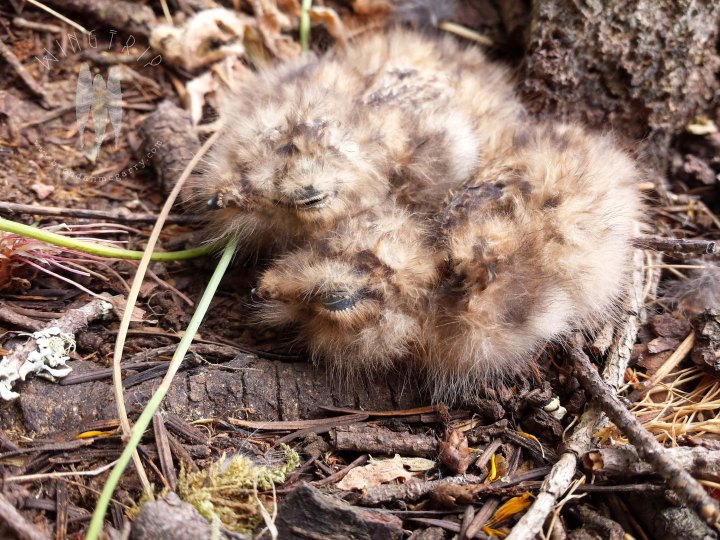
The continuum between these two reproductive strategies is not a clearly defined line. An example of this being the Common Nighthawk hatchlings in the photo above. They are considered semi-precocious, with mostly open eyes and feathers upon hatching but requiring more help from their parents because they aren’t as mobile as some precocial young; in particular they need to be fed.

COME Watermarked 2

This bit of vocabulary can be turned in our direction. Humans are solidly altricial at birth.

comments 10

Introducing…a Natural History Lexicon!

Recently, it came to my attention that in the popularization of nature, many of us have been left in the dust on proper vocabulary and terms for the  things we encounter. Our effectiveness wavers when this happens, and despite a personal appreciation of the dismissal of formalities, a greater vocabulary for all is undeniably means for a better world. I am no different than many, because while I know birds well, I can’t name every structure on a plant nor many those of most invertebrates; I too will be a learning much.

So, while things can seem semantic to the non-professional, I think that we could all do with a livelier vocabulary. As of today, I embark on a quest to enliven your idiolect, so we can be a little more fluent in the dialect of natural history (knowing more about the natural world is another undeniable good in my book). Some of the words introduced may make some of us say “Duh,” but please keep those thoughts to yourself. I’m operating from this vantage: most of us don’t know as much as we think and hubris can bar us from real learning.

“The doorstep to the temple of wisdom is a knowledge of our own ignorance.”

Benjamin Franklin

And with that, here’s your first word:

Stamen

14141660015_859c0019ff_k

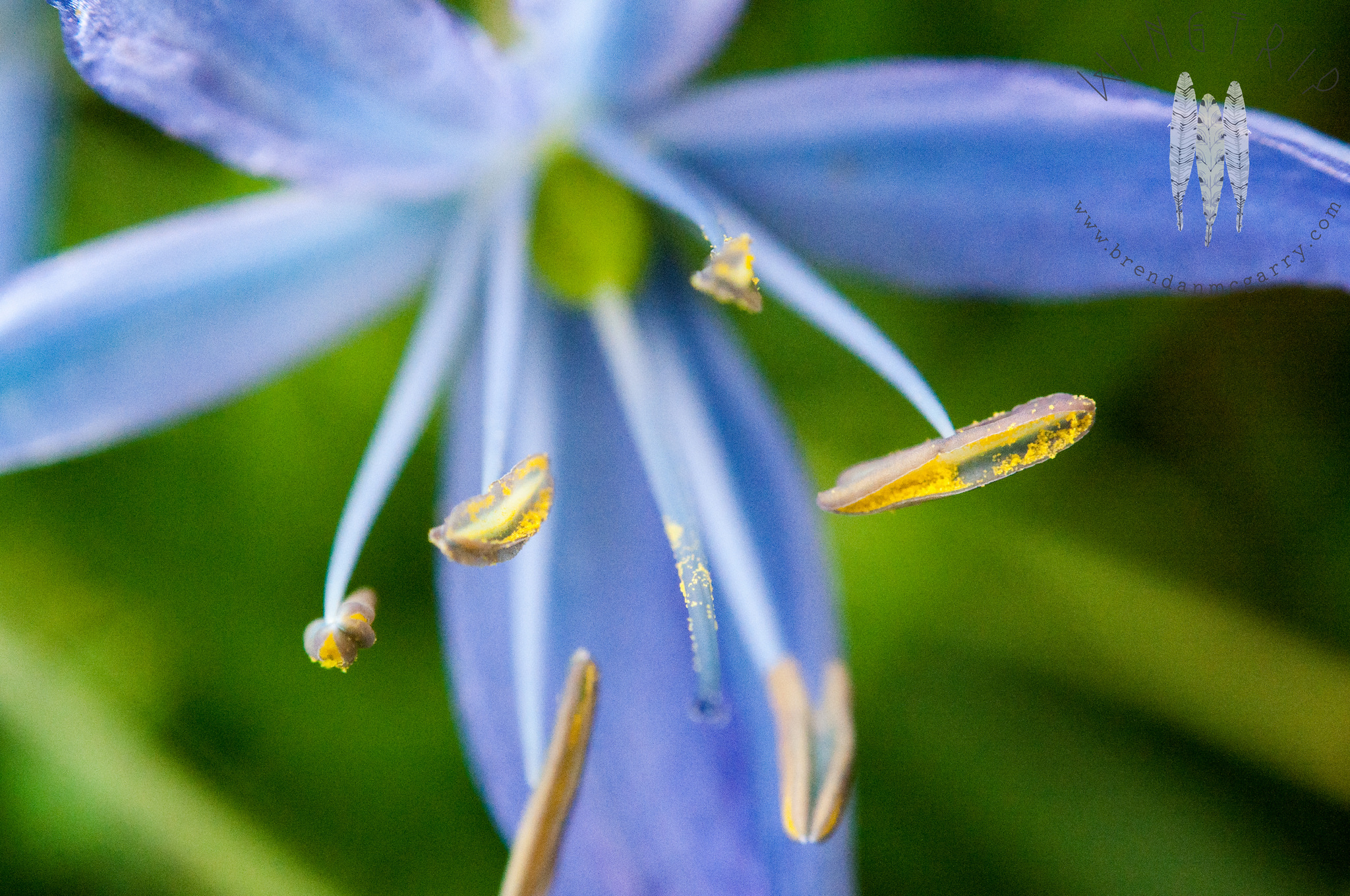
Stamen are the male portion of a flower. Many flowers are hermaphroditic, bearing both male and female parts, but some only carry one or the other. This Common Camas (Camassia quamash) flower has both and is considered a “complete flower.”  Stamens consist of a filament, the stalk, on the end of which dangles the anther (prominent in this image). Pollen production happens on the anther, intended to drift off, on a pollinating animal or simply in the wind, to fertilize another flower nearby. Collectively the stamens of a flower are called the androecium, which is a big word I don’t expect anyone to be using in everyday discussions of plants. But from now on, you have to say stamen instead of “those pollen thingies.” We’ve still got plenty of summer to enjoy some flowers, you might as well learn a bit about them.

And don’t you worry, we’ll talk about other flower thingies at a later date.


comments 2

Visualizing the Pitayal Pt. 4 – Plants in Two Parts

Botanists, don’t read the next line. Ok? Good.

I don’t like doing vegetation surveys.

Ok, you can start reading again.

Plants and animals are inexorably bound. If you have even the vaguest interest in the natural world, you should claim fealty to Kingdom Plantae. Knowing this and loving plants, still doesn’t mean I’ll rescind the above statement.

13615919654_32570ff558_b

Mamalaria cactus growing beneath one of the copious leguminous trees in the area. Many small cacti thrive in the shelter because they don’t get trampled on or found my animals that eat them.

As an example, just because you appreciate that your stomach bacteria processes much of what you throw their way, doesn’t mean that you want to survey the bacterial makeup of your gut. Similarly, just because you know that plants largely define an environment, that plants can be stunningly beautiful and that plants are just as fascinating as say, birds, doesn’t mean you want to enjoy walking through a plot surveying them. Unfortunately for me, this is an essential aspect of many studies. Surveying plants demonstrates habitat, which further informs biological diversity. Despite my flippant comments, I owe much of my botanist abilities to surveys and ultimately I am glad to have experienced them.

13607155825_67a1a1ab5f_b

Lots of lichen in the region. I know exactly zero about them. Not a lot of people know much more.

Surprisingly, I didn’t hear any complaining out of the Navopatia interns when it came time to do vegetation surveys. It was a hot afternoon on a plot several kilometers from camp and I kept waiting for some belly aching, but no nothing but jolliness. (These interns were unreal, I thought complaining about field work was part of the job.)

My formative vegetation surveys included scrambling through post forest fire ecosystems in the Northern Sierras. We measured the diameter of charred trunks, wading through the robust resurgence of spiky shrubs called chapparal whitethorn (Ceanothus leucodermis). Many afternoons were filled with punctured Carhartts and looking the part of a coal miner. Of course, if we’re comparing miseries, the interns at Navopatia were measuring giant cacti.

The middle of the day in the desert is uneasily still. A few Northern Mockingbirds chucks cut the murmurs of interns going about their work, but nothing else stirred but some gasps of wind. I was tagging along to get images of them “doing science,” a surprisingly difficult thing to capture interestingly in photos (unless the subjects are measuring giant carpet pythons or radio collaring snow leopards). Thankfully for those at work, there was no hugging of cacti to be done, despite how much I would have liked those photos.

13607611023_7fc901d0b0_b

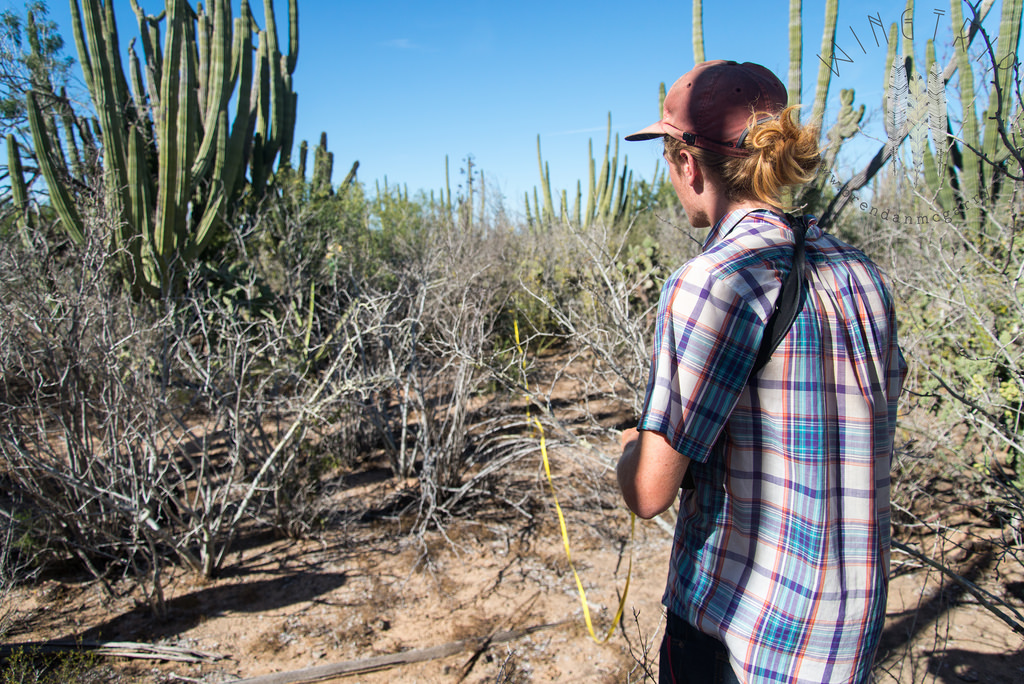
Wyatt running a line through the scrub.

When assaying plant mass and density (rather recording species richness and diversity), you need some tools. You can’t possibly count every plant in a plot (for those who haven’t made the connection, the random plots where the area searches for birds happen, also get their paired plant data). So, you sample the population.

If you’ve been following along, you may have just thought, how in the world do you identify 800 some plant species, when most of your workforce are more ornithologist than botanist? The answer is that you don’t. Vegetation surveys that accompany bird surveys are designed to get a ecological snapshot of an area and typically look at plants shrub size and larger. Usually, this relives the need for a dichotomous key, because even if you are an idiot at plants, you can learn the predominant species with some coaching. Thankfully Sallie Herman of t he field station happens to be a crack botanist and trains the students every year.

This corner of the New World has had some serious botanical explorers. The most famous was Howard Scott Gentry, who ventured into the Sonoran wilderness fresh out of his undergraduate at UC Berkeley in 1933. Still in the golden days of natural history studies, he was able to make a living traipsing about from coast to peak collecting plants and sending them off to herbariums back in the states. Spending twenty years exploring, mostly in the Sierra Madre, he developed a good sense for the floral makeup of the region, learning much from time living with the various indigenous people in the region. His book Rio Mayo Plants of Sonora Chihuahua, which was later updated into Gentry’s Rio Mayo Plants is the tome after which further studies have been based.

Before Gentry died in 1993 at 89, he had become the foremost expert on the region’s Agaves and amongst other things while working for the USDA, was responsible for the introduction of seedless grapes to North America. His initial work in the region, would have looked different from the work of the Field Station, an important but primary collecting forays, but it had a similar goal. Understanding what species called which spaces home.

13607680233_55017d2e3a_b

Jilly measuring heights.

Armed with measuring tape to mark the survey area, a pole to measure height and girth, and a clipboard to record the data, the interns picked around the spikes helping reach this same goal. Sometimes there was no avoiding wedging between plants. A pitaya and chunari grown in a strangling embrace, having seeded right next to each-other, required gingerly nimble measurement. The life of a field biologist would be easier, but entirely more dull, if spacing was predictable and even. I happily sat to the side and snapped photos from safety.

13615574763_23c37de2f8_b

Pitaya and Chunari growing into eachother.

What I’ve always liked most about plant surveys (besides getting them over with), is the quiet, methodical time you spend while conducting them. Most land bird surveys are comparatively frantic affairs, racing against midday. As I’ve grown older, I’ve appreciated slowing down a bit, with time to contemplate, learn, and regurgitate irrationally flowery writing about the landscape. The operative part of all this is that in surveying vegetation, one has time to learn at a realistic pace.

13607696255_884a034efd_b

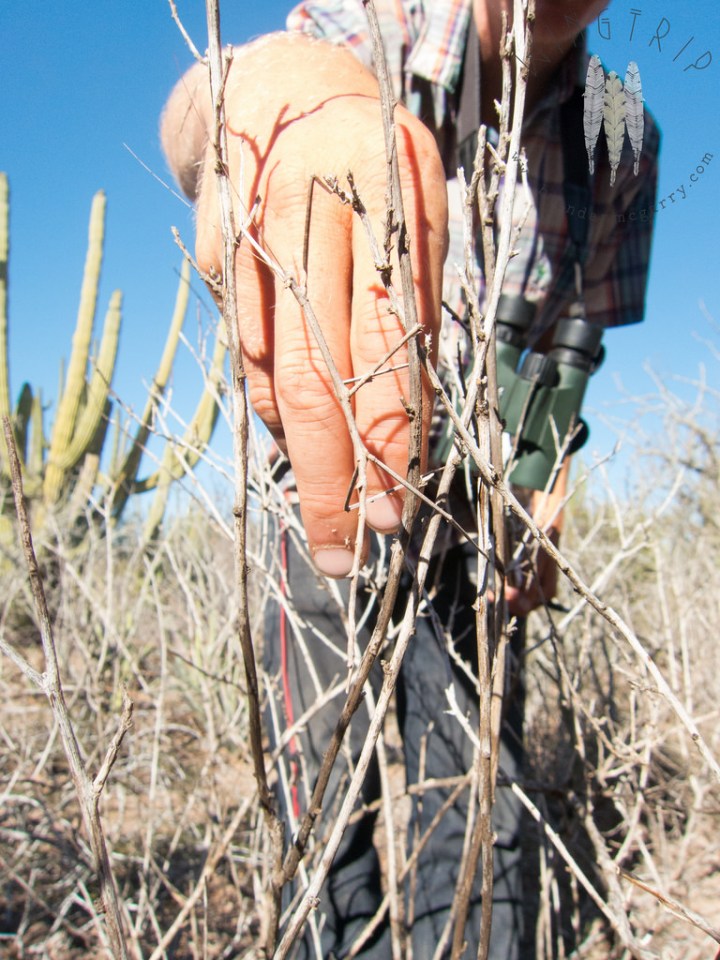
Taking your time on vegetation surveys, you find things like this, a walking stick!