comment 1

Interview: Ben Freeman and a Spine of Papua Biodiversity Pt. 2

Brendan McGarry: I’m guessing that you were working hard for a short period of time and that was about it – did you have any time for recreating or was it just eat, sleep, work?

Ben Freeman: We were pretty regimented due to the amount of work we had to do. It was a busy schedule, but we took a couple days off towards the end of the trip to let workers hike back to their villages for Sunday breaks — their day of rest, church time etc — and to do laundry, sleep etc.  So it was eat, sleep, work but on a given day the work came in patches; the nets were most active in the morning and much of the midday was usually fairly relaxed; we’d all stretch out if it was sunny and make little dens of ferns to sleep on (fern stay dry and make good bedding).

BM: Did you spend any time interacting with ‘locals’?

BF: Yup. All the time. Everything we did was thanks to the hard work of our workers and porters. PNG is famous for its linguistic diversity — over 700 languages spoken on the island — but everyone uses an English-based creole language called Tok Pisin to communicate. So we tried to learn Tok Pisin and tell stories of life in America while the local guys tried to teach us Tok Pisin and tell us stories about village life and hunting trips to the bush (the “bush” being the forest, or anywhere that is not a human-dominated landscape).

BM: What were your favorite species while you were there?  Avian or otherwise.

BF: The birds of paradise were of course fantastic; I think we saw a total of seven species. But among the many many exciting and wonderful birds, I think I was most taken with the Papuan Hornbill. We first encountered this lowland bird at the 900 m camp; I heard incredibly loud wingbeats and looked up into a small sky gap to see two large elongated dark shapes pass high overhead. I don’t think I’ve ever been so confused as to what type of bird I had just seen. I was considering eagles, cranes, all sorts of crazy possibilities, when Casti — one of the head CI fieldworkers — told us they were hornbills. Wow. We later were able to watch them closely in feeding trees, in groups of a dozen or more, and I remained captivated by them. So prehistoric; a huge bird with a wingbeat audible from hundreds of meters away…

BM: Give us an idea of the diversity – what is your take on the avifauna there and the general wealth of biodiversity.  New Guinea has a reputation.

BF: Tropical humid forests contain the majority of terrestrial vertebrate diversity on Earth, and this diversity is especially pronounced in tropical mountains, as the bird communities (and plants, and mammals etc etc) completely change as you change elevation. For example, the birds we observed at 2400 m were 100% different from the birds we observed at 200 m. This kind of diversity is emotionally exciting, perhaps especially to biologists, but also I think to most people. There are just so many species, and you consistently find new species at a given site, even after two or three full days. It’s a bit like being in a candy store — the candy store is emotionally exciting because of its tremendous diversity — different candies everywhere you look! It wouldn’t be as intriguing if the whole store was just full of tootsie rolls…So I think diversity in and of itself is stimulating, certainly to biologists, and PNG is certainly home to a huge amount of biodiversity.   It’s also the biggest expanse of tropical forest left in SE Asia. PNG’s forests have numerous threats — massive logging and mining projects run by foreign multinationals – but so much of it is so remote that it seems a promising place for conservation actions that also have strong social benefits, like the YUS project.

BM: Did you see evidence impacts from climate change or other human influences in the places you visited?

BF: We were told that people could now grow coconut palms at higher elevations than they could historically. If true, this would likely be a direct result of climate change. The human influences are pretty obvious — the areas around villages are mostly cut and serve as gardens to grow food. But they also plant coffee (often shade) and cacao (for chocolate) as cash crops. Imagine the difficulties in getting product to market though! carrying 40 kg bags of dried coffee beans 3 hours by hand to a place where a small plane can take it to a central processing location!  Perhaps the most interesting human impact on the landscape for me was the existence of large montane grasslands. These grasslands have existed for (likely) thousands of years, and are a result of repeated fires set by people. People like these grasslands, as they are a good home for wild pigs, which are hunted for meat. And, more generally, people worldwide like to live in an open landscape…

BM: What were some challenges of the work?

BF: It was obviously very remote. One big challenge was finding water, and enough of it. The local guys drank very little, but I need a gallon or so of drinking water per day when I’m working in a hot, humid environment. Plus water for cooking, washing dishes and at least a little bit of bathing. Finding water was surprisingly hard — at one field camp the nearest flowing water was 45 minutes hard walk downhill! We’ll just say we went easy on the bathing at this camp… Luckily the lowland field camps generally had small rivers nearby to bathe in daily.

BM: What’s next?  Where are you now? What’s in your future?

BF: I’m now starting a Ph.D program in Ecology & Evolutionary Biology at Cornell University. Alexa finished her Ph.D. in ecology at Virginia Tech in December 2009, she’s writing grants to get a post-doc studying reproductive physiology of birds. I’m hoping to study the diversity of tropical mountains for my dissertation (possibly in PNG, possibly in the Andes); why are elevational distributions so narrow in the tropics?

comment 0

Interview: Ben Freeman and a Spine of Papua Biodiversity Pt. 1

Just in case you didn’t snicker enough in the last interview that my initials are BM, here’s another, equally fascinating and envy inspiring conversation. A benefit of starting out young as a birder is that it’s a small world.  You inevitably meet some people who are headed amazing directions.  Ben Freeman is another ornithologically inclined acquaintance on the way to big things.  He recently returned from work in Papua New Guinea and is in his first year of graduate school at Cornell.  Surprisingly enough he has very similar interests to Ben Winger. Let’s be honest though, tropical mountains are riveting in so many ways.  Enjoy!

Brendan McGarry: First of all – where specifically did you go and what was the purpose of this trip?  Give us a little background of how you ended up in Papua New Guinea.

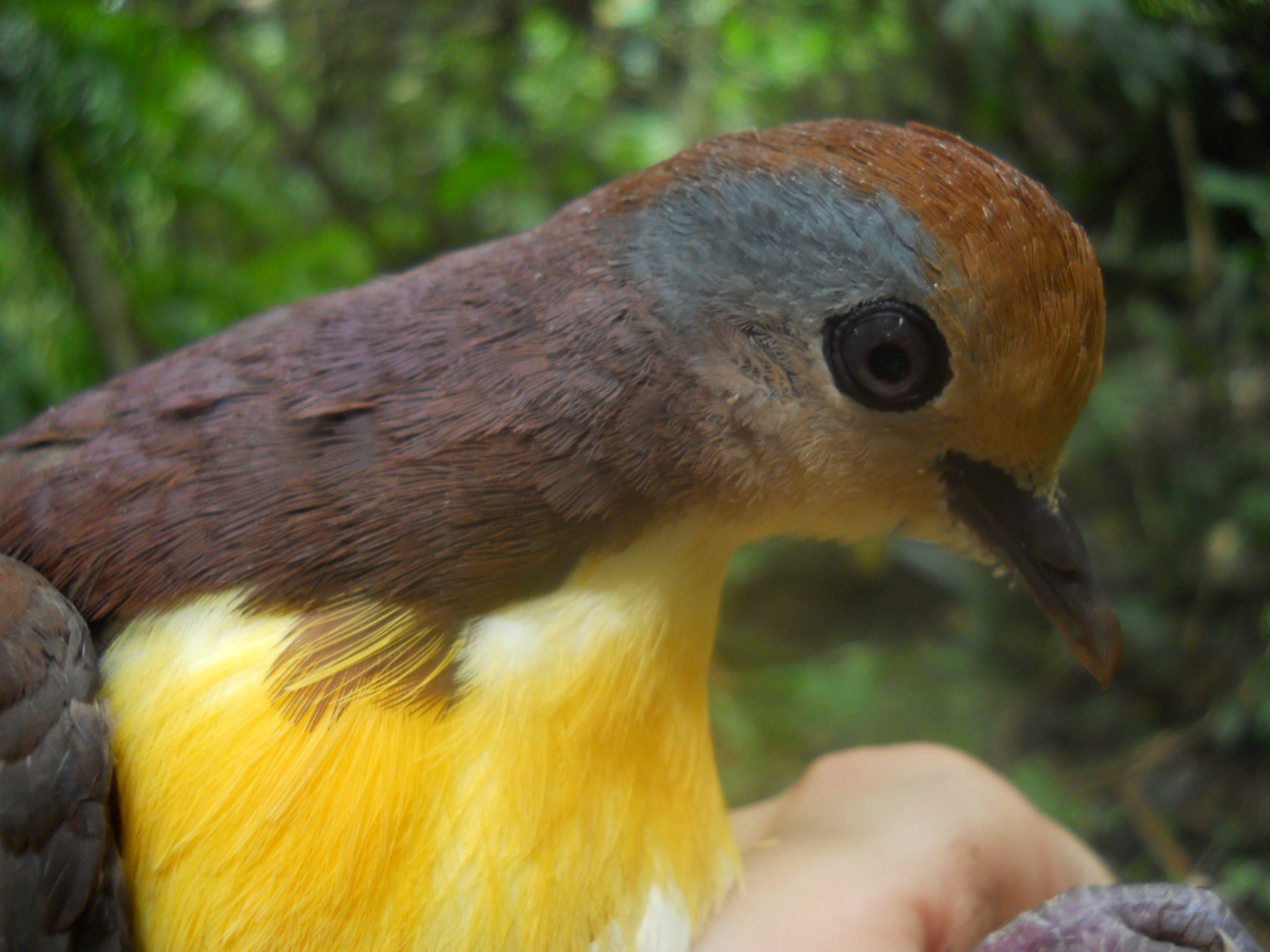
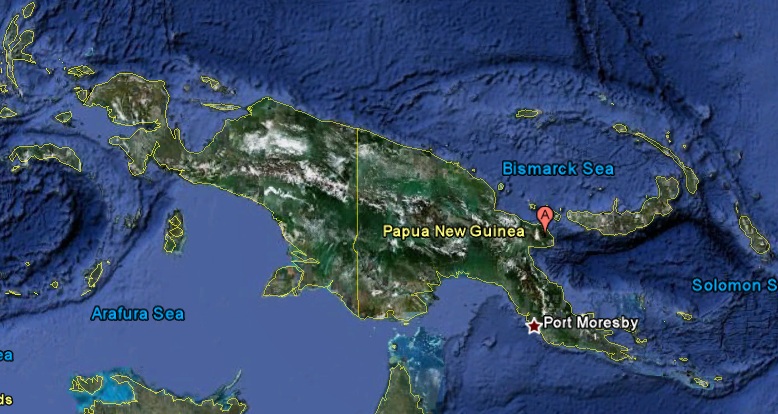
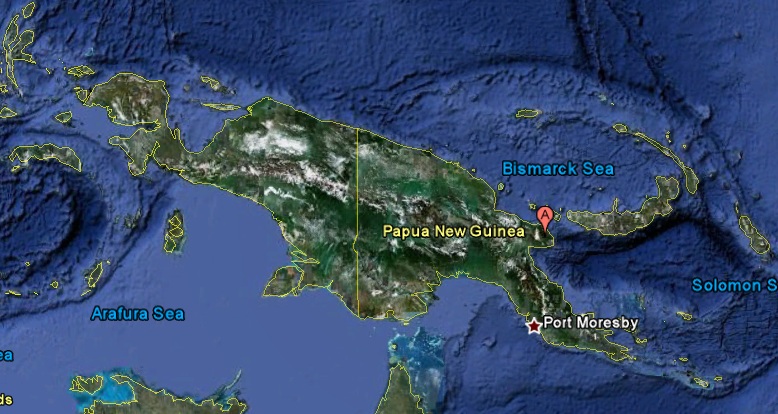
Ben Freeman: I went to the Huon Peninsula in Morobe Province; a nubby peninsula in NE PNG. The Huon contains the Finisterre, Saruwaged and one other mountain range, all of which contain peaks that top out at or around 4,000 m. These are all young mountain ranges — I think the main uplift has occurred in the past couple million years. The island of New Guinea has a mountainous backbone that runs down the center of the island, completely surrounded by islands. There are many outlying mountain ranges, but few as high as the ranges on the Huon. The Huon’s combination of many large, tall mountain ranges and isolation is a classic recipe for endemism; any montane species that somehow arrive to the Huon’s mountains are isolated due to the intervening lowlands and essentially on their own evolutionary trajectories. Given enough time, these forms evolve significant differences and are classified as species endemic to the Huon (but with a close relative in the Central ranges). Huon endemics include three endemic birds of paradise, an endemic bowerbird, an endemic tree kangaroo, and many others. So that is a very brief history of the Huon Peninsula and why it is cool from a zoology perspective.


The Tree Kangaroo Conservation Project (TKCP) headquartered at the Woodland Park Zoo (in Seattle, WA) has been working on bottom-up conservation on the Huon Peninsula for over a decade. Their efforts have led to the creation of the YUS Conservation Area, over 150,000 hectares of land set aside for conservation by local landowners. Many ethnic groups and dozens of villages exist within the YUS Conservation Area. TKCP is working on helping YUS communities in their economic development, education and access to medicine.


Recently, a Conservation International (CI) team headed by Dr. Bruce Beehler, a top ornithologist and conservation biologist who works in PNG, won a grant from the German-funded LifeWeb initiative to study the impacts of climate change on tropical plants and animals. The general goal is to complete detailed field surveys of plants and animals in the YUS ecosystem along an elevational gradient — from sea level to over 3,000 m — and compare the datasets these surveys generate with historical transects, to see if plants and animals have shifted their ranges to higher elevations in response to climate change. These generated datasets will also provide excellent benchmarks for future studies of plant/animal distributions in relation to climate change in the coming years/decades.


Alexandra Class and I were hired by Dr. Beehler to perform mist-net bird surveys at eight field camps, located between 200 m and 2400 m (approx every 350 vertical m). Future work will extend the transect to 3,100 m, and the mist-net data will be combined with Dr. Beehler’s audiovisual surveys to quantitatively estimate bird distributions along this elevational gradient.


BM: Describe a typical day for us, the environment, etc.


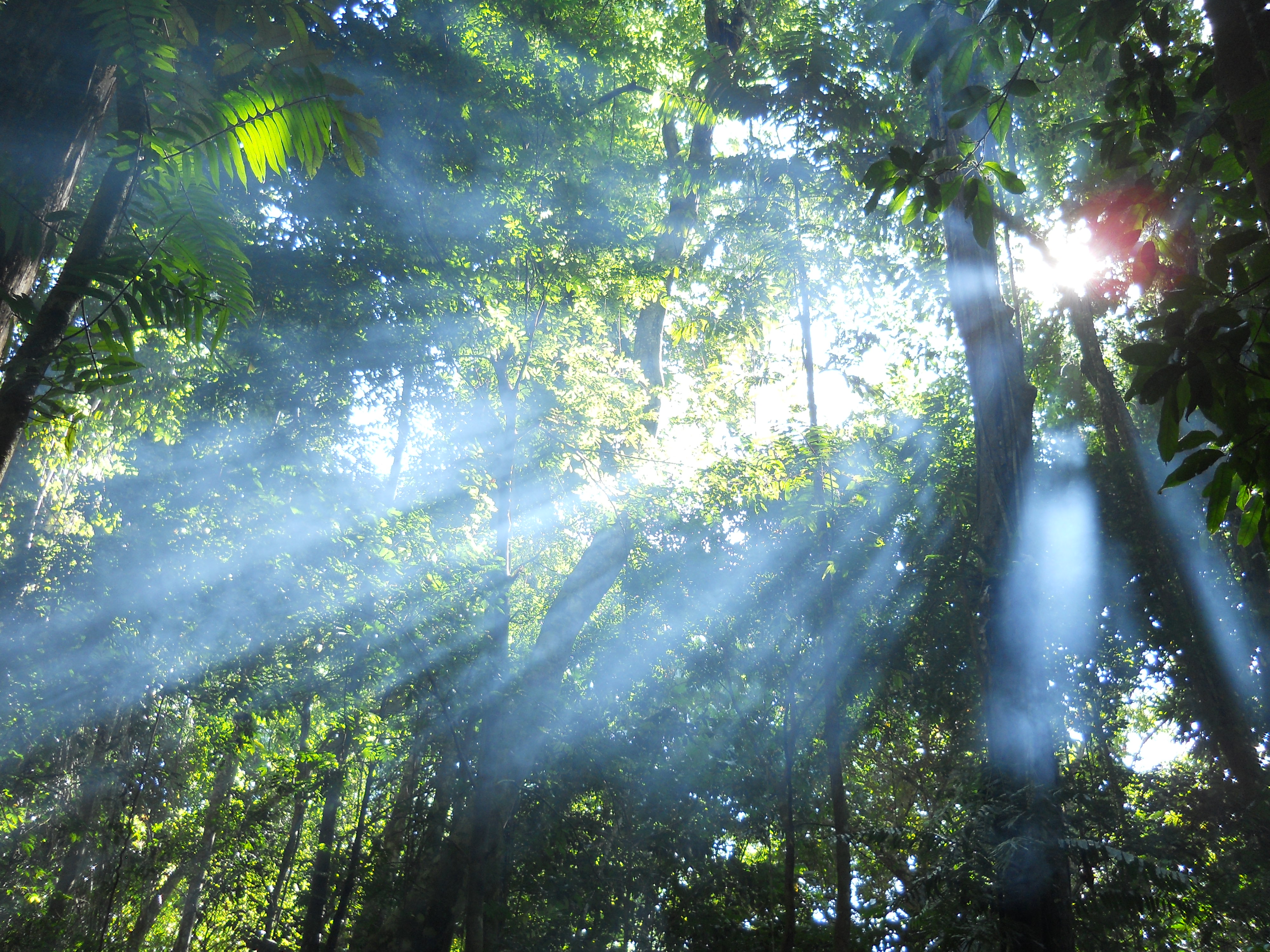
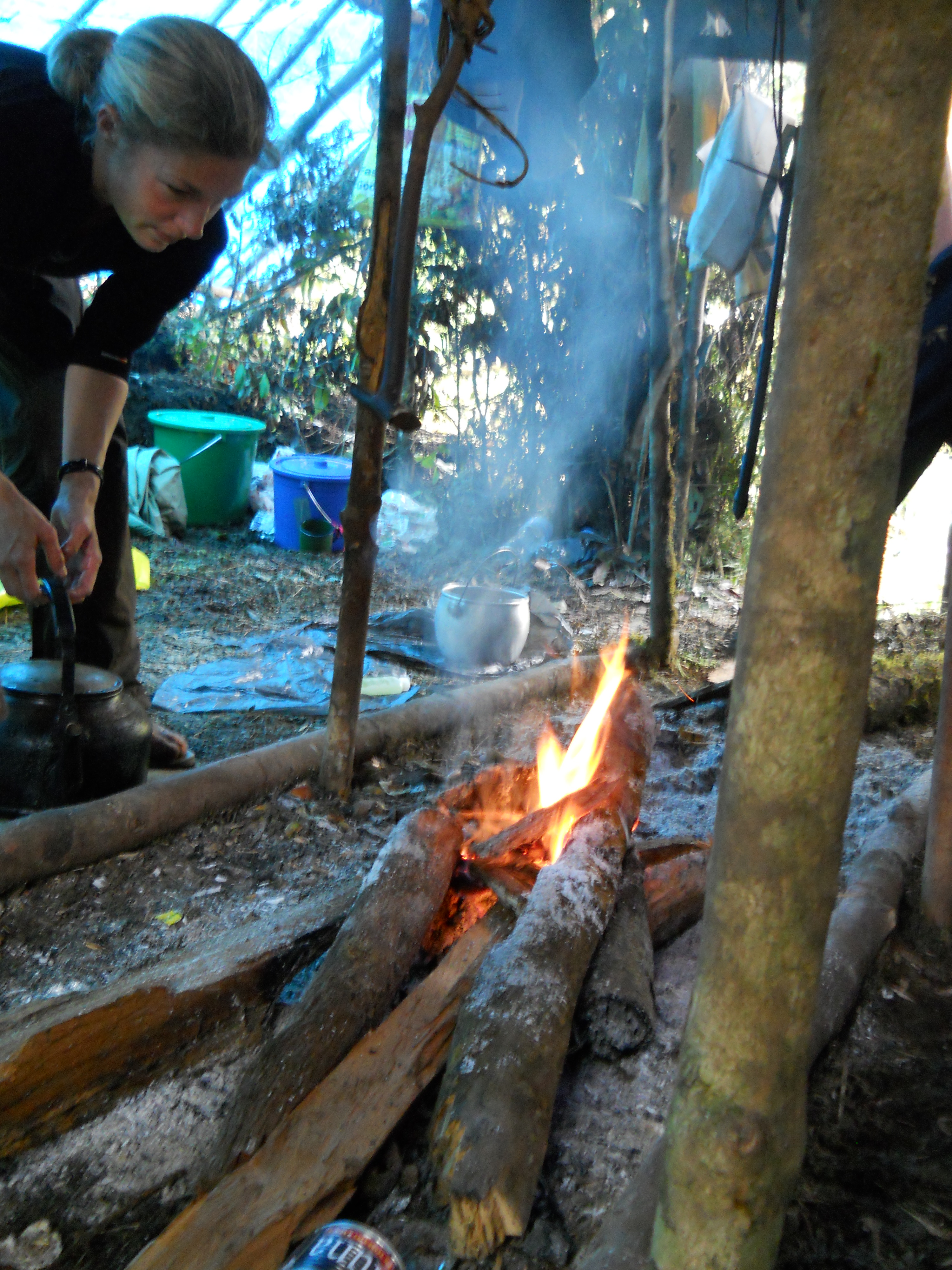
BF: PNG is a different world. To arrive to our field site within the YUS ecosystem, we hopped into a small “bush” plane in the city of Lae and buzzed over the mountain tops, eventually landing on the grass airstrip in Sapwanga village. The flight took only 45 minutes and traveled just 70 km, but the difference between take-off and landing was acute. Sapwanga’s only transportation is a weekly flight from Lae; the one general store is irregularly stocked at best, there is no electricity, and people eat what they grow in their “gardens” and get water from nearby streams for cooking, drinking, washing and bathing. Meals are cooked using firewood. There are footpaths that traverse the mountains, but Lae would be over a 4 day hike away.  And Sapwanga was a regional hub, the location of the valley’s school and therefore much better connected to the outside world. From Sapmanga we hiked for three hours to the village of Gomdon, local porters carrying all our supplies, including enough food to feed six people for two months (Alexa, myself and a rotating cast of four workers). After organizing in Gomdon, we bought local produce, organized porters and workers, and hiked 6 hours up to the ridgeline that formed our elevational transect, to our first field camp. Field camps consist of a central A-frame built with machetes, using saplings for support and vines to lash the structure together. Several large blue plastic tarps formed the roof — this space was our storeroom, kitchen, dining room and sleeping space for the workers, about 30 feet long by 20 feet wide by 15 feet tall… Each field camp had an outhouse and a flattened space for researchers to set up tents.

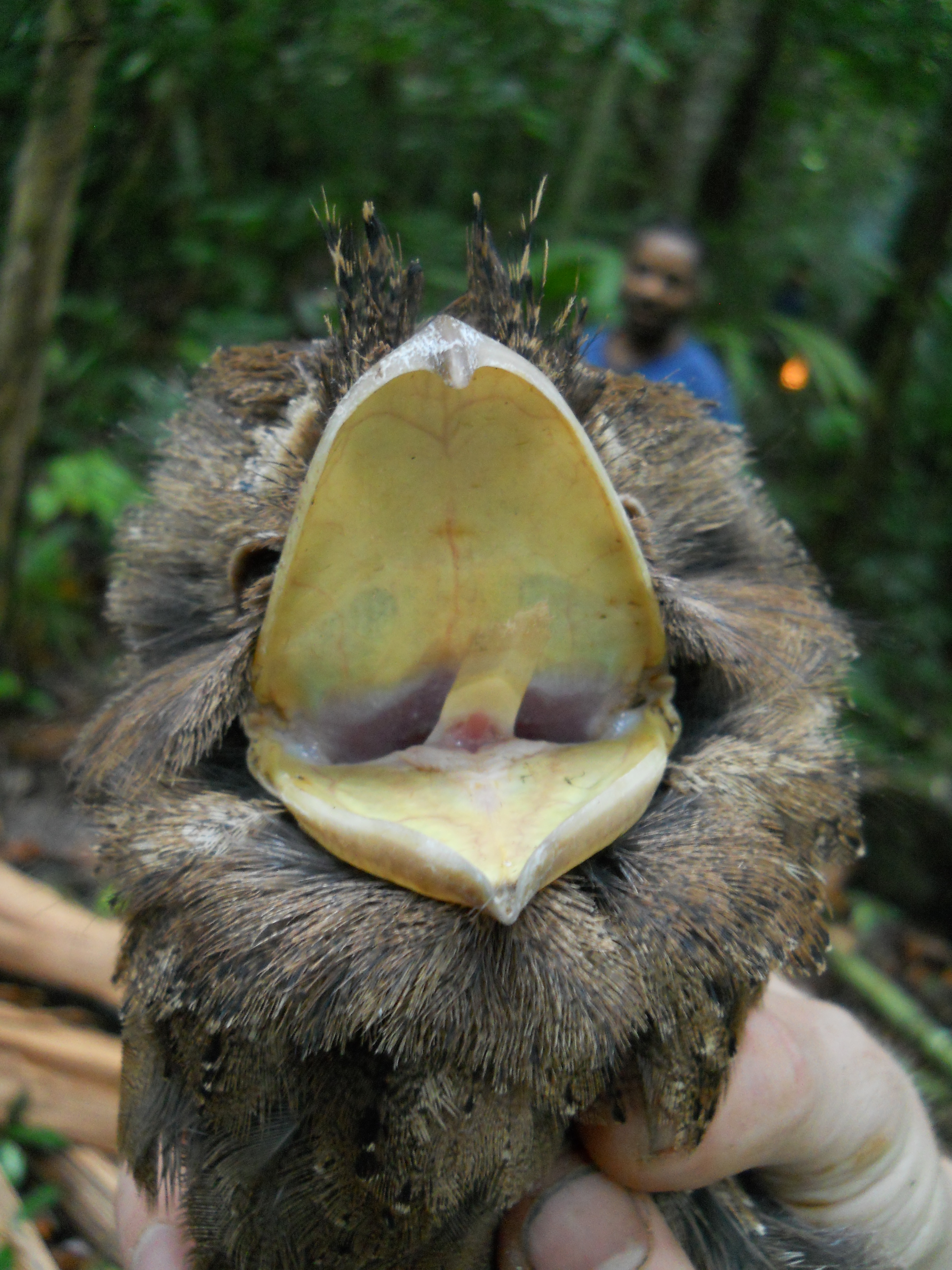
Daily chores consisted of fetching water (sometimes involved a 30 minute one-way trip to the water source!), cleaning dishes, cooking meals, and most importantly, mist-netting birds. At each site we made a 1 km trail that followed the elevational contour (e.g. the 2420 m transect stayed at or around 2420 m.a.s.l for its entirety), and set up 36 mist nets along this trail, along with a small A-frame with benches and a tarped roof for processing birds. It took one day of hard work to make the transect trail and set up nets. We used saplings for poles. We then mist-netted from dawn to dusk for three days at each site, Alexa, myself and four workers patrolling the net lines and taking out any birds that we caught. We measured, weighed and photographed the birds we caught. After three days at a site, we collected our nets, packed up our gear, and walked downhill to the next field camp.


We’ll conclude the interview tomorrow – there was just too much good stuff to talk about!


comments 3

Interview: Ben Winger – On Expeditions and the Importance of Museum Collections

I interviewed Ben, a fellow bird nerd and real deal Ornithologist, this fall about exciting expeditions he’s taken in the name of science.  Enjoy!

Ben Winger is a graduate student in the Committee on Evolutionary Biology at the University of Chicago and the Division of Birds of the Field Museum of Natural History.  He received his undergraduate degree from Cornell in 2007 and in 2008 embarked on an ornithological expedition to a poorly known region of Peru with two of his undergraduate colleagues (read more about this 2008 trip here).  In 2010, after finishing his first year of graduate school, he visited a different area of Peru on an expedition with colleagues from the Field Museum Division of Birds and the Centro de Ornitologia y Biodiversidad in Lima.


Brendan McGarry: Tell me a little about your research interests and how they tie into your recent trip.

Ben Winger: Broadly, I am interested in the speciation of birds, as well as how their geographic ranges have evolved through time.  I am currently beginning a project that I hope will provide insight into the formation of the incredible diversity of birds found in the Andes, as well how speciation in birds occurs more generally. On this trip in 2010, we set out to northern Peru to collect genetic samples for this and other projects related to bird speciation in South America. The trip was also focused on collecting specimens that will be useful for other researchers in the future.

BM: Does your research mainly consist of collecting or banding or conducting observational transects.  What is the makeup of your data collection? How did this most recent expedition compare to your previous trip in 2008? How would a typical day of work go in each trip?

BW: On the 2008 Cornell trip to Peru, our time was split between conducting species inventories through observational transects (i.e., birding or point-counts), mist-netting and audio-recording, and collecting a small number of voucher specimens that represented the most important new records for the area. A typical day would involve audio-recording in the dawn and dusk hours, observational surveys in the morning, and mist-netting throughout the day. In the slow part of the afternoon we prepared specimens if any had been collected, and made sure that our observations and audio-recordings were thoroughly logged in our notebooks.
On the 2010 trip, we were focused more on specimen collection, but I also did some audio-recording for the Macaulay Library at Cornell and our observations will be entered into eBird as well. During collection-focused trips like this, obtaining and preparing specimens is a full-time task.  Much more time is spent huddled in camp preparing the specimens and diligently keeping an eye on the collection to make sure it is not damaged by insects or humidity.  A significant amount of time is also spent keeping track of what we have collected and making decisions about which species and individuals to collect, so that we do not collect too many individuals of any species.  These decisions involve adhering to the terms of our government-issued permits, but equally important they involve calling on knowledge about the rarity or conservation status of certain species and the representation that a species may or may not have in museum collections worldwide.  Finally, we also spend time collecting the endo- and ecto-parasites on each specimen, as well as samples of pathogens like avian malaria and flu, to further knowledge of host-parasite evolution and avian diseases.

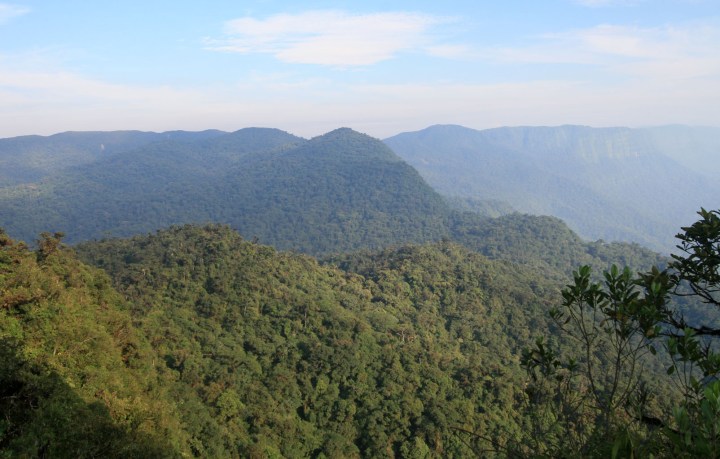
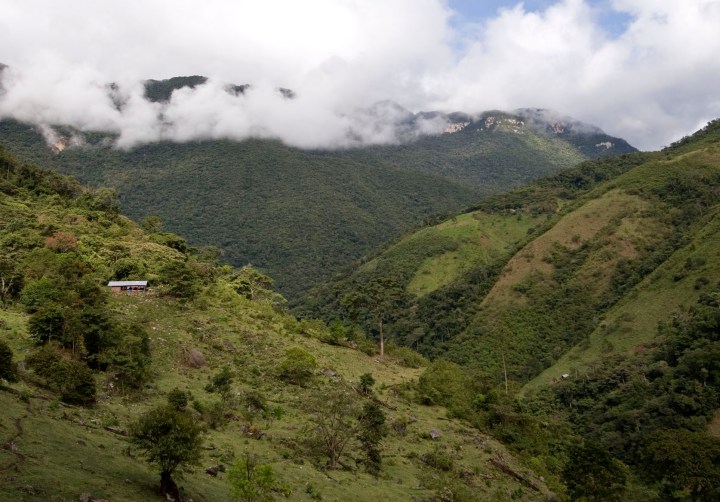
The difference between these two trips is that in 2008, the goal was to conduct the first avian inventory of a very remote region. Ornithologists had never visited this area, the Gran Pajonal of Peru, so we were gathering baseline data on the presence and absence of bird species. It was important that we covered as much ground as we could and surveyed as many different habitats as possible, so we spent less time collecting specimens and more time making observations. In 2010 we were working in an area that was relatively better known ornithologically, but still not nearly as well known as any location in North America. For example, very few tissue samples for DNA studies had been collected in this area, and the lower elevation cloud forest had scarcely been visited by ornithologists since the early 1900s.  The focus of the 2010 trip was on collecting samples that will be useful for a myriad of studies on avian evolution and ecology, as well as increasing knowledge of the distribution of Andean birds, rather than documenting all the species in a particular region as I did in 2008.  There were many similarities between both trips, however: both were in remote regions of the Andes that required several days of trekking to access, and both relied on support staff from local communities to help construct camps, cut trails and guide the teams through the mountainous jungle.
BM: Your interests are deeply rooted in biogeography, what sort of expectations do you have for your future research? Do you foresee conservation benefits or simply broadening our knowledge base on speciation, biogeography, and spatial movements? Admittedly these areas of research often do directly benefit conservation.

BW: I hope that my research will contribute to our understanding of how the astounding avian diversity we see throughout the world has evolved. Furthermore, the specimens we collect and the data we gather are not only useful for research projects like mine that are currently ongoing, but the material is available, archived in museums and databases, for any researcher or conservation worker in the future. Although it may not be superficially obvious, this type of research, and specimen collection in general, does have an influence on conservation. For example, there are many highly endemic species in the world that are actually fairly difficult to distinguish from more common, widespread species.  Without the efforts of museum workers, many of these forms would go unnoticed, undescribed and, consequently, unprotected. Our understanding of global biodiversity, even in a group of animals as well known as birds, is still far from complete. Therefore, the continued collection of baseline data on the existence of and variation within species in the form of specimen collections is an invaluable aspect of documenting and protecting life on earth. It may appear ironic that collecting birds can benefit their conservation, but the very small numbers of birds that are collected each year for scientific purposes do not have an impact on the long-term health of populations.  Rather, responsible collecting increases our knowledge of the biodiversity we are trying to protect and helps to inform conservation priorities.

BM: I’m fairly certain both you and I are convinced that museum collecting is vital for a historical knowledge of literally every area of natural history. However, what would your explanation of the importance be to someone unconvinced, particularly pertaining to you own work? Could your and others’ research be conducted without current collection efforts? Some people have questions about the necessity of banding birds, let alone something like shooting birds that they’d possibly consider archaic.

BW: As technology improves, we are increasingly able to do more and more without collecting specimens: DNA can be sequenced from blood or feather samples instead of muscle tissue; plumage variation can be captured with a photograph; audio recordings can be used to document the presence of a species in a reserve.  These practices are all valuable, positive advancements.  They allow scientists to study the genetics of highly endangered species that could be imperiled by collecting, birders to document rarities or even make taxonomic discoveries, and ornithologists to survey nature reserves where collecting is not permitted. However, these technological improvements do not cast collecting into the dark ages.  Rather, they emphasize the amount of invaluable information that can be obtained from a single specimen (skin, skeleton, fluid, spreadwing) that is catalogued in the public domain with associated data (geographical information, tissue samples, stomach contents, pathogens, parasites, and vocal recordings to name a few examples).  Photographs can deceive through distortion of light or post-processing, and blood samples collected by scientists without a voucher specimen do not need to be archived in a collection, and thus are not always available for future scientific research beyond the initial purpose of the investigator.  A specimen on the other hand, properly cared for and made accessible in a museum collection, will continue to benefit future inquiry in ways we cannot yet imagine. The specimen and the natural history collection have as much, if not more, value in science and society than they ever have. Particularly as each day habitats and the species therein are disappearing faster than we can protect them and as we discover new and innovative things that we can learn from specimens, I believe that obtaining a record of life on earth in the form of museum collections is a worthwhile human endeavor and one that is vitally important in 2010.

BM: Living in a remote field location is hard enough in a temperate climate; what are the major challenges to your health and productivity in the tropics?

BW: The tropics are a challenging but extremely rewarding place to work. Parasites, digestive tract infections, monotonous field food, biting insects and other dangerous creatures, and the constant possibility for political unrest in the host country are par for the course.  Tropical expeditions also tend to involve long, difficult overland hikes through degraded habitat to access pristine forest, or an inordinate amount of time sitting in uncomfortable river boats, and of course lots of time spent in damp clothes and molding sleeping bags. For me, the psychological and emotional challenges of missing loved ones back home is always harder to deal with than the physical, bacterial or climatic difficulties which, in retrospect, seem like mere nuisances. However, the sense of discovery that only comes in the tropics, and the possibility to explore and work in remote, untrammeled places where few have ever set foot makes it all worth it.


BM: When you aren’t out in the field, what are you spending your time on? When are you headed back next?

BW: These days I’m in Chicago designing a plan for my PhD thesis, and getting started in the molecular laboratory at the Field Museum. I will defend my dissertation proposal to my PhD committee in the spring, and I have plans to get back into the field in the summer of 2011.  I try to go birding on the Chicago lakefront as much as time allows (documenting my sightings in eBird, of course!), as it is a fantastic place to witness the spectacle of bird migration.  I should mention that we do not collect birds in the Chicago area, but every day during migration hundreds of birds are killed when they collide with skyscrapers and other buildings. These birds are picked up by a team of volunteers that scours the downtown area every morning during migration. Birds that are still alive are brought to an animal rehab center, and those that have died are brought to the Field Museum, where they prepared as skins or skeletons. The collection that the Field Museum has maintained of thousands of these “tower-kill” birds has not only increased our knowledge of migration patterns in the Chicago area, but it has been crucial in the documentation of the tremendous avian mortality caused by skyscrapers.  Data from this collection has been an important factor in convincing building owners around Chicago to turn out their lights at night to help reduce bird mortality.  Read more about it here.

Thanks Ben – we’ll all look forward to hearing more from you in the future!

comments 2

The Museums Pt. II

An ornithological collection is not a bunch of stuffed birds. Devoid of 15-some data points, dutifully transcribed on individualized tags, they would be merely wonders of preservation. Every bird has a unique number, date of collection, a preparer, a locale, standard name (Latin name), and the list extends the more recent the specimen. From a locale you can extrapolate historical species distributions. The preparer can add clue to a historical record. The bird itself combed with tantamount outcomes.

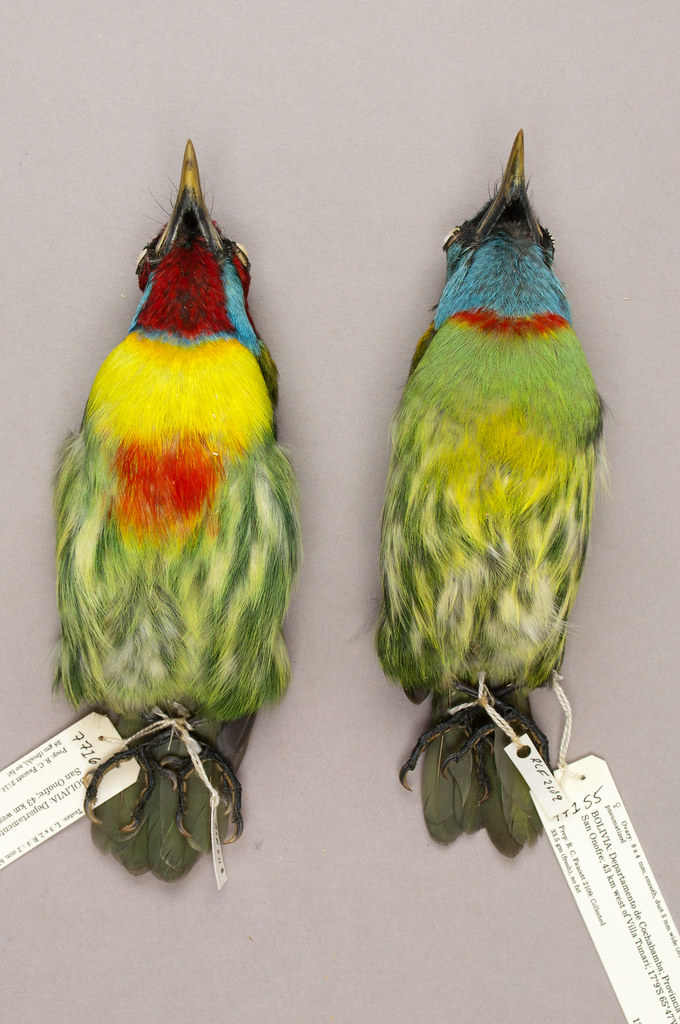
To be fair, skins are not good for one thing; looking at size and shape. One of the unfortunate sides of preparation, not matter how skilled and careful the preparer is – a bird will not retain original shape. Think of a sock being filled with something other than a foot, it can be radically misshapen. Plumage, molt, coloration all can be duly noted but discussions of size or shape in a skin is off limits – poorly shaped skins border on comical or bizzare. Luckily skeletons are kept and collected to record size. Thankfully, wing spreads also largely retain their original conformation.

The Burke has over 100,000 birds and about 3,400 species represented. Location in mind, they have an obvious bias towards Western North America and Northern Pacific Seabirds. The most important species are from expeditions in Northern Russia that have been conducted for 12 years and from 15 years in the Solomon Islands. These represent a highly significant body of data, likely the only on bird populations in those areas. One could travel there, conduct point counts, mist net birds, and come away with data as well but field work relies on a preexisting question.

Field investigations, conducted in years to come, cannot be predicted. If someone is curious about the parasite load of Rufous Hummingbirds from the 1980s compared to the 2000’s (just a hypothetical), there’s a good chance a natural history museum would have data to help answer that question. Even a meticulous banding operation wouldn’t reveal a holistic data.

A specific case that showing the necessity of skins comes in the form of stable isotope analysis. This process takes into account the different isotopes of common elements and revealing secrets of animals lives. Isotopes can be mapped to different regions of the globe, different foods, etc. being unique to those locales or foods. Mindful analysis can help one determine the trophic level of various seabirds (basically what they are eating) or help distinguish between migratory and resident populations of Canada geese.

While collectors covet the specimens they seek out, there few who relish the act of collection. Excitement over the chase, the hunt, the exhausting and harsh work of locating specific quarry, yes. However, barring the few, killing is merely the unfortunate part of collecting. They honor the specimen through hard work to preserve it possibly for centuries to come. A few individuals shot, memorialized and useful for tantamount, for as long as they are properly cared for. Surely the objectors can oblige that? There is no massacre, a trip has a small list of birds, they seek them out and take their quota. Negligible when you take into account disease, predation, and all the trappings of modern human impact – large buildings, cars, domestic pets, and habitat destruction. In some cases we even immortalize birds we’ve ushered out of existence (birds like the Carolina Parakeet, which, if someone alive saw them in the wild, would be over 106 years old). To be fair, there is strong evidence that a flurry of specimen grabbing of the quickly disappearing Ivory-billed Woodpecker helped its demise. Alas not every person will deny covetous greed, especially when money or prestige is involved.

Birds are the most widespread and diverse vertebrates on the planet. They’ve flourished in every feasible locale. Even in the advent of fancy cameras, concentrated efforts to collect date unobtrusively, to develop hands off approaches, there are simply some birds we cannot keep proper tabs on. Albatrosses are a prime example, spending most of their lives roaming the pelagic waters, only occasionally breeding on logistically inaccessible islands. It makes sense that their molt strategies are complicated because they can’t molt the way many birds would or they’d lose their ability to efficiently harness air currents. Albatross molt is so complicated that I will admit I know little and don’t intend to delve any deeper for this piece. However, even the briefest of comprehension of molt strategies in these long living, low fecundity species, breeding on isolated, vulnerable island gives their conservation a step up. Feathers being a defining characteristic of birds, dictate a lot in their lives. Naked apes will do well to continue to master molt.

With brevity in mind, this is where the discussion ends. Possible this wasn’t convincing and you find shooting birds cruel and museums barbaric. The hope is that you’ve seen the light and realized that how we understand populations, natural history, and biodiversity can be augmented by invaluable museum collections. Simply, if we don’t know the birds, how can we expect to save them?

Please give me your thoughts negative or otherwise and check out the rest of the photos I took.

(Thanks is due to Rob Faucett for allowing me access to the collections)

comments 2

Review: Ghost Bird

I decided to write a review of the movie instead of listening to someone “uh-huh” me while they played video games. After watching a documentary about an extinct bird, the last thing I wanted was to have the message fall on deaf ears and I suppose that’s the point of a documentary.  To spread the word.  Regardless, my blood began to boil when I realized my friend was more engaged by fictitious explosions and gunfire than understanding this world and our place in it.

Ivory-billed Woodpeckers were probably never widespread or populous. Being one of the largest woodpeckers humans have known, they needed a lot of space. Even the Pileated Woodpeckers require their room, ample decaying trees for roosting and feeding in mature forests. Those few spread out Ivory-bills got our attention.

In his documentary Ghost Bird, Scott Crocker set out to explore the modern controversy this bird embodies. April 2005 saw a national announcement by the Cornell Lab of Ornithology that one bird had been rediscovered and filmed in the swamps of Arkansas and the world of birding, ornithology, and conservation flew into a dervish of activity. I can remember where I was when I heard, it was like hearing Elvis was actually still alive. People wanted to believe that this bird was still out there. It offered redemption and a positive note, it brought tears to the eyes of those lucky few. The problem was, after five years, no verified sightings exist.

While it is uncommon to find a bird quite so captivating, the Lord God Bird is Hollywood worthy. Crocker brings us face to face with the absurdities of pride and belief that led a large amount of money and time to be dedicated to rediscovering a bird that has not been seen in the US since the 1940s. The power of this hope brought a spurt of economy to a depressed town and held controversy that almost no other bird could.

Crocker’s depiction of the key players, from scientists to locals in the Cache River area is both poignant and accurate. The subject of a presumably extinct bird will never be one of overwhelmingly happy amusement, but it certainly brings the story to vibrant life. At the very least it reminds all of us of our impact, as heart breaking as it may be. See the movie, read the half dozen books on the subject, and learn about a tiny portion of our environmental history.  There’s much too much for me to try to discuss, so I expect you all to go out and see a fine bit of  complicated, passionate conservation cinema.

comment 0

San Luis and the Leiton Finca Part I

After visiting the Ara Project (www.hatchedtoflyfree.org) near San Jose my family and my friend Tiffany (we both studied at La Selva Biological Station in 2006 through a program at The Evergreen State College) headed out towards Monteverde. All of us except my mother had traveled around Costa Rica before and knew that the road to Monteverde was hair-raising to say the least. We had no idea how this adventure would be in a rental car and even more exciting was the fact that most roads are not labeled in Costa Rica. We headed out on the PanAmerican Highway.

The road seemed endless but it’s hard to get bored looking out the window when traveling through a country that is not your own (or even your state). We stopped at a few places along the way and each time the forest down below (we were gaining elevation the whole time) teemed with the calls of birds unknown to me. In all honesty, it drove me mad that I could only ID a few of them by call. As we neared the town of Monteverde we stopped to look at a White-throated Magpie Jay in a tree. As we got out of the car I realized we were also surrounded by White-fronted Amazon Parrots. Every time I see amazon parrots in the wild I always imagine that they are like a dysfunctional family you see on TV. There’s lots of gesturing and yelling and screaming and you want to change the channel but you can’t help but watch the whole thing. We enjoyed the parrots for a bit, while a man across the street with a cowboy hat and a small brown horse at his side eyed us. We arrived at Monteverde in the dark with the local shops and restaurants brightly lit and offering many souvenirs, coffee, and night tours to see bats, frogs and other species. We met our friend Melvin Leiton and after dinner with his wife and son, headed back to his mother’s house for a much-needed good night’s rest.

In the morning I awoke to a chorus of so many birds I didn’t even bother to change into real clothes, brush my teeth, or look in the mirror to make sure my hair wasn’t about to take over the world. Outside on the lawn Melvin and my mom were looking at White-faced Capuchin Monkeys quietly moving from tree to tree. Mist shrouded the hills covered in cloud forest and as the sun broke over the peaks White-collared Swifts shot down the valley like fighter jets called to action. In the distance male Three-wattled Bellbirds could be heard with their very distinctive “BONK!” calls. At the Leiton finca (farm) birds literally drip out of the trees. Without traveling more than a quarter-mile in any direction I had 48 species on my list on the first morning and over 100 by the next day.

This is a very special place. The Leitons own many hectares with most of it never logged or impacted by humans. There are a few clearings for houses and one cow in a small pasture. The rest is primary cloud forest butting up against the Monteverde Cloud Forest Reserve. Melvin is a superb guide and truly loves the birds he hunts down to show visitors. His true love lies with the bellbird and he knows he’ll come back as one someday.

comment 1

The Museum

The landscape of presentation, the selective facts that drive inquisition, and the visual stimulus, combine in the best cases for endless learning. It can be overwhelming, for it’s easy to walk away with the impression of comprehending little and feeling exhausted for it.  People blame that feeling on standing on marble floors for hours on end. A fairer attribution would be to the revelations untangling in the carriage of their mind.

Museums, from the Greek Mouseion, were the place of the muses, the patrons of art. This congers inspiration – of imagination, of knowledge. Indeed we are lucky to have such tomes all over this world. Places were we celebrate, mourn, and most importantly understand art, history, and science. They used to be institutions of the wealthy, collections that humored, satisfied the required gentlemanly hobby. The enlightenment brought museums into the public eye in the 18th century.  It is a fair venture that we should be indebted to those who took the time to catalog the treasures we find within.

There are many benefits to having them. Beyond education of a general public, they also serve to maintain our necessity for comprehension. The paramount of an museum is not what you see in the display cases, the rotating and permanent exhibits. Behind the scenes is where the real magic and importance lies.

All share a meticulous and delicate process of cataloging and preserving everything them have. Every single item in a museum, natural history or otherwise, is priceless and irreplaceable. After all, no two items will be under the exact same environmental stresses. Just because you can go out and “get” another American Robin doesn’t mean it will hold the same information as another American Robin, even one born the same year and hatched nearby. And better yet, having two birds or rather two data points is infinitely better than one.  The same can be said of pennies minted in 1972 or a Peruvian blankets woven in 1775.

Being largely a blog about birds, science, and natural history, it is only appropriate to focus on a natural history museum in this discussion. Happily Seattle is blessed to have an extremely good one, housed on the University of Washington, the Thomas Burke Museum of Natural History and Culture. These subjects might not seem relevant, however with only a little imagination comes a realization that human history is essentially a segment of natural history. Even if we behave as if we aren’t part of the cycle, a part of nature, doesn’t mean we really are after all.

Natural History Museums can range in size from places like the Smithsonian or the Chicago Field Museum to small private collections like the Murie Museum of the Teton Science School in Jackson, Wyoming. Collections are amassed by, well, by collecting.  People find specimens in the field by happenstance or search them out purposefully, both depend on being an expert. It only makes sense that in looking for a certain subspecies of Savannah Sparrow, that you know what to look for before you shoot.  Now-a-days, only experts are allowed, by permit to collect or posses almost any native bird in the United States (in other words, don’t get inspired to go out and collect bird feathers after reading this – per the Migratory Bird Act). And yes, there’s that gun thing. We’ll get to that later.

The Burke Museum was founded in 1885 by members of the University of Washington’s Young Naturalists Society. They erected a building of their own volition recognizing the need to properly house an increasing population of artifacts (unless something drastic happens, an active museum is always likely to grow, even burst at the seams). In 1899 it was deemed a state museum and in 1962 it received the current name, after a bequest after Judge Thomas Burke.

The museum itself is a lumbering, boxy building. It isn’t particularly eye catching or a testament to architecture. However that is not the point or intention. Efficiency of space is paramount – those collections from Native American artifacts to the Ornithology holdings – they need proper space, ventilation, and treatments – you can’t just pile things in a box and call it good.

On display are all the trappings of a typical array of showcases. To keep people interested in a world of media, there are the typical flashing lights, videos, and interactive pieces but upon entering, there is a long glass case filled with a sampling of all the Burke has to offer. Even after you’ve perused everything, you quickly realize there is a lot more in the building than the public space.

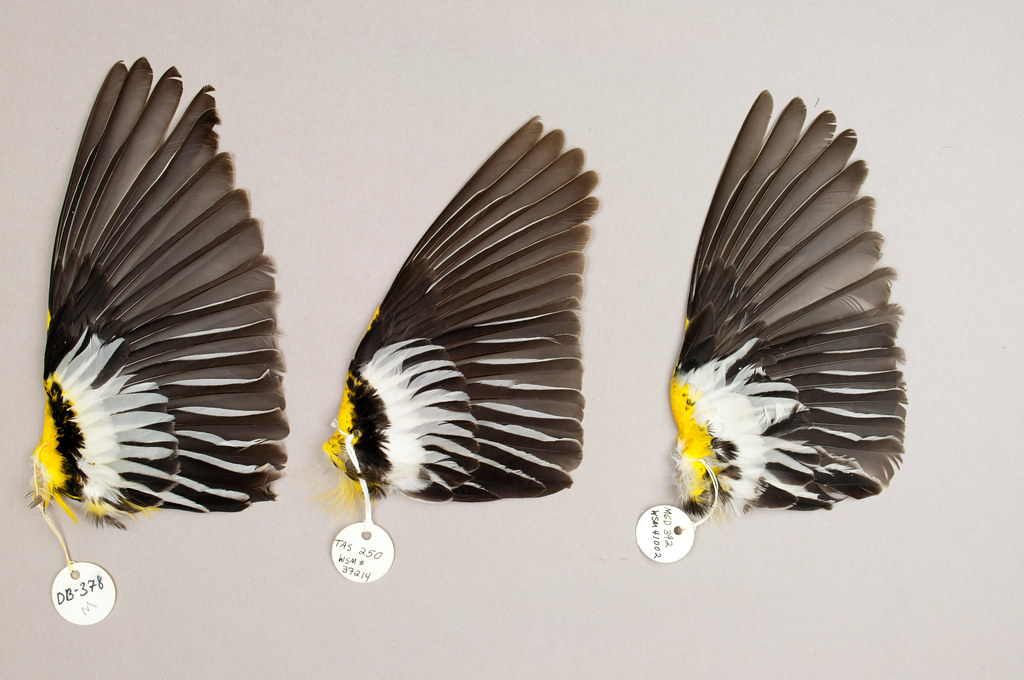
The ornithology collections at the Burke count among one of the largest in the country.  Not only are there bird skins but they hold soft tissue samples (the second largest collection in the world), skeletons, and eggs from the world’s avian diversity.  Thanks to their pioneering work, the Burke got an early start on the practice of creating spread wings from their specimens.  As a result they have the largest and likely fastest growing collection of spread wings, a valuable thing indeed. Once a bird has been dead awhile, rigor mortis sets in and you can no longer make a puppet of it, spreading wings or flexing feet.  To allow for study of things like molt in a bird’s wings (the most complicated and interesting area of study in molt), a wing is amputated, spread properly, and let to dry.

The mammalogy and ornithology departments share a prep room where they do the surprisingly clean job of preparing study skins. Collection expeditions can’t wait around, so they are done in the field but the museum takes window kills, the bird your cat caught, local collections, or birds someone found on the beach.  Bird preparation is a delicate process and although almost anyone can learn it, only someone with much experience will produce perfect skins.  However, they also scrub skeletons the Dermestid beetles colony hasn’t fully picked clean, (any respectable museum has a colony of these beetles to clean bones of any ligament or hide) and take tissue samples here.

So museums exist, they are meticulous storehouses of historical information, and some are natural history museums.  But haven’t we moved beyond shooting birds?  We’ve binoculars, spotting scopes, cameras, video, all at our disposal.  John James Audubon and other naturalists of his time had no choice if they wanted to really understand the species they studied because these advanced optics weren’t available.  Is it really necessary now?

comments 2

Migration!

Migration happens once every year.  And then again maybe 6 months later.

Really it depends on an number of factors, but around here, starting in late July and extending through late September many birds are on the move away from their breeding grounds.  Some are merely altitudinal migrants, descending when the weather turns fowl in the mountains.  But a large number undertake a twice yearly journey that can span continents and oceans.  Raptors let thermals carry them much of the way, songbirds power through with the help of highways of wind, and seabirds harness the oceanic air streams.  A few of the many reasons birds are on the move is to avoid harsh weather and often more accurately  to take advantage of seasonal or episodic food sources that good weather brings, particularly in temperate clines.  There are migratory birds in every place on earth and the reasons, methods, and extremities are as diverse as the species that practice.

This phenomenon is inherently mystical, fascinating, and curious for humans.  After all, with the rare modern exceptions of hunter gatherers that follow seasonal food sources, we don’t migrate.  However, for millennia those of us in the Northern Hemisphere noticed when our vibrant sprouts begin to push up, we begin seeing swallows again; by the time the major harvests began, the field grew quiet once more.

Ancient Greeks believed absent swallows burrowed underground.

These journeys often defy our concepts of reality.  Discussions about the record holder long distant migrants shifted from the Arctic Tern (flying from the Arctic Circle to Antarctica), to the Bar-tailed Godwit (flying from the Alaska to New Zealand), to the Sooty Shearwater (Northern Hemisphere to Southern), and back again.  The Bar-tailed Godwit is held to be longest non-stop migrant  some flying about 7,000 miles in one go without any dilly dallying (they fly over water and cannot float!).  Sooty Shearwaters and Arctic Terns have both been recorded in distances exceeding 30,000 miles.  In 2006 Sooty Shearwaters broke the record for the longest distance animal migration at around 40,000 miles, making a figure 8 tour between North and South Pacific each migration.  2010 research results on Arctic Terns showed them travelings in excess of 40,000 miles in their year of travel.  (all this knowledge is a result of bird banding and lightweight radio tags).  Seabirds certainly make some of the most spectacular hauls and spend a lot of time preparing for it, allowing for around 50 percent of their body weight to store fat reserves.

Here in the Puget Sound, many of our migrants are songbirds bound for the Neotropics.  They are the reason people buy Shade Grown Coffee, because they winter in places in Mexico or Central America that produce coffee and would otherwise cut down forests to grow it.  Equally astounding is their travel, which may start as far as Alaska or Northern Canada or may be a bird that reared young in your backyard in Seattle, but will end in some instances as far South as Panama.  Not only that, but it is done largely at night!

Although it seems odd that diurnal, typically terrestrial species are flying high in the sky at night, there are some very logical admissions it allows for.  The normal predators, who would be almost impossible to avoid in high in the open during the day, are asleep.  Secondly, although birds fuel up before they leave, stops are necessary for food and water which they cannot do at night.  Finally, the most interesting part is that they are using the stars to navigate!  We long pondered how many birds were migrating at night until a technique using an instrument called an Emlen Funnel was invented in 1966 (follow the link to learn how it works).

Go out on a still night during migration and you can hear the calls of migrating songbirds.  In the city, even above the noise of urban life, they are audible.  Residing in the suburbs or away from busy roadways, one can hear hundreds, even thousands, of individuals representing dozens of species (with a bit of practice you can start to differentiate).  Some enthusiasts actually set up their own recording devices and use programs to sort and count what flew over each night.  Cornell Lab of Ornithology embarked on research doing exactly this, but on a larger scale along the Eastern Seaboard allowing for studies both on reasons for nocturnal flight calls and on population dynamics.

While these birds are on the move, they face many threats, not the least of which is the human influence.  Our massive buildings and lights confuse birds in nightly migration.  New York City’s light kill an estimated 10,000 birds a year.  We destroy habitat not only at both ends of travel, but demolish their stop overs along the way.  In short, these amazing travelers not only have the sheer obstacles of the elements, predators, and distance to come up against, but humans as well.  Research allows us to understand this phenomenon but it also helps us evaluate how we can alter our ways to benefit birds.

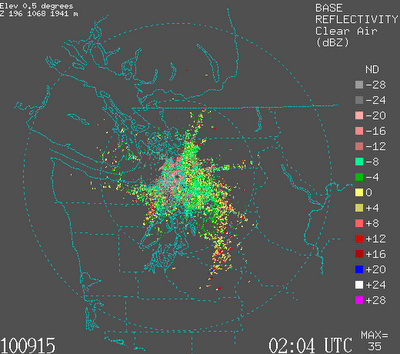
What brought this diatribe about?  This week, meteorologist and northwest weather expert Cliff Mass , posted a blog entry with fantastic Doppler Radar images showing birds nocturnally moving over the Puget Sound area.  There are a lot and they are moving south!

Migration is something we still don’t fully understand and this article is just the tip of the iceberg on this fascinating subject.  If you are interested in learning more I’d recommend Scott Weidensaul’s popular account,  Living On the Wind: Across the Hemisphere With Migratory Birds.  We are luck to have some amazing technologies from sound recordings, radar imaging, and light weight radio tags to help us imagine an otherworldly behavior.

comment 0

Photo Blast: Cactus Wren

The Cactus Wren is the state bird of Arizona, but that is probably the least interesting of designations.  More importantly it is also a member of one of the largest genera of wrens Campylorhynchus, dominating both in size and number of species (the largest, Giant Wren is a congener).  One can also infer that it is a desert obligate, only living in Northern Mexico and the Southern US.   It by far the largest wren in the United States, by several inches, and also the only representative of the genus here.  They make great stashes of domed nests in Cholla Cactus, are easily spotted on a stroll through the scrub.  Common, inquisitive birds, that spout an iconic wavering, churring call, as the rain has picked up in Seattle I’ve had dreams about them and their domain.

comment 0

LEWO!

“Holy Shit, there’s a fucking Lewis’s Woodpecker in the backyard. I gotta call you back.”

I was talking with my friend Ryan on the phone about birding, standing in my parents’ jungle of a suburban backyard. A few less usual birds, including a Yellow Warbler and a Hairy Woodpecker had moved through already. But this bird prompted exclamations, decidedly foul ones I’m admittedly loose with.

My parents are well versed in the the rabid affect of rare birds. They’ve been privy to it since I was a youngster with 7×50 Bushnell Binoculars, calling Phoebes “Foe Bees.” A White-tailed Kite flew over our backyard, I wasn’t able to document with a photograph, but I tore through the house yelling about it. The Lewis’s Woodpecker got the same response 16 years later.

These woodpeckers, if it hasn’t been obvious yet, are not a regular visitor to the backyard. They are a declining species, that is almost entirely restricted to East of the Cascades in Washington. Regularly venturing over during migration, even in 1982, they were absent in King County, having previously nested locally on the West side. A consistent practice of snag removal by humans and significant competition from the European Starling are two purported reasons for a noted decline since the 1960s. They rely on decaying snags often most common in burns, particularly in open Cottonwood or Ponderosa Pine forests and secondarily in Oak woodland, for nesting as well as for food caching. However, although their decline is certain, their sporadic distribution leaves us woefully unsure of how this plays out over their entire range.

In Washington they are now easiest to find in areas around Yakima and overwintering birds are strictly east of the southern stretch of the Cascades (except in rare occasions when they hold up in the West). Their migratory habits are far from predictable but generally they don’t stick around in the northern parts of their range, particularly in Washington and British Columbia. They also move around to opportunistically forage and have also been documented in nomadic groups.

Their most definitive behavior is what caught my eye. When Lewis and Clark ventured across the continent, Lewis first described the bird with some apparent confusion, as a “black woodpecker (or crow)” that “flys a good deal like a jay bird.” My first experiences with this bird, I too picked up on this, nicknaming it the crow woodpecker in my notebook. Glides, slow wing beats, and sallying flights are so aberrant from the typically undulating flight of the order Piciformes, the woodpeckers. Only its congeners, the Red-headed Woodpecker and the Acorn Woodpecker show slight hints of similar propulsion.

My initiated parents had reacted very reasonably to my screaming and running through the house. They shut the dog inside and followed me out with binoculars. We watched the bird flycatching from the tops of several large Douglas Firs, too far for a good picture but recognizable certainly. It had also gained the curiosity of a Steller’s Jay (being probably the first Lewis’s Woodpecker it’d ever seen), who flew in and tailed the woodpecker as it went about foraging. Just when my heart rate had slowed, I realized there were two birds looping about in the wind!

At first, I assumed they were migrants. But it wasn’t a far leap to think they could be in a nomadic group. Additionally they were making the best of the winged termites that had been about the past couple days. Could it be that they’d ended up here in search of a last hatch of insects before settling down for a winter of acorns and other nuts? Seems as good an explanation as any.

With unique behavior and the striking meld of dark iridescence, gray, and watermelon pink plumage they’re striking birds. I profess a love of woodpeckers, but it seems ironic this un-woodpecker like species is a favorite. My family enjoyed both birds as they floated up high, occasionally taking breaks in the fir tops. Whatever their reason for being there, they stuck around for another day before disappearing into the sublime ether of rare birds, always a pleasant surprise.