comment 1

In a Rut

Sometimes the birds just don’t want to cooperate. Sure, I could hear many but I couldn’t see a damn thing. Down the slope of Hurricane Ridge I was squinting across, only six trees were likely candidates for a Olive-sided Flycatcher I could hear pipping away, but no tapered silhouette materialized. American Pipits spirited about overhead and in open alpine meadows directly in front of us, apparently invisible. Don’t get me wrong here, I love wildflowers, but I was begging to lose steam talking about them. Something alive and lacking roots was in order for variety’s sake.

Those snow patches were in an oddly exposed southern face….No, not snow, Mountain Goats!

There’s a million and one stories about introduced species, intentional or otherwise, the vast majority are not positive. How Mountain Goats got to the Olympic Peninsula isn’t a mystery, a few sportsmen got it in their heads in 1920s that they could do with some more things to hunt in the Olympics. Apparently Black-tailed Deer and the largest subspecies of Elk in North America, the Roosevelt Elk (Cervus canadensis roosevelti), weren’t enough.

In a place that designated a National Park, a Biosphere Reserve, and a World Heritage Site partially because of marked floral endemism, (and notable endemic fauna) you might guess why a significant introduced goat population is be a problem. (Ok, ok, they are actually goat-antelopes but who’s counting?) The point is they trample, munch, and wallow in all those gaudy, endemic, fragile plants I was half complaining about earlier, (I also incessantly have to remind my fellow mammals to not trample them so I can’t really blame the goats too much).

The goats have been a point of contention for a long time. The park service initially tried to remove the over 1000 strong population by live capture during the 1980s. This was dangerous, eventually deemed impractical at best, taking care of 521 animals. Between some hunting outside the park and the removals, the population dropped back to a somewhat reasonable number. In 1997 there was a push to shoot the remainder but public opinion apparently shut that idea down.

So then this guy hiking in the Olympics in 2010 got gored by a male Mountain Goat in rut. He died. People got upset (understandably) and there’s a lawsuit pending. Knowing full well that mountain goats are aggressive and potentially dangerous, it’s still easy to want to get closer and we hiked on intent on better views.

We’d been watched the group of seven goats, three of them adorable yearlings, when the largest and closest animal, dashed inexplicably closer to where we stood on the trail.  While rushing away in terror I also noticed he was shedding his winter wool coat quite rapidly, tufts wafting off as he sprinted.  I thought of the warm blankets the people of the Olympic Peninsula would have traded for with tribes from near the goats’ native range in the Cascades. Then I noticed the man running in our direction and realized why the goats were running.

I’ve never had a ranger at park tell me to throw rocks at a wild animal until this year. Much less have I ever seen a ranger running full-tilt down a trail shooting a paintball gun at Mountain Goats. They’d gotten much too close to the trail, following about all the wonderful annual foliage in the subalpine swale just below us.  Deterring animals from living in areas where high numbers of people visit is the temporary solution.

I don’t envy the National Park service, trying to appease animals rights interests by not killing the goats but being asked to do so by concerned hikers (and likely a few botanists). Sure these animals shouldn’t be there, but they are always enjoyable to see. And quite honestly I didn’t mind seeing rangers shoot hot pink paintballs at seven caterwauling goats. It was possibly the funniest thing I’ve seen all summer (however let’s pray next summer consists of something better).

comments 4

My City’s Bird

Great Blue Herons (Ardea herodias) are ubiquitous and easily observed. So common, widespread, and obvious that they are easily written off. You’ve seen a lot of them and will see many more, as they are one of the most adaptable waterbirds in North America.

These are gems we should really cherish. Species we can become truly familiar with, because in the case of birds, familiarity doesn’t breed contempt. We should not just note their presence, but really make an effort to know them. In Seattle, we share our city with herons anywhere there’s shoreline and we’ve even made them our city bird. Some people become heavily involved in their natural history, anointing themselves caretakers of heronry sites, keeping watch. Others merely notice them standing at the Ballard Locks or flying over their house in the middle of the city. Most people in Seattle know them because of their size alone, which makes them easy to observe. I’d hazard they are as iconic of birdlife to the general public as Bald Eagles.

Yet, while I always note a GBH, as many birders call them, I wouldn’t suggest I spend tons of time thinking about their habits or that I have an intimate understanding of them as a species. I generally know what most birders know: that they nest in colonies, they eat fish but have quite varied diets, that they are the largest herons in North America, and are very common.

I always try to push myself to learn more, not by reading or studying photographs, but by observation. When the opportunity presents itself, I try to not keep walking and do what is all too easy to say.

“It’s just a heron.”

I resisted the urge recently and was graced with some decent photos and some enjoyable behavior.

This particular bird was obviously hunting – standing intensely still over a clear patch of water on the edge of Union Bay on Lake Washington. I decided to settle down, take a few shots, wait, and observe. Of course as I decided this, the bird made its move, diving almost completely into the water.

Wet and gangly, the bird flopped back out of the water with a small catfish adorning the end of its spear-like bill. Blood began to trail down the protruding bill tip and it began a series of head waggles to loosen the quarry. Eventually the fish slid off and at the same time the bird deftly tossed it up and caught it head first. Swallowing the catfish in this orientation, a creeping lump that slowly slid down the heron’s gracile neck, reminiscent of a snake’s dinnertime.

As I watched this mealtime, one of thousands this bird would have all summer, I realized I’d never seen a heron swallow something so large. I’ve been watching birds for 18 years, much more of my life then I haven’t, and I’ve never seen this simple act in person. There’s always something new to see, even when you think you’ve fully explore your backyard, you’ll discover some nook, casting everything in a new light.  With Summer flying by, I always need to find small pleasures.

Mulling this over, I watched the bird go through the post meal motions. Bill rubbing, splashing the blood off in the water, and a series of yawns that left its tongue dangling at odd angles. All of a sudden, it turned to look at me, as if suddenly realizing what I was, and took off with a raucous squawk.

Thanks Heron.

comments 3

Summertime?

It’s rather amusing to think about the Summer Solstice in the Pacific Northwest, especially considering the weather today. Here in Seattle, we don’t consider it summer until after the fourth of July. Yet many of the breeding birds are done singing by then, having had at least one brood. So many of us grow up with these strange ingrained memories of birds singing on bright summer days.

I’ve been bemoaning that I feel like I missed spring. I did plenty of birding and it’s not as if the birds are totally done. Yet, it feels like the weeks are slipping by, as work not specifically ornithological keeps me distracted. I guess I’m feeling out of touch. My journal, of what I’ve heard and seen almost every day helps, but doesn’t make up for the early hours traipsing about during point counts or banding.

So, I’ve decided that I wanted to commemorate the passing of our the longest day of the year by listing some of the more notable bird encounters, sightings, and aural identifications during this spring away field biology. These are encounters not sought after. In a way I’m grasping for content where I haven’t had time to seek it out; however I think noting the every day is just as valuable as seeking out the obscure. Establishing a norm is understanding for stasis, for conservation.

March 23, 2012 17:10 – The air feels of spring and technically it is. Sitting on a bench on the edge of Union Bay at the Montlake Fill, I’m privy to territorial stirrings. Three Virginia Rails call within 80 meters of my seat. One suddenly appears, bounds across an opening in awkward half flight, jumping gait, and crashes into another rail at the edge of a bank of cattails. This is the first time I’ve ever seen rails physically attacking one another, presumably because of their veiled lives. The attack lasts a second but feels monumental.

April 21, 2012 15:20 – Spring in the Hoh Rainforest. Blooming Salmonberry with Rufous Hummingbirds in attendance. Varied Thrush are tantalizingly close but still unseen, their insect calls reverberating in my ears. Pacific Wren are always singing but they seem particularly brazen today, standing ground on their nurse log perches when I approach. Everything is bathed in a sunlit lime.

April 29, 2012 6:45 – The pair of them are flying right at eye level in early morning glow. The tiercel, he’s notabley smaller, lofts up to land on a light pole along the freeway. The hen, seemingly floating by, suddenly tucks and drops out of view below the bridge. I can’t complain about having Peregrine Falcons on my morning commute.

May 26, 2012 12:20 – There’s an adult Bald Eagle flying over the freeway, being dive bombed by a Red-tailed Hawk. I’m driving with my mom, trying to split my attention between the road and the birds. An American Crow joins, focusing on the hawk. The eagle does a series of barrel rolls, extending its talons at its oppressor. They form a strange triple tiered circus act that begs a giggle. Birders aren’t always the safest of drivers.

May 30, 2012 15:40 – My first Willow Flycatcher is calling somewhere amongst the Red Alder stand before us. I’m guiding a group through the Hummock Trail in Mt. St. Helen’s National Monument. There’s no time to suss out the bird, to actually see it. Satisfaction in hearing a fitzbew will have to suffice, and it does.

June 3, 2012 11:00 – Hurricane Ridge is coming to life. American Pipits are already twittering about the matted ground where the snow has been peeled back by the sun. An Olympic Marmot lay sunning itself, probably just now unburied from a winter slumber. The precipitous icy peaks, gashed by glaciers and the elements, remind us that it’s not yet spring. In trade for a good portrait, I let a hungry Common Raven take a look in the car trunk.

June 13, 2012 13:00 – I’m talking to one of my Wilderness First Responder classmates during lunch. I hear the piercing call of an Osprey and look up to see one high up, performing a display I’ve never seen. A second bird joined higher still, the first continued a series of shallow dives while thrusting its legs out, screaming insistently. Getting home I discover (as I surmised) that this was likely a male bird displaying to a female. Nuptial displays are bizarre no matter the species.

June 14, 2012 15:20 – Two Common Nighthawks are flying over the field by the Environmental Learning Center at Discovery Park. I’m supposed to be listening to a lecture on reducing dislocated limbs in my Wilderness First Responder class but I’m highly distracted when we’re outside. These two goatsuckers are a surprise and are high enough that they only caught my eye by the pattern of their flight. Normally I detect them by their strange mechanical call. I wonder if they are nesting nearby.

June 21, 2012 12:57 – As I am writing this, a group of exceptionally noisy Bushtits are at my window, dangling about the birch just outside. I presume this is the pair I’ve been seeing all spring, now towing around their fully grown young, just barely discernible from their parents. The fledglings are incessantly crying for food, the parents hurriedly searching for morsels, shoving them in ravenous mouths. Just as I am about to turn away, a crow swoops in, presumably to grab a little bushtit morsel. Alarm calls irrupt but in seconds things are back to normal.

I feel a bit better now that I look at it this way.

comment 1

Happy World Oceans Day!

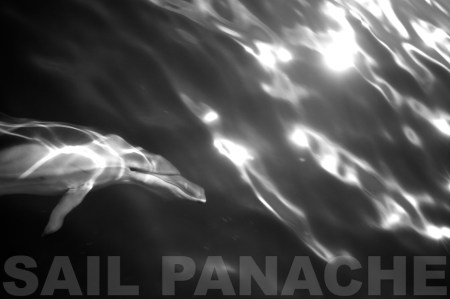
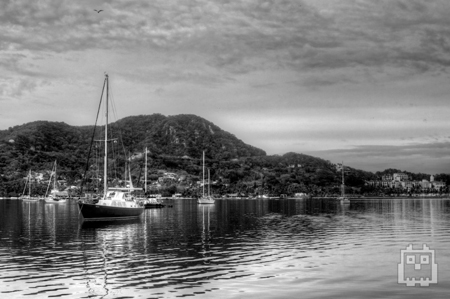
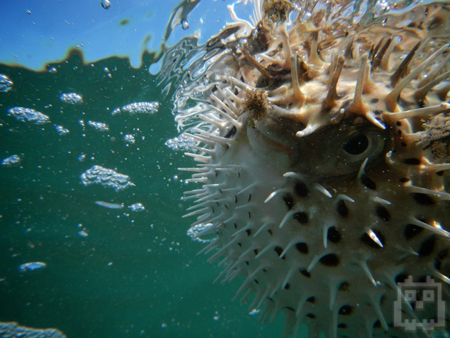
Happy World Oceans Day!  Hope everyone takes a second to think about the beautiful oceans on this planet we live on.  I’ve never been a big swimmer, but I sure as hell cherish the ocean.  Here are a few photos that came to mind when I thought about today.

We all know things aren’t what they used to be out on the open oceans.  The world is mostly water.  It takes care of us.  Let’s take care of it.

comment 0

Life. Death. All in the backyard.

Feathers were strewn everywhere. Body and head asunder. Something had been eating the skull custard. A murder in my backyard.

I’d been walking my bike to the back patio of my urban home in Seattle when I’d been stopped in my tracks. A bird lay there, dead, left in the middle of the cement. Immediately my mind tore into superstitious, paranoid thoughts. Was this an ill omen? Who was the culprit? The neighbor’s cat, who roams freely, accompanying me while I tend my vegetable garden? Was I responsible because I’d not chased him away? Or was this something entirely more natural, a Cooper’s, a Sharp-shinned Hawk?

This mess was a female American Robin (Turdus migratorius). Most likely the one I’d been watching collect heaping billfulls of earthworms for nestlings nearby. I had a selfish moment of annoyance. I’d just swept the patio, now it was littered with feathers and a half eaten corpse. What a strange reaction to a gruesome death. Annoyance at the inconvenience?
Walking inside, I pondered how I should be reacting. A couple attitudes, moral directions presented themselves.

On one hand, this is just a part of life. Mortality, particularly in short-lived species like American Robins, is commonplace. Death is often apparent during the breeding season. Failed nests, naïve fledglings, there’s a reason many species have large clutches. The American Robin population is generally increasing, so certainly there was nothing to worry about. While I know these things are true, I’ve never been able to fully submit to this scientifically objective tone. I’d argue that most good biologists have emotional attachment to whatever they study and generally care more than their publications admit.

(And, I do enjoy seeing a natural predator catch prey, but that doesn’t mean I relish death.)

On the flip side is my desire to honor or rather cherish all life. Assigning values to different species seems absurd, horrible in fact. Yet we do it all the time, from valuing vegetables over weeds or killing mosquitoes while encouraging lady beetles. Life isn’t so simplistic to totally adhere to one train of thought. I’d be lying if I said that I wouldn’t be more upset if I’d found say a Cooper’s Hawk or even an American Crow dead in my yard.

However, what if I was indirectly responsible for the death of this bird? I connected the dots: petting the neighbor’s cat, encouraging it to come back, giving it an opportunity to catch this mother robin. There’s an entirely different issue here:  this cat was outdoors in the first place. Outdoor pet cats probably kill hundreds of millions of songbirds every year. This is an inflammatory issue, but you can’t ignore that fact that house cats are not natural and can have a serious impact. With an estimated 60 million pet cats in the United States alone (many of course are kept indoors), if even half are outside and kill a bird every year, that’s around 30 million birds dead of just one of many human causes*. I myself have had pet cats that went outside too.

So basically, should I be moved to tears or stoically look on as a trained scientist? As usual, I landed somewhere in the middle. There’s a good chance that if this female had a nest, it would now fail and that was a sad image; baby birds wasting away in the nest. Males do help with rearing young but it’s not typically a one bird job. Yet, as I said, American Robins are extremely common and that this was not a disaster for the species.  However, whether or not we choose to acknowledge it, humans have impacts on other species, even the common ones.

Mulling it all over I’d concluded that another bird had likely killed the robin based on the state of the corpse. The scientist in me decided that I might as well use this as learning experience, I started to do a little research on American Robins.  Maybe I could also figure out the age of the bird or something else. Time for some forensics.

Just as I had that thought, I heard the ominous rush of scavenger wings outside. Crow wings. It doesn’t take long for a mess to be cleaned up. More wingbeats and knocking on the gutters. I crept outside to watch the crow and its prize.  I wasn’t quiet enough. Flushing, it left a robin corpse in the gutter. Maybe that full crop was going to some babies. From death comes life? I continued thinking about how to approach life and death in my backyard and I heard the crow return two more times.

Inspecting my patio a half an hour later, I found no head and no body.  Somehow this resolved the issue for me.

As I stood there with feathers strewn about my feet, Bewick’s Wrens were noisily herding their shakily flighted fledglings about the yard. Death and life were spinning about, even in my urban yard.

* a few sources and extra info for those who get up in arms about cats: http://library.fws.gov/bird_publications/songbrd.html ; http://www.fws.gov/birds/mortality-fact-sheet.pdf ; http://www.motherjones.com/environment/2011/06/cats-tnr-birds-feral

comment 0

Interview: Zachary Shane Orion Lough of SailPanache.com Pt. 2

Part Two of an interview with Zachary Shane Orion Lough.  Refresh your memory and enjoy Part One.

Brendan McGarry: For me, hearing about time alone, tested by the elements and embracing natural solitude, is very exciting because I see a lot of intellectual potential in it.  Time to think about the natural world and philosophize while still being active in your environment.  However, I’d go out on a limb and suggest that I’m the choir they speak of preaching to.  Do you think it translates to those less involved in nature and adventure?  For that matter, even if it didn’t, does to matter?

Zachary Shane Orion Lough: I am essentially arguing for involvement in the natural world. Any argument requires careful tact. My tact or tactic for success is giving the proper portion-size of nature in my website. SailPanache.com talks about lots of stuff other than the natural world. I have my inner monologue, the sailing, the cities and the people. I believe this spectrum of topics makes it easier for people who may be less interested in the nature or, say, sailing aspects of my website to digest it as a whole comfortably. The more they read, the more they are exposed to all topics, and eventually they will want it all. This answer might be a little heavy on marketing philosophy, but I do believe it works. Think of it as “Nature Light!”

BM: Do you have any planned end, either location or date to the sail? Do you think if you could keep this up perpetually, would you? I know you are a social animal. Does having a home, as in a place, matter to you in your goals?

ZSOL: I constantly fight with the idea of home. More specifically the feeling of the familiar. I think it’s natural to want that whether it’s a person, place or thing. Panache has become very familiar, but I desire a physical permanent home and the comfort it offers. I have felt the gravity of each port and the comforts they offer. I guess subconsciously I am looking for home, but I have limited resources and know if I want to keep this adventure going I can’t be stagnant. I have to keep moving. If I had unlimited resources, I would circumnavigate over several years and spend several months in each place. I would love to keep this going, but financially it isn’t possible.

At the moment, I have enough money to travel through the Pacific and end up in New Zealand and/or Australia. If I can work there for a bit, or find some form of sponsorship, I will definitely keep moving. The lifestyle is very rewarding, I enjoy sharing it through SailPanache.com, and I am not ready to give it up!

BM: What is your favorite place to be in the natural world?

ZSOL: Right now one place come to mind. Being in such a hot place I constantly think about snow. A pine covered forest draped in snow is what I think about on those 100 degree days. It’s silent. Smells of evergreens. It calms and cools me, even if just for a moment.

BM: Do you hate Frigatebirds?

ZSOL: Absofuckinglutely. I hate how they pester boobies and steal their food. I hate how they love to crap all over my boat. One exceptionally large frigatebird sat on my anemometer (a thing on the top of my mast to measure wind speed) and broke it. The bird just wanted a free ride, but come on. I guess I don’t hate them, but they frustrate me. As frustrating as they may be, they are impressive and very beautiful. Wingspan to weight ratio is one of the highest, making them crazy agile in the air. But I still fucking despise them.

BM: Anything special wildlife wise you’d hope to see in your journey?  Anything particularly memorable you’ve already experienced?

ZSOL: For all intents and purposes, oceans are like deserts. Most of the time there is nothing to see on the macro level. Sure, give me a microscope and I could discover all sorts of cool zooplankton, but I don’t have that kind of equipment aboard Panache. I would love to see anything big or dangerous. Sharks and sailfish are high on my list. I would love to catch a Wahoo. I would love love love to see a sunfish. I’m sure I will scratch one of these things off my list by the end of my Pacific crossing.

As for memorable things I have already seen, dolphins are always a friendly visitor, but my truly memorable experience involved a dolphin fish or dorado or Mahi Mahi. On the sail down the Baja coast I caught one for food. They are delicious and definitely ramped up my fishing drive. The first day out of Acapulco I woke up and poked my head out of the cockpit. Still squinting I could see a bright yellow fin slicing back and forth through the water right off the port side. I scrambled on deck and as the reflection of the sky faded from the water it revealed a massive Mahi Mahi. This Bull Dorado was literally as big as me. My initial response was to try and catch it. Feeding out a lure behind the boat got the giant’s attention, and I realized two unfortunate things: 1. If the fish struck the lure the line wasn’t tied off to anything, and 2. if I somehow managed to get the fish in the boat, there is no way I would be able to eat it all. I was happy to see the blue and green giant lose interest quickly and continue to swim happily along.

This fish paced Panache for the better part of 3 hours. I just sat there and watched. Panache was like a pace car. Every once in a while the Dorado would jet off leaving a visible wake on the surface of the water. After a minute or so, he would calmly come back to the boat. I assume he was using Panache to scare food fish and then hunting them down. Pretty rare to see a Bull Dorado that size, and probably even more rare to have one pace your boat.

Thanks for the interview Zach.  Safe travels and good adventures!  I hope you’ve all enjoyed Zach’s wonderful photography and sage words.  Please be sure to check out SailPanache.com and keep track of his travels!

comment 1

Malheuring Around Pt. 3 (Conclusion)

The unflagging exuberance of young birders (or simply those enamored with nature) is draining on those even just slightly older. Certainly it’s uplifting and I felt energized as we left the Sage Grouse Lek on Foster Flats. Energy was entirely welcome after all, we still had a full day ahead of us.

Vesper Sparrows (Pooecetes gramineus) and Horned Larks (Eremophila alpestris) serenaded us down from the lek “parking lot.” In a couple slimy sections of the road, I inwardly thanked our lucky stars for making it up. After the other visitors had squirmed upslope, the track was a sloppy mess of mud ruts. The refreshing air wafted through aromatic shrubs had a calming effect though. The were windows rolled down and ears pricked at notes from the steppe.

There.

Just as I expressed doubts about the promise we’d see a certain sage obligate, we heard cheery, ebullient notes tossed across the shrubs. The Sage Sparrow (Amphispiza belli) is a delicately colored bird, enjoyable and beautiful in subdued shades of gray and brown in the way we find subtle geology dazzling. I’d also reckon it has one of the prettier sparrow songs. The first individual sat dutifully staking claim, broadcasting for mates long enough for Eric and I to creep near clutching cameras.

Before we made it back to the highway we couldn’t resist a few more stops to enjoy the sunny morning. A Ferruginous Hawk (Buteo regalis) sailed far above and more sparrows sang around us. We all developed platforms of mud, inches thick, caked to our soles that had to be scraped off each time before returning to the van.

Already pleased with the sights, we curved down the highway to the The Bureau of Land Management’s (BLM) Diamond Craters Outstanding Natural Area. The mention of the BLM never gets me excited except knowing that the land has few rules to fetter the adventurous. When entering their properties (or as many say, “our property, our land”), I vacillate between imagining open pit mines and overgrazed riparian areas festering with watery cow pies. “The Bureau of Land Mismanagement.” Let it be said that the road we traveled in to see the lek was a derelict BLM road, so I can’t entirely grouse. Diamond Crater’s must be the crown gem of all the BLM land.

What pleased me the most about visiting this area was the fluency of the Birdwatch kids in all things natural. Sure, they wanted to go far and see much birdwise, but they could enjoy roaming geology and settling down for a good old fashioned lizard catching romp too. Before we’d even made it past the first designated stop on the auto tour of the “Outstading Natural Area,” we were crawling over the thin crust of a basaltic flow in search of reptiles.


Midday birding what it is, we had the geology and herps to keep us busy. This first stop saw us clambering on a vertically tilted slab of basalt attempting to outwit several behemoth Western Fence Lizards (Sceloporus occidentalis). A cooperative Sagebrush Lizard (Sceloporus graciosus) proved much more easily caught and photographed. At the same time, someone noticed that many of the cracks in the rock were filled with Pacific Chorus Frogs (Pseudacris regilla)! Between trying to capture images of frog faces wedged in fissures and snagging lizards, we laughed and scrambled away an hour. This was good, respectable fun that had nothing to do with age or ability or knowledge.

The Diamond Craters are true geological wonders, much deserving of their cornball designation. I’d visited previously but hadn’t been compelled to contemplate the spread. Much of the rock we’d seen before this point was from a comparatively ancient 9.2 million year old vent located near where Burns, Oregon is today. The Diamond Craters are a geologically young formation, around 25,000 years old, and display a huge array of basaltic volcanic features localized and easy to see. Massive craters admired are in various states of erosion, collapsing in on themselves. The evidence of explosive events, fueled by the interaction of water and magma, were strewn about. I couldn’t help but wish to have viewed this from afar over the thousands of years of activity. The tumult, the explosions, the flows of viscous lava bubbling from vents to cover lakes and millions of years of older formations. I reckon I could probably give up television for that opportunity.

Possibly the gravity of the geology was lost on some of the students but they couldn’t ignore the unique features. Nor could they deny the desire to roam the slopes or climb into the craters. (Parents, don’t worry, this is no longer volcanically active). At the particularly stunning Lava Pit Crater, a collapsed shield volcano that repeatedly flooded lava over the surrounding slopes until it subsided and began to crumble, we had another good scramble. Here we found some delicate Side-blotched Lizards (genus Uta) near the crater rim and the more intrepid accidentally sussed out both a Great-horned (Bubo virginianus) and Barn Owl (Tyto alba) while exploring a particularly large vent.

The day went on like that. Driving, stopping at a gaudy volcanic feature, spreading out over it till we looked like ants, and circling back up to pile into the car. I don’t think any of us could have asked for a more enjoyable afternoon to cap the day and the trip. As the weather began to foul again, we turned back to the field station, satisfied and tired.

Back at the field station we discovered a Bushy-tailed Woodrat (Neotoma cinerea) that had been captured in the director’s residence and left for us to release. Only in this bizarre world I’m a part of does releasing giant rats count as fun. The giddy troops were dispatched and those of us who drove at 3 AM took a rest. Somehow, when they returned, I got convinced to hunt Kangaroo rats one last time.

So, excuse my lack of eloquence here: this shit is important. These kids are going to grow up and change the world. They are going to be stewards of the environment, no matter what choices they make in their career paths (doctors, business people, politicians need to have a connection with the natural world too). The volunteers of the program said this about my cohort when I was in Birdwatch and they were right; we’re working on it. I can think of little that is more important than helping this generation along, particularly considering this is a dying pursuit amongst the youngsters of America. Nature Deficit disorder may not be diagnosable but it is real. There is a widening disconnect between young people and nature, in my generation, and those after. I’ll never stop asking this of you, of myself, of anyone: how we can expect to save things we don’t understand, let alone care about? Simply knowing an animal or a landscape is endangered doesn’t inherently fuel action.

I’ll calm down and stop jumping on my soap box in just a second. My point is, if you have kids, get them outside and let them get dirty. If you are a kid (read: if you are young of heart), get out yourself. You don’t need to know what everything is or fret over dangers. For shit’s sake, live a little!

There are plenty more details, stories, and exciting things to share about our travels in Oregon but I choose to leave it here. We had an immeasurably good time and were all sad to leave and head back to the city. All ten hours back there were constant pleas from students (and whispered from the volunteers) to stop and explore. To get sidetracked.

Get sidetracked.


comment 0

Interview: Zachary Shane Orion Lough of SailPanache.com Pt. 1

If you can think back that far, you might have read that I am starting a series of interviews with people I believe are doing interesting things. My first (I’ve done others in the past) is with Zachary Lough of SailPanache.com who is currently in the midst of traveling by boat, examining nature, and documenting the whole process. I finally caught up with him at port on a short rest.  This is part one of a two part interview.

Brendan McGarry: Who are you? Not just your name, but what guides you through life? I’m starting off with deep questions.

Zachary Shane Orion Lough: My name is Zachary Shane Orion Lough (I’m not sure why I have so many names). I am a 26-year-old who has bypassed the traditional career path for the opportunity to create my own. I am on a sailing adventure aboard my sailboat Panache. I document my travels with photography, writing and short videos. I hope that my adventures inspire people and eventually transform into a career. As for a guiding force, that would have to be capturing the unknown. Pretty vague, but I think that answer is equally as deep.

BM: For those who don’t know, explain to us what SailPanache.com is all about.

ZSOL: SailPanache is my platform for sharing my journey. The source for getting the details about my trip. Not only the simple facts of where and when, but my personal journey getting places, mentally and physically. My goal is to have the viewer experience the places as I do. It’s a very media-rich website that I hope gives a decent picture of where I have been and how it affected me.

My sailboat is named Panache. She is a small Catalina 30 built in 1976. The previous owner took her to Mexico twice, through the South Pacific, and all the way to Australia. I plan to follow in his footsteps.

BM: Where are you currently in your travels?

ZSOL: Costa del Sol, El Salvador. It’s hot here. El Salvador has provided a love hate relationship with the heat; it’s great by the pool, but miserable when you are working outside. My blood is now permanently hot, and 60 degrees feels like a freezer.

BM: Thus far, what is your favorite experience? What are you most looking forward to?

ZSOL: My favorite experience has to be making my first solo sailing trip from Manzanillo to Zihuatanejo. It took several days and was a testing ground for larger single-handed passages. I am now on the eve of sailing solo to the South Pacific, specifically Fatu Hiva in the Marquesas. This trip is definitely something I have been looking forward to for as long as I knew what sailing was. Crossing the Pacific is one of the greatest achievements for a sailor. It’s epic. I am excited and terrified. This is a true adventure, and one I can’t wait to share via SailPanache.com.

BM: What basic challenges do you face in your travels?

ZSOL: While sailing solo along the coast, my biggest challenge was when to go to bed and for how long. Technically you are always supposed to have someone on watch. Being alone, I have to go to bed sometime! The Mexican coast is filled with fishing boats that don’t display navigation lights, long lines that drift in your way, and gill nets that can foul your prop. Even curious whales can be a potential danger! Add night to the equation and you can imagine how much stressful falling asleep can be. I have radar and other tools to help me see in the dark, but even that can’t help you sometimes. Sailing coastal routes solo is exhausting, so I decided to start sailing farther offshore (30ish miles). This helped cut down on the traffic, and I got more sleep.

Weather is also a huge concern. If you have no wind, you go nowhere. My engine is small, and I carry little fuel, so if I have no wind, I typically don’t cover much ground. If you encounter a gale and have too much wind, you can rip your sails or worse. It’s all about finding the right amount of sail area for the given wind conditions and acting accordingly when they change. I recently experienced hurricane force winds (80+ miles per hour) here in El Salvador and it was terrifying. A 36’ J-Boat dragged anchor and was totaled when it smashed against a concrete pier. The weather can be your best friend and greatest opponent. Praying to Poseidon is recommended.

As for the things I can control, managing Panache’s water and food supply can be a challenge. I need to make sure I have enough and that I end up in places where I can replenish. For my Pacific crossing, I am carrying 75 gallons of water and enough rice and beans to fart all the way to Australia. My diet will be extremely boring, but I hope to catch fish to spice things up.

I just listed some specific challenges above, but ultimately sailing as a form of travel is one big challenge. It makes simple tasks, like getting from point A to point B, an adventure. But that’s part of what makes it so great!

BM: Nature is obviously a big thing in your life. Besides simply needing to have it, like myself, how do you plan to incorporate it into your professional life?

ZSOL: I want to have an unequivocal adventure through nature. I have come to the conclusion that I can only find that by crossing an ocean. I’m not sure If I will experience sensory deprivation or sensory overload. On one end, I will be cutting technology and social contact almost completely out of my life, and at the other end I will be adding the constant liveliness of the expansive ocean and everything it has to offer. I believe each experience is equally stimulating, but I am curious to see how total immersion will affect me. This little experiment will be available on SailPanache.com, and I hope readers will get curious and excited about that immersion. My goal isn’t to encourage people to drop everything, turn into a Luddite and tromp into the forest or sail out into an ocean. I simply want subscribers to receive their nature “fix,” which I believe encourages respect.

This underlying message is not how I present SailPanache.com. I am meticulously documenting my trip in hopes that I can use the site as a platform to slingshot myself into photojournalism/writing/video dude.

(BM: hey, me too!)

I’m trying to make a career for myself, but at the same time, I still want my respect for nature to be a prominent theme. Traveling through Mexico, and especially El Salvador, there is a huge lack of respect for the natural world. It’s frustrating and in some indirect way I think my website helps.

Stay tuned for part two shortly!


comments 4

Big Day. May 5. 2012.

A quick note: for those of you haven’t donated yet, my big day was in support of Seattle Audubon. This money is for a general fund but continues programs like Birdwatch, the high school group I volunteer with and have blogged about. Please consider pledging to my Birdathon. Thanks so much for your support!

I woke in the confusion of deep sleep, unsure where I was. Blearily, I cast about for my glasses, brushing frost off my sleeping bag. When my brain caught up it was with a mournful reproach. What had I gotten myself into. Oh no…this was just the start of the day. This could be the intro to a horror movie.

Welcome to our big day: 12 AM on a dirt road in Wenatchee National Forest on May 5th.

Five hours later we were sitting in the car waiting for first light. Our first bird had taken nearly two hours – a Spotted Owl barking in a distant drainage. We stood watching wind push surreal globular clouds across a full moon the rest of the time. The second species in four hours, was a Northern Pygmy Owl right at dawn.

I’ll freely admit that I despise owling. Owls are indelibly special birds, species which have always held a corner of the human imagination. However, interminable hours standing in the cold, listening to air move over your ears and the gaseous irruptions of your fellow owlers, imagining distant barks, hoots, or whines, are almost never worth it. Not the best way to get excited about a big day.

For those of you who aren’t familiar, a big day is when manic birders try to see as many species of birds as possible in 24 hours. This could be in a county, a state, even a city. My expedition mates, Adam Sedgley, Micheal Willison, and I were making our go in Washington State. Adam and I were raising money for Seattle Audubon with pledges for our endeavors.

We secretly knew from the start that we wouldn’t approach the state record of 211 birds. For one we were going out a bit too early in the year for some vital species. Give or take a few weeks, May is universal big day month in North America yet early May in Washington doesn’t afford time for some neotropical migrants to arrive. Second, our route needed some fine tuning. Third, completely out of our control, was wind. A birder can never get worse luck than high winds.

A big day more or less consists of rushing about from place to place. We’d see or hear a bird, make sure everyone got on it, and rush off. This wasn’t about beautiful views or remarkable observations, it was about efficiency and tallying off species within our 24 hour frame.

We started daybreak on Bethel Ridge, which is on a random forest service road near Rimrock Lake on Highway 12. In typical dawn activity we dashed off most species we could possibly snag. Wham bam. Time to move on.

Down Umptanum road between Naches and Ellensburg, we weren’t feeling particularly enthusiastic. Aiming to hit certain habitats is key and it’s a serious issue when you miss birds with only one opportunity to see them reliably. Later in the day when we were going over species we still needed, minutes before a Red-breasted Sapsucker flew across the road I said something like “they’re easy to see flying.” I wished we’d had that kind of fortune with White-breasted Nuthatch or White-headed Woodpecker in the few Ponderosa stands visited. We were getting skunked.

Early in the game we’d adopted a strategy of running to and from the car. After finding Sage Sparrow along the Old Vantage Highway, Adam and I dashed back out of the sage, warily eyed by two geared up gentlemen on dirt bikes next to the car. They were probably used to seeing birders but were maybe a bit uneasy as to our running.

“Stop! Back up a bit……there….a bit further. It just flew. Pull forward…”

Equally so our driving probably wasn’t convincing any bystanders of our sanity. Stopping in the middle of the road or weaving to see a bird. All in all we were safe. But erratic, very erratic.

Things were not looking fantastic by mid day. Noon was literally the halfway point, we’d been up for 12 hours and would be for another 12. Sheer lunacy.

Despite feeling pessimistic I was having a surprisingly good time. That’s what big days are about. Testing yourself, in planning, in ability to pick out birds whizzing by or calling quietly, pushing your limits of sleep deprivation.

By the time the crest of the Cascades at White Pass came and went I’d already started to nod. Time was slipping by as we crossed into Southwestern Washington, hoping to scoop what we could before the sun traded places with the moon around 8:30 PM.

I’d never been to Rainbow Falls State Park but I was grateful to stretch my legs. Everything counts, even common birds (which are so often missed). Pacific Wren, Townsend’s Warbler, Pacific-slope Flycatcher, and Wilson’s Warbler were all birds I can potentially see minutes from my home in urban Seattle. Hermit Warbler however was not. Time to move on.

Desperation setting in and we saw our first gulls in a field near Roy. Luckily they were worth studying, Herring and Mew Gull represented. We were tempted to waste precious minutes to make another bird a Thayer’s. I made an unethical, silly, and unsuccessful attempt to get the bird to fly by running down the road parallel to it.

There’s a certain salvation in getting to an entirely new habitat. Suddenly coastal Washington and all its marine, intertidal species spread before us. Crunch time and we crunched much of what we’d hoped for, waterfowl, shorebirds, a few songbirds. Yet, those missed species always make you cringe.

Big days are unapologeticly crude. You eat horribly, relieve yourself in convenient, not polite, places, and largely reject courtesy. Vespertine sputtered out on a platform at the Wesport Jetty. Pelagic and Brandt’s Cormorants were our last species roosting offshore. As we scanned with flagging enthusiasm, we probably managed to ruin a man’s attempt to photograph the blood orange moon creeping over Gray’s Harbor, shaking the platform and his tripod.

153 species, 890 miles driven.  Not terrible but not great either.  Definitely fun.  The callous road trip nation easily folds into the world of birding. Maybe we could have driven further and seen more? Then again the need for dinner, rest, and the camaraderie of sharing a meal surpassed a more hours standing in the cold, hoping for owls. I wasn’t going to suggest that anyway. Like I said, I sorta hate owling.

comment 0

Malheuring Around Pt. 3

Flattening animals is never a good way to start the day. The jackrabbit was in the opposite lane when the brights caught it. Why it made the decision to hop daintily beneath my tires is beyond comprehension. As Tristan put it later, slowing would have made the difference between creaming it at 40mph rather than 60. I’d rather a clean job of it. I was still unerved.

Foster Flats Road slid about under the tires like the thin layer of wet snow most Seattlites find an insurmountable obstacle. When rain falls heavily on ground only half prepared for absorption, a sickly alluvium forms. We’d been warned such mud could make for disaster. However, there’d been no rain overnight and at 3:50AM a collective decision made. Yes, we were still in pajamas and the twin beds were, at that moment, the most luxurious in the world, but there was a greater pull. Time to get up the kids.

A vague hint of a slaty first light began to push over the horizon. The windows rolled down, Horned Larks were audible in dawn chorus. They were also apparently sleeping the middle of the road, groggily or stubbornly flushing seconds before our tread.

After eight squelching, sliding, jostling miles we slowed to a crawl. It was about five AM and we should have been able to hear them. We didn’t.

“Turn off the engine. I can’t hear anything.”

“Vesper Sparrow. Horned Lark. Meadowlark.” I grasped for other sounds in the inky depths.

“Stop crinkling that granola bar wrapper.”

A frumpy bird flew across the road. Our pulses quickened and I immediately cut the engine. Still nothing. I was starting to worry because we’d driven several tenths of a mile too far. People in the van began to ask pointed questions about the decision to drive beyond the bird. Collective decision making has never existed when the driver can be blamed for any potential problems. We circled back.

As if by magic, our eyes adjusted in the still waxing light. Something, looking uncannily like a pillow filled with a pair of matching balloons, adorned with a pointy fan on one end, was pirouetting about outside. We started to notice these queer shapes all over in the twilight. We were here.

Out on the sage it sounded as if a group of overweight people wearing corduroys were alternating between running and resting on elliptical machines – their inner thighs rubbing together audibly for contracted periods. As the pants rubbed, they were desperately clutching milkshakes and the viscous liquid was popping about in odd percussion inside their cups. This is a perfect example why written descriptions of avian sounds pale in comparison to a recording or a real thing. I’ve merely succeeded in describing weight watchers subscribers.

Jokes aside, what was really happening out there? Why had we woke at 4 AM, driven a sketchy muddy road, and crept about in the dark? In reality, the apparitions meters from our van were Greater Sage Grouse (Centrocercus urophasianus) in Strutting Display. This was their lek, a place where males collect to show off for females. We were attending one of most magical avian displays in North America.

Portraying this scene, so compellingly unique and fascinating as it truly was, might just be beyond me. As I watched the males dance about in the hopes that the females, lurking on the sidelines might find them worthy of copulation, I was awash in a passion that takes me now and then. Evolutionary time spread before me, I was lost in a branching whirlwind of specialization and runaway selection. I found myself swelling with excitement, in a tizzy over the beauty of the natural world. This was the second Sage Grouse lek I’d ever seen and these males were unconcernedly bouncing about just meters from us.

The noises we were hearing were partially from esophageal pouches, which swelled as they prepared for the breeding season. Males fill these pouches with air and as they do so swish their wings against the feathers of their necks and breasts. The air sacs plop (like the milkshakes, which in this case call all the girls to the yard) and the wings rub against chest to create the swish (the corduroys).

Besides the fact that these birds were an amazing sight to see, they are becoming rarer and rarer. Biologists on the state and federal level have been dancing around listing these birds for years now. This area of Oregon happens to be a stronghold but that doesn’t mean they are safe. They’ve merely benefited from occurring in the least human inhabited corner of the lower 48. Mines, natural gas, windmills, cattle ranching, and hunting seem to trump saving an animal that is an embodiment of this habitat. Sure they’re chickens, but they’re North America’s largest, only residing in the West and in shrub steppe. They need to be nurtured not stomped out of existence by clumsy cattle and gas pads. I use resources, everyone can be blamed for these problems, but denying protection for special animals does nothing but further the problem, leaving them prone to further decline.

There were nearly thirty males strutting about, amply bosomed and obviously thoroughly out of their minds. Several of the males in more central locations fought over space, displaying at eachother and occasionally physically attacking. There’s a dearth of consistent information to explain their nuptial behavior. What is apparent is that prime males come together to display, only a few of these males actually mate, and the females will nest and raise young completely on their own. We noticed that the males in the middle of the lek seemed more active, both fighting more and displaying with more frequency. The best of the best?

The sun began to creep higher, casting a harsh glare across the display grounds. Before long the males would be flying off for the day, to return in the early hours the following morning. Soon these grounds would be quiet until next March when the strutting begins anew. We’d been perched in our van for nearly three hours and I was pretty sure I was getting deep vein thrombosis. It was time to slide on off and leave these outrageous birds to their shrubs and their flouting.

If this wasn’t a formative experience for the Birdwatch students then we’d probably never find one.

(Ok, so I lied, there will be one more entry to tie up all the loose ends on our trip to Malheur. We had fun, which invariably means I have too much to say!)